Introduction: The Oleoresin Opportunity
India is the world’s largest producer and exporter of turmeric. For most processors, turmeric means powder — dried, ground, packed, and sold. But there is a parallel market that commands significantly higher value: turmeric oleoresin Extraction.
Oleoresin is the concentrated extract of turmeric’s bioactive and aromatic compounds — primarily curcuminoids (curcumin, bisdemethoxycurcumin, demethoxycurcumin) alongside the spice’s volatile oils. It is used in pharmaceutical manufacturing, nutraceutical formulations, food colour applications, and cosmetic ingredients. As a raw material, oleoresin commands a premium over standard turmeric powder — driven by its concentrated curcumin content, consistent specification, and suitability for standardised dosage applications.
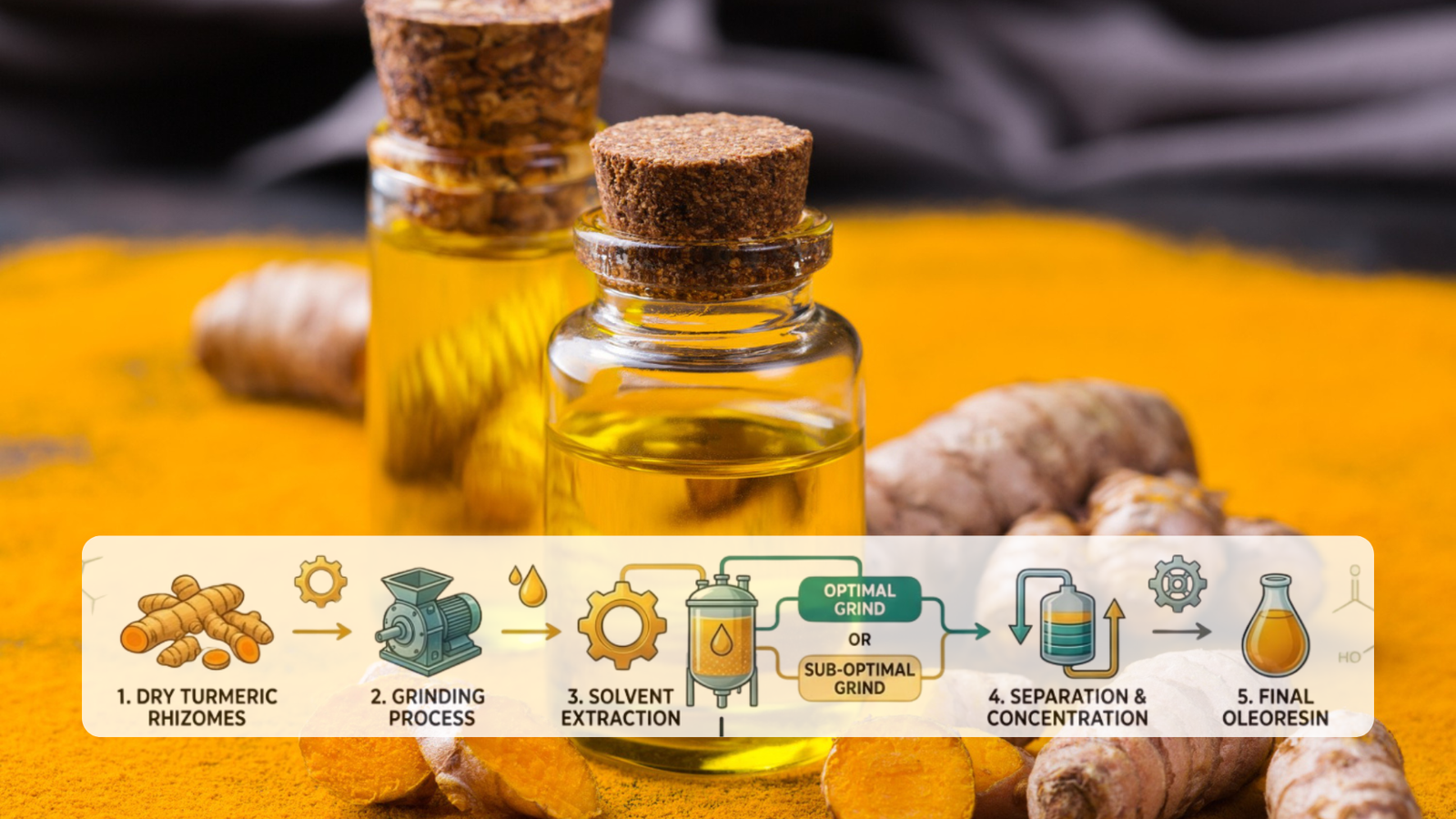
What most turmeric processors do not fully account for is this: the yield and purity of oleoresin extraction is largely determined before the extraction vessel is filled. It is determined at the grinding stage. The quality of the milled turmeric — its particle size distribution, its thermal history during processing, its moisture content, and its microbial load — directly controls how efficiently the solvent can access and extract curcuminoids from the ground material.
This article explains exactly how each of those variables connects to extraction outcomes — and what equipment decisions support extraction-grade processing.
What Is Turmeric Oleoresin Extraction ?
Turmeric oleoresin is produced by solvent extraction of dried, ground turmeric rhizomes. The process involves immersing milled turmeric in an approved solvent (typically ethanol or acetone in pharmaceutical-grade applications, hexane in industrial applications), allowing the solvent to dissolve the curcuminoids and volatile oils, then removing and evaporating the solvent to yield a concentrated oleoresin paste or liquid.
The commercial specification of turmeric oleoresin is defined primarily by its curcumin content (typically expressed as percentage of total curcuminoids) and its volatile oil fraction. Premium pharmaceutical-grade oleoresin requires curcumin concentrations of 25–35% or higher, consistent colour index, and compliance with residual solvent limits under the target market’s pharmacopoeia.
Every factor that compromises the curcumin content of the ground turmeric before extraction — thermal degradation, moisture absorption, oxidation — reduces the extractable concentration and the final oleoresin yield.
How Grinding Quality Impacts Extraction Yield
Particle Size Uniformity and Solvent Extraction Efficiency
In solvent extraction, the driving force is the concentration gradient between the solvent and the curcuminoid-containing cells inside each particle. The solvent must penetrate the particle, dissolve the target compounds, and diffuse back out carrying them.
Particle size determines the diffusion path length. Smaller, more uniform particles have greater surface area per unit mass, shorter diffusion distances, and more consistent solvent contact — resulting in faster, more complete extraction.
The critical qualifier is uniformity. A sample with a wide particle size distribution — a mix of fine powder and coarse fragments — does not extract uniformly. The fines over-extract (picking up undesirable pigments and bitter compounds), while the coarse particles under-extract (leaving curcuminoids behind). Both outcomes reduce yield quality.
This is why tight particle size distribution — delivered by an Air Classifying Mill rather than a standard hammer mill — is the technical standard for extraction-grade turmeric.
Heat Degradation of Curcumin During Milling
Curcumin is a polyphenol with known thermal sensitivity. While it is relatively stable at ambient temperature in dry form, exposure to heat during processing accelerates degradation — particularly in the presence of oxygen and moisture.
Conventional grinding can raise the milling chamber to temperatures between 42°C and 95°C. At these temperatures, and over repeated exposure across a commercial batch, curcumin degradation is measurable. The impact is twofold: the total curcuminoid content of the ground material is reduced before extraction begins, and the colour profile shifts — which affects downstream colour standardisation in food and pharmaceutical applications.
Low-heat grinding — through multi-mode milling that reduces frictional heat at the mechanical level — preserves the curcuminoid fraction through the milling stage.
Moisture Effects on Oleoresin Concentration
Turmeric is hygroscopic to a degree that requires careful process management. During and after milling, ground turmeric can absorb ambient moisture — diluting the curcumin concentration per unit mass and introducing free water that can interfere with solvent extraction efficiency.
Controlled post-milling handling, storage in sealed environments, and integration of drying stages where necessary are process requirements for extraction-grade material. Equipment design — particularly the discharge and handling path from mill to storage — matters here.
The Role of Temperature Control in Oleoresin-Grade Grinding
For extraction-grade turmeric, the milling temperature objective is to stay within a range that preserves the curcuminoid profile without compromising throughput or particle size control.
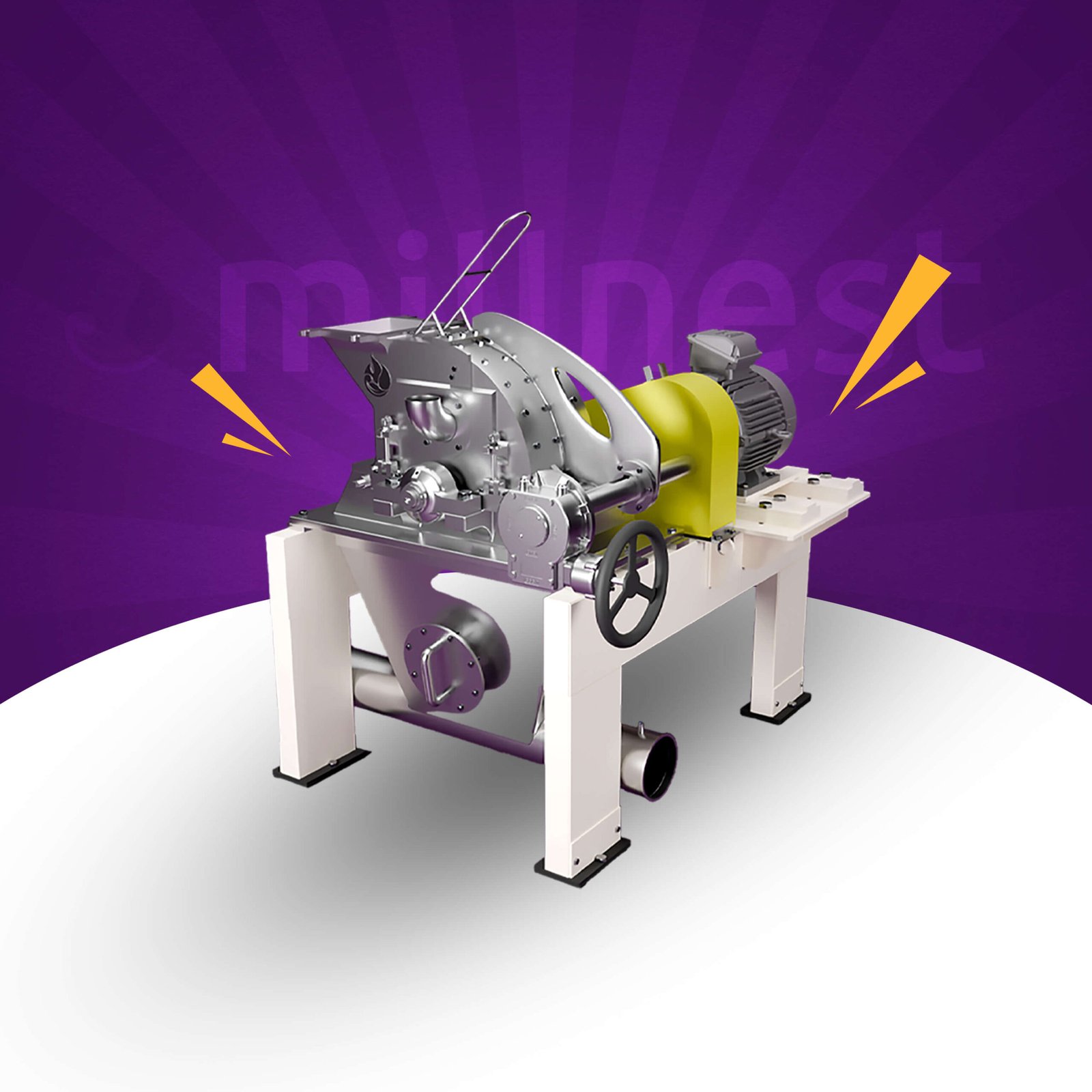
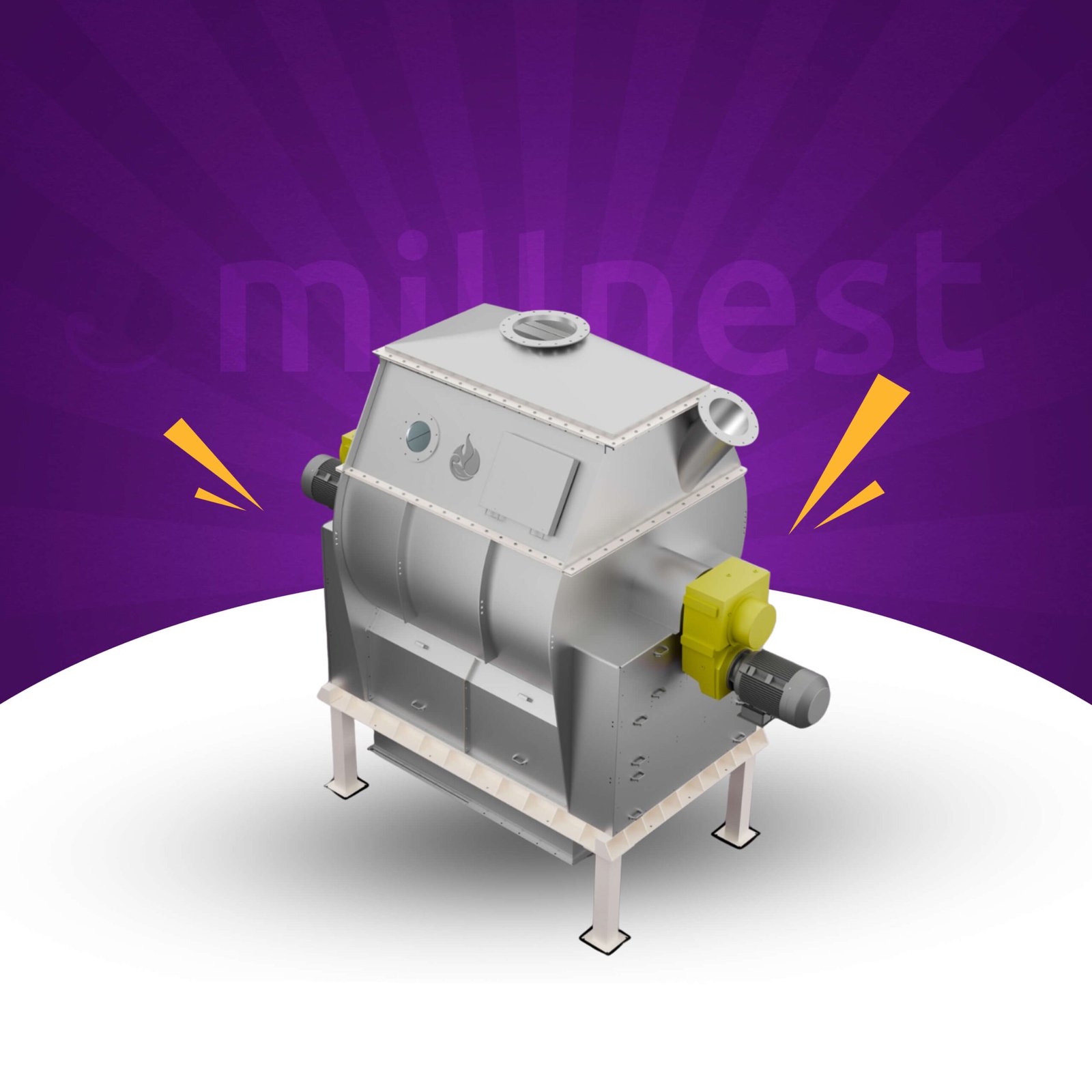
MillNest’s Universal Mill is engineered with low heat generation as a core design parameter — using impact, shear, and attrition modes selectable based on the material being processed. This multi-mode architecture generates less frictional heat than equivalent single-mode impact milling, making it suitable for extraction-grade pre-milling where curcumin preservation is the priority.
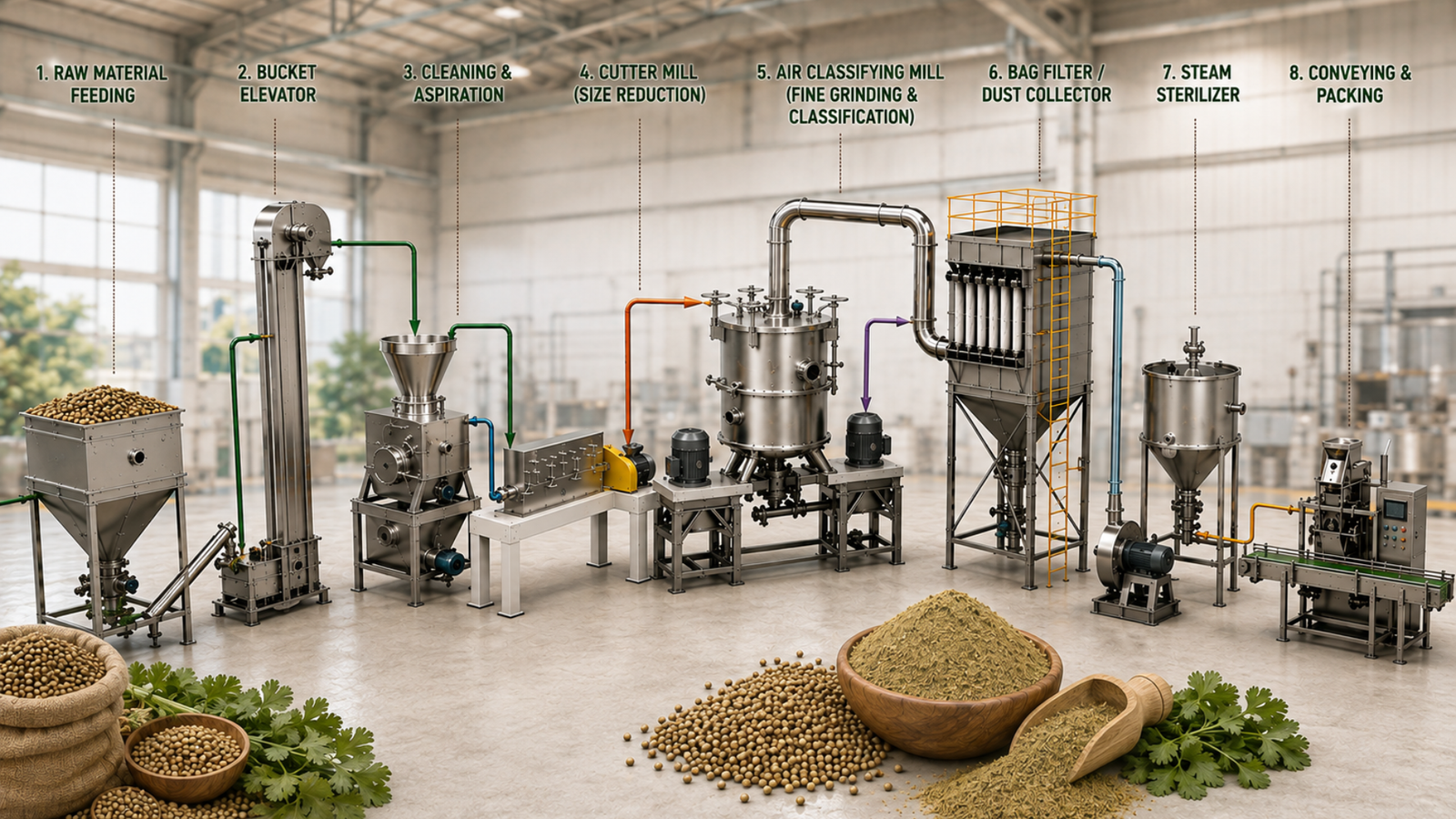
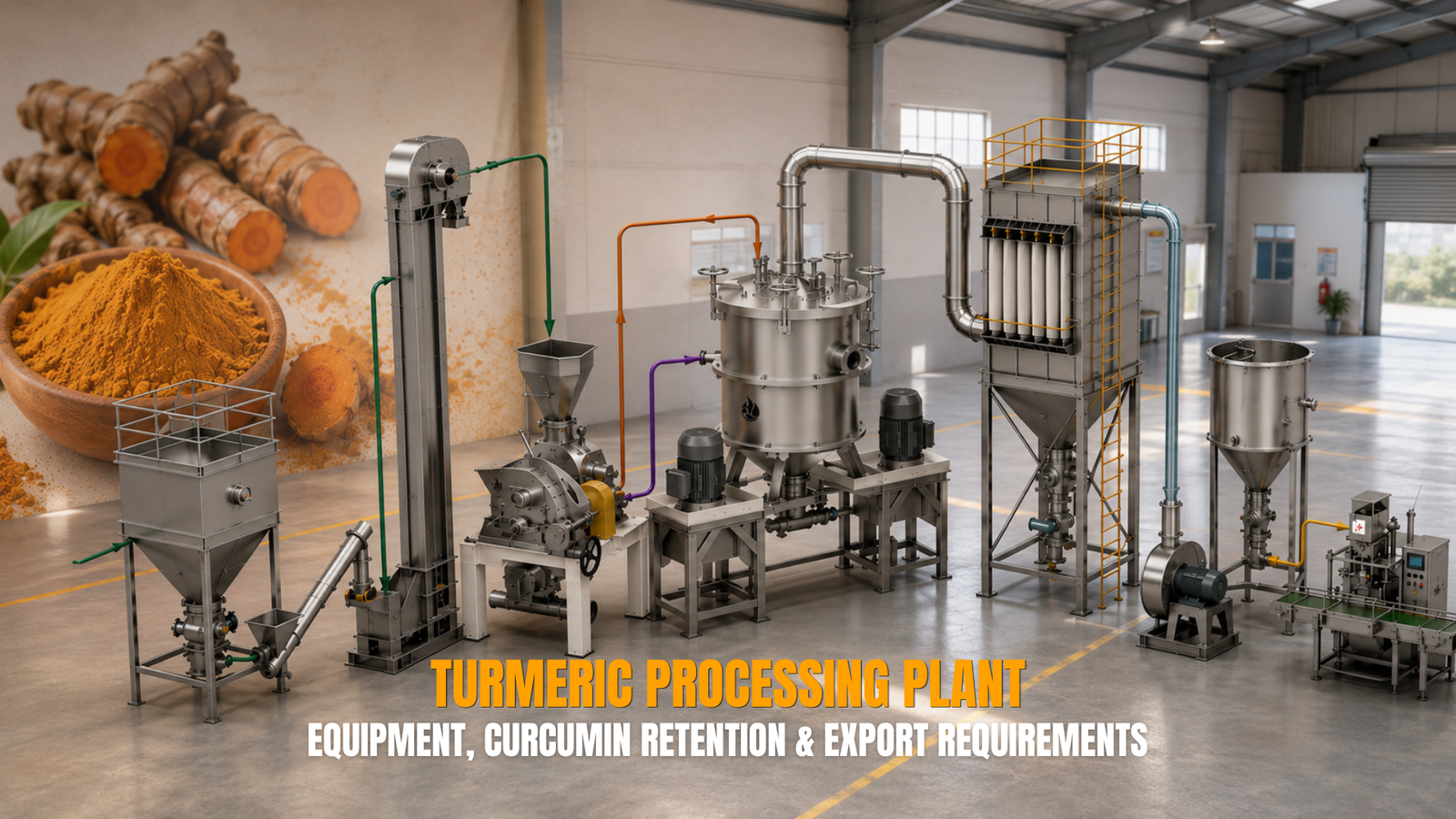
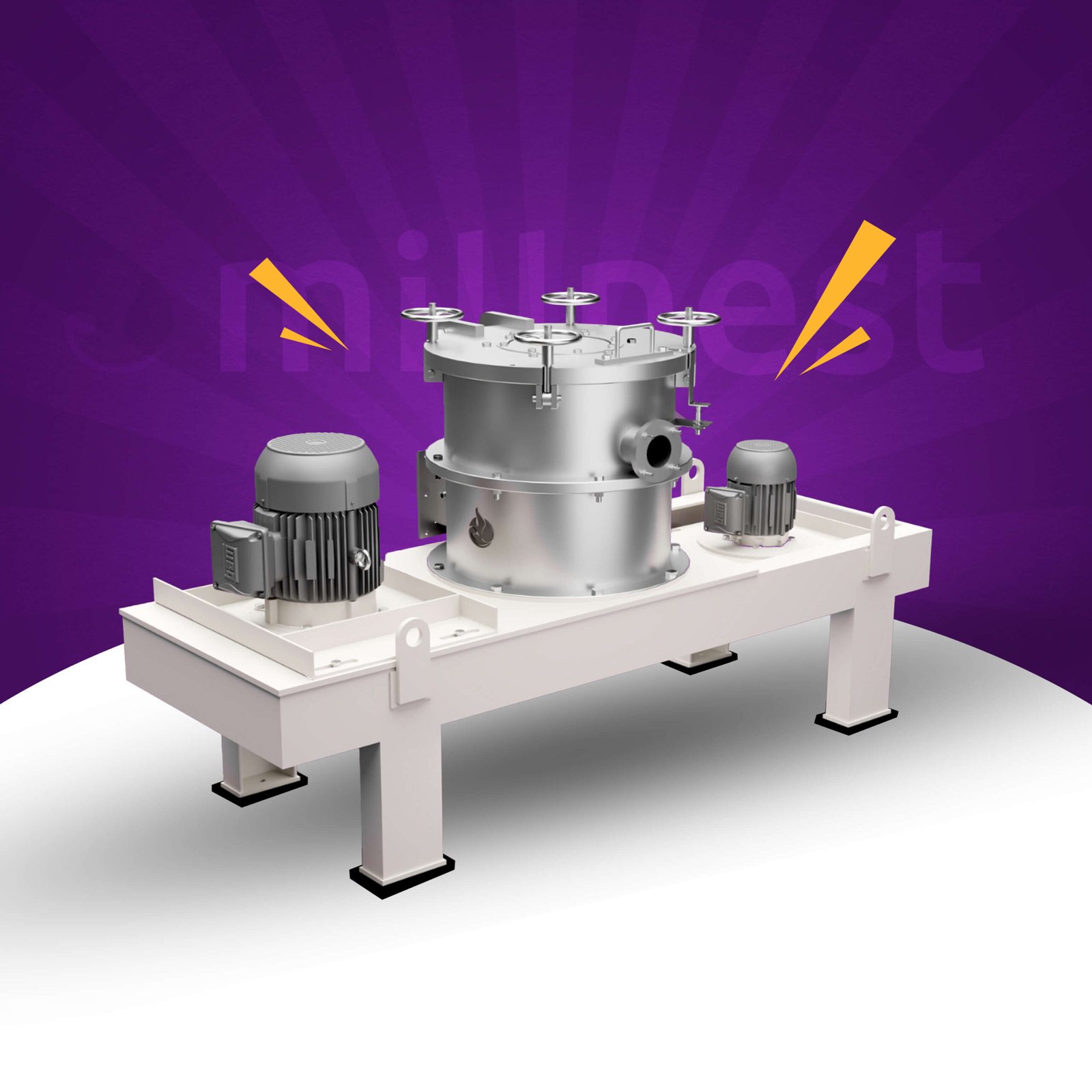
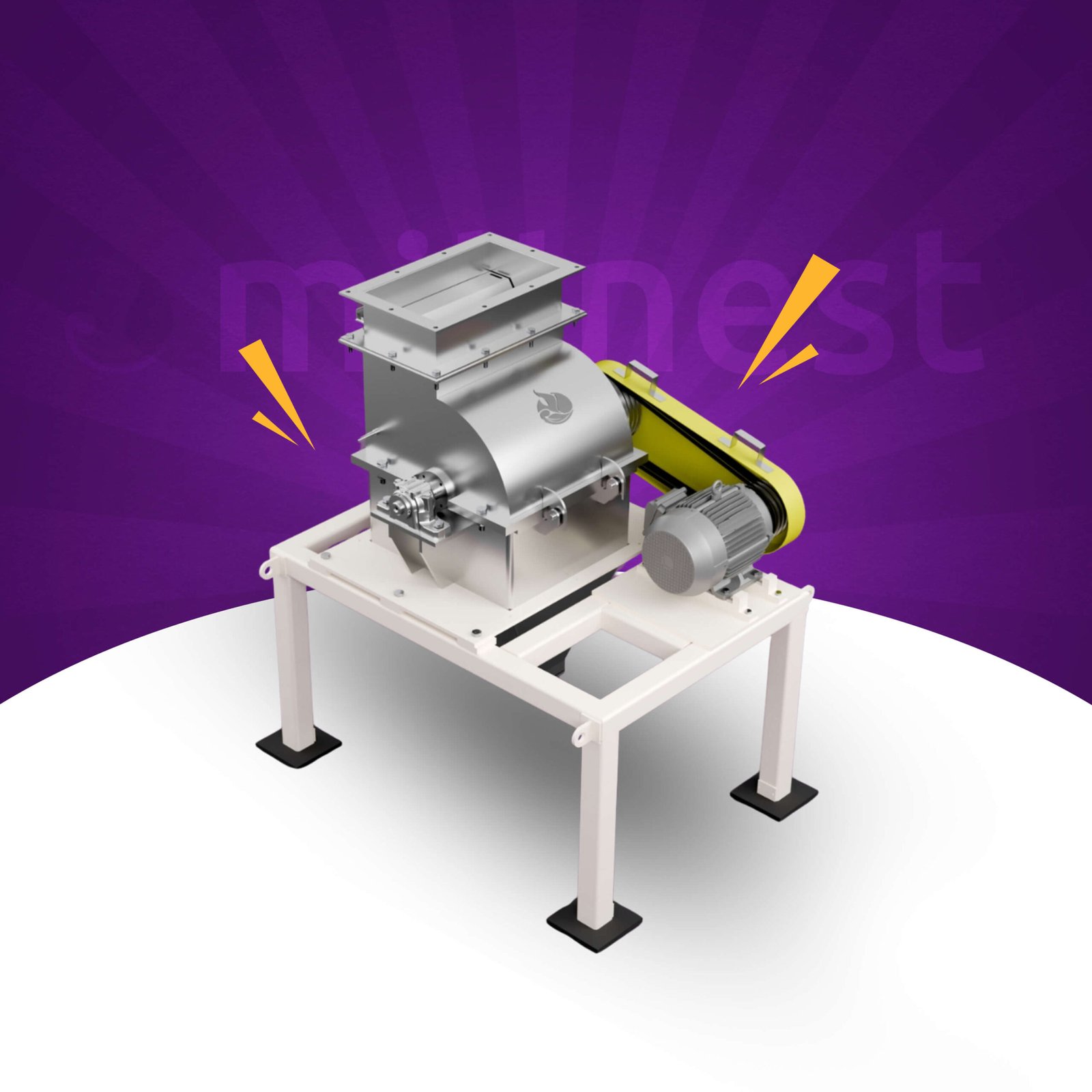
For the final classification stage — where particle size distribution must be precisely controlled for extraction efficiency — MillNest’s Air Classifying Mill (ACM) integrates grinding and classification in a single unit, delivering tight particle size control with reduced overgrinding and separation of fine particles that would otherwise create extraction inconsistency.
Why Controlled Atmosphere Processing Matters
Curcumin oxidises in the presence of oxygen — particularly at elevated temperature and in the presence of light. While full inert-atmosphere milling is a specialised requirement, process design that minimises unnecessary air exposure during and after grinding is good practice for extraction-grade turmeric.
This includes: contained grinding chambers that limit atmospheric exposure, enclosed conveying paths between mill and storage, and minimising the time that freshly milled turmeric remains in open contact with ambient air before packaging or transfer to extraction.
MillNest ACM: Tight Particle Size Control for Extraction-Grade Turmeric
The Air Classifying Mill achieves precise size distribution through integrated air classification — combining grinding and classification in a single unit for space and cost efficiency. It separates fine particles efficiently, reducing the generation of oversized particles that create extraction inconsistency.
For turmeric destined for oleoresin extraction, the ACM provides:
- Tight particle size distribution within the target specification for solvent extraction
- Reduced overgrinding that would create excessive fines and over-extraction
- Consistent, repeatable output across batches — essential for export-grade production where specification tolerance is narrow
- SS 304/316 construction throughout product-contact surfaces
MillNest Universal Mill: Multi-Mode Operation for Pre-Extraction Milling
The Universal Mill’s adjustable particle size control and multi-mode operation (impact, shear, attrition) make it the appropriate tool for the pre-classification milling stage — where the objective is controlled size reduction without thermal damage to the curcuminoid fraction.
Its suitability for heat-sensitive materials is a stated design parameter: the Universal Mill is specifically noted in MillNest’s equipment specification as preserving natural properties like oils in spices — directly applicable to curcumin and volatile oil preservation in extraction-grade turmeric.
Integration with TEMA Steam Sterilization for Export-Compliant Decontamination
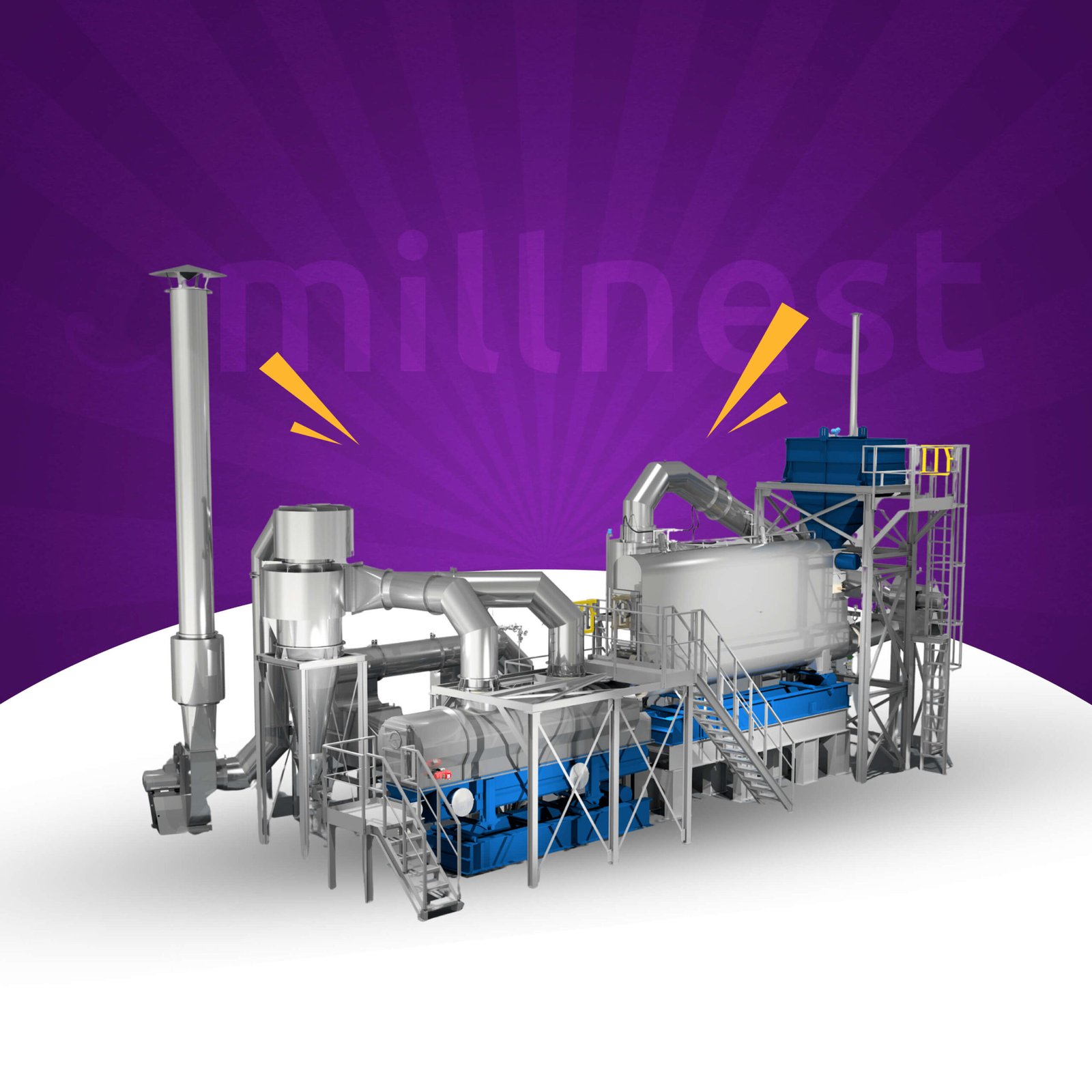
Pharmaceutical-grade and premium food-grade oleoresin requires microbial-clean input material. TEMA’s HTST natural steam sterilization — used by MillNest as part of its integrated EPC offering — achieves microbial reduction up to Log 6 using pure steam at 102–122°C for 20–40 seconds, with no chemical residue.
For turmeric destined for pharmaceutical oleoresin extraction, decontamination without chemical treatment is not just preferable — it is a regulatory requirement in many export markets. Chemical fumigation introduces residue management obligations. Irradiation affects the curcuminoid profile and is not permitted in several markets. Natural steam sterilization avoids both complications.
The TEMA process is followed by cooling in a fluidized bed using sterile air — preserving moisture and texture, preventing recontamination, and ensuring the material is ready for immediate milling or storage without quality loss.
Pepper Oleoresin: Similar Principles, Different Sensitivities
The oleoresin opportunity extends beyond turmeric. Black pepper oleoresin — standardised for piperine content — is used in pharmaceutical bioavailability applications (piperine is widely used as a bioavailability enhancer in supplement formulations) and in premium flavour extraction.
Pepper oleoresin processing shares the fundamental principles of extraction-grade milling: tight particle size control, sub-45°C temperature management to preserve piperine, and decontamination for export compliance. The difference is in the specific heat threshold (above 45°C, piperine degrades significantly faster than curcumin), which makes temperature management even more critical in pepper oleoresin applications.
MillNest’s Universal Mill in low-shear mode is the appropriate configuration for pre-extraction pepper milling — combining the fibrous hull reduction capability needed for black pepper with the thermal management required for piperine retention.
Equipment Selection Checklist for Oleoresin-Grade Processing
Before configuring a turmeric or pepper oleoresin production line, verify:
☐ Primary mill provides tight, classifiable particle size distribution — not just average fineness ☐ Milling system can maintain sub-45°C chamber temperature at commercial throughput ☐ Product-contact surfaces are SS 304 minimum; SS 316 for pharmaceutical compliance ☐ Post-milling discharge and handling path is enclosed — minimising atmospheric oxidation exposure ☐ Decontamination system uses non-chemical method appropriate for pharmaceutical input material ☐ Equipment supports batch traceability documentation for export compliance ☐ EPC supplier has demonstrated experience with extraction-grade processing requirements
Conclusion
Turmeric oleoresin extraction is one of the highest-value segments in Indian spice processing. The yield, purity, and consistency of your oleoresin output — and therefore your price realisation — is substantially determined by the milling equipment and process design upstream of the extraction vessel.
Investing in extraction-grade grinding is not a cost addition. It is a yield and price improvement that compounds across every batch.
MillNest designs and supplies complete EPC solutions for extraction-grade turmeric and pepper processing — from individual mill selection to turnkey plant design with integrated TEMA decontamination.
Book an Equipment Audit → www.millnest.com | namaste@millnest.com | +91 733 0000 173