




Spice Processing Plant Modernisation Guide : Retrofit, Refurbish, or Replace?
Every spice plant owner reaches the same inflection point eventually.The machines are older. Maintenance costs are climbing. A compliance notice has arrived, or a large buyer has asked questions about your facility that you couldn’t answer confidently. The equipment is still running — but something needs to change.
The question is what, in what order, and at what cost.
This guide consolidates everything a mid-size Indian spice processor needs to make that decision well. It covers the full range of modernisation options — equipment retrofit, machine refurbishment, and phased replacement — with the frameworks, cost benchmarks, and decision tools to choose the right path for your specific situation.
If you are looking for a single reference to anchor your plant modernisation planning, this is it.
Why Modernisation Can’t Wait
The pressure to modernise Indian spice processing infrastructure is coming from three directions simultaneously, and all three are intensifying.
Regulatory tightening. FSSAI compliance requirements have expanded significantly in scope and enforcement over the past five years. Dust containment standards, food-contact surface specifications, traceability documentation, and sanitation design requirements have all moved. Facilities that passed audits five years ago with their current equipment are finding those same machines flagging observations today.
Buyer specification upgrades. Organised retail, QSR chains, and export markets — particularly the Gulf, EU, and US — have raised the bar on supplier facility standards. Machinery age, hygiene design, and process documentation are all part of buyer qualification conversations in ways they weren’t a decade ago.
Competitive cost pressure. The processors gaining ground in Indian spice markets are running tighter cost-per-kg numbers, driven by energy efficiency gains, reduced rework rates, and lower unplanned downtime. Legacy equipment running on degraded components and oversized energy consumption is a structural cost disadvantage — one that compounds every month it continues.
The answer to these pressures is not necessarily spending the most. It is spending correctly. And that starts with understanding the three modernisation options available to you.
Option 1: Equipment Retrofit — Upgrade What You Have
What Retrofit Means
An equipment retrofit adds new capability to an existing machine — upgraded control systems, improved drive assemblies, enhanced dust containment, or precision instrumentation — without replacing the machine itself.
Retrofit is the right answer when a machine’s structural core is sound but its performance, efficiency, or compliance profile needs updating. It is fundamentally different from refurbishment (which restores existing capability) and from replacement (which starts fresh).
The 5-Question Retrofit Feasibility Framework
Before committing to any retrofit investment, five questions determine whether the option is genuinely viable:
- Structural integrity — Is the main frame, body casting, or vessel structurally sound? Fatigue cracks, deformation, or compromised food-contact surfaces that cannot be rehabilitated make retrofit unviable regardless of other factors.
- Parts and component availability — Can upgraded components — new control panels, modern drive systems, sensors, upgraded grinding elements — be integrated into the existing frame? Poor parts availability creates a retrofit that will be difficult to maintain.
- Compliance gap — How large is the gap between the machine’s current specification and what current and near-term regulatory standards require? A bridgeable gap supports retrofit. A fundamental design non-conformity typically does not.
- Throughput gap — Is the machine underperforming because of wear and maintenance issues (solvable through retrofit or refurbishment) or because the design is fundamentally mismatched to current production requirements (not solvable without replacement)?
- ROI horizon — Does the retrofit investment pay back within an acceptable window given the machine’s remaining useful life?
The Retrofit vs Replace Decision Matrix
Assessment Factor | Favour Retrofit | Favour Replacement |
Structural condition | Sound frame, no fatigue | Cracked, deformed, or corroded body |
Parts availability | Available locally or regionally | Obsolete, no viable equivalents |
Compliance gap | Minor, bridgeable with upgrades | Fundamental design non-conformity |
Throughput gap | Maintenance-driven loss | Design capacity limitation |
Remaining asset life | 5+ years | Under 3 years |
ROI payback | Retrofit payback ≤ 18 months | Replacement payback is shorter |
Three or more factors pointing in the same direction typically settles the decision. When the matrix is split, the ROI payback period breaks the tie.
The ROI Payback Formula
Payback Period = Total Investment ÷ (Annual Savings + Annual Revenue Uplift)
Annual savings include: reduced downtime cost, lower maintenance spend, energy efficiency gains, and avoided compliance penalty exposure. Annual revenue uplift accounts for capacity restoration or quality improvement that unlocks better pricing or new customer segments.
A retrofit with a short payback period on a machine with significant structural life remaining is almost always the superior decision over a replacement with a longer payback — even if the replaced machine has a longer nominal service horizon. Run both numbers before deciding.
For a detailed worked example and the full retrofit vs replace framework, read: Retrofit or Replace? The Framework Every Spice Plant Owner Needs →
Option 2: Machine Refurbishment — Restore What You Have
What Refurbishment Means
Machine refurbishment is a structured mechanical overhaul that restores an existing machine to a defined performance standard — typically close to, or at, original manufacturer specification.
Where retrofit adds new capability, refurbishment restores existing capability. A well-executed refurbishment extends equipment life by 5 to 8 years at a fraction of new equipment cost.
The Refurbishment Process
A professional equipment refurbishment programme follows six stages:
- Strip down — Full disassembly to the structural frame
- Condition assessment — Every component inspected against dimensional and performance tolerances, with written report
- Parts replacement — Worn or failed components replaced; retained components cleaned, treated, and prepared
- Reassembly and alignment — Rebuilt to manufacturer specification with alignment certificates at each sub-assembly stage
- Performance testing — Tested under load against defined benchmarks before return to plant
- Installation and handover — Commissioned in the plant environment with updated maintenance documentation
What Gets Replaced vs What Gets Retained
Component | Typically Replaced | Typically Retained |
Grinding elements (hammers, screens, blades) | Always | — |
Bearings and seals | Always | — |
Drive belts | Always | — |
Pulleys and shafts | If beyond tolerance | If within spec |
Food-contact liners | If non-compliant or worn | Compliant SS in good condition |
Main frame and body | If structurally compromised | Primary retention item |
Control panel | If degraded or non-compliant | Modern panels often retained |
Motor | If efficiency or condition warrants | IE3/IE4 motors often retained |
Refurbishment Cost Benchmarks
Rather than quoting specific figures — which vary by machine age, configuration, and condition — the useful benchmark is the relationship between refurbishment cost and new equipment cost.
A professionally executed refurbishment typically costs between 25% and 45% of the equivalent new machine price, depending on machine type and the scope of parts replacement the condition assessment reveals. Machines with higher structural complexity or more food-contact surface area tend toward the upper end of that range. Simpler mechanical units with sound frames and limited wear typically sit at the lower end.
The equipment upgrade ROI case becomes compelling when the refurbishment cost falls well below the 45% threshold, the machine has 5 or more years of structural life remaining, and post-refurbishment performance can be verified against a defined standard.
For machine-specific cost guidance and the full refurbishment decision framework, read: Equipment Refurbishment for Spice Processing: What It Costs, What It Covers, and When It Makes Sense →
Option 3: Phased Modernisation — Upgrade in Sequence
Why Sequencing Matters
The most common modernisation mistake Indian spice processors make is not choosing the wrong option — it is trying to do everything at once.
A structured phased modernisation approach distributes capital across 12–18 months, lets early phases fund later ones through efficiency gains, and ensures that each upgrade builds on a stable foundation rather than being layered onto unresolved problems.
The 5-Phase Modernisation Sequence
Phase 1: Controls and Visibility (Months 1–3) Install monitoring instrumentation and data logging before touching any mechanical component. You cannot optimise what you cannot measure. Returns typically begin within 6–8 weeks as hidden losses become visible and actionable.
Phase 2: Wear Parts and Consumables Overhaul (Months 3–6) Restore all high-run machines to rated performance through comprehensive wear parts replacement — grinding elements, bearings, seals, drive components. Throughput recovery of 15–25% is typical. Returns begin from the first shift post-completion.
Phase 3: Capacity and Efficiency Upgrades (Months 6–10) Motor upgrades, feed system optimisation, dust extraction improvements. Phase 1 data tells you exactly where to spend. Phase 2 mechanical restoration means efficiency upgrades are not wasted on degraded machines.
Phase 4: Compliance and Food Safety (Months 10–14) Surface upgrades, air handling improvements, traceability system implementation. Addressed after operational headroom is created by Phases 1–3. This is the phase that unlocks new buyer relationships and export opportunities.
Phase 5: Selective Replacement (Months 14–18) Only now — with data, restored performance, and compliance in place — does replacement happen. And only for the machines that genuinely cannot be brought to spec any other way. Typically 30–50% fewer replacements than initially assumed.
Phased Cash Flow Logic
The financial logic of this sequence is straightforward. Early phases carry lower investment requirements and faster payback. The efficiency gains and downtime savings they generate begin accumulating within weeks. By the time Phase 4 and Phase 5 capital is required, the programme is partly self-funding — the plant’s own improved performance is contributing to the modernisation budget.
This structure also makes modernisation financing significantly more accessible. Lenders can see milestone-based drawdowns, demonstrated ROI from earlier phases, and a structured repayment horizon rather than a single large upfront capital request.
For the full narrative, composite case study, and detailed phase rationale, read: The Phased Modernisation Playbook: How Indian Spice Processors Are Upgrading Without Shutting Down →
Legacy System Integration: VFDs, Digital Controls, and IoT Sensors
One of the most overlooked dimensions of spice processing plant modernisation is the integration layer — specifically, how older mechanical equipment can be brought into a more digitally connected plant environment without full replacement.
Three technologies are driving the most cost-effective legacy equipment upgrades in Indian food processing currently:
Variable Frequency Drives (VFDs). Installing VFDs on existing motors allows precise control of grinding speed, reducing energy consumption by 15–30% on variable-load applications and extending motor life significantly. Payback is typically achieved within 10–16 months at normal production volumes and current electricity tariffs.
Digital control panel upgrades. Replacing analogue or relay-based control panels with PLC-based systems adds operator visibility, alarm management, and basic data logging without touching the mechanical machine. The investment is modest relative to the operational benefit, and the upgrade is compatible with virtually any existing machine frame.
IoT sensors and condition monitoring. Vibration sensors, temperature monitors, and power meters installed on existing equipment provide early warning of developing mechanical issues — reducing unplanned downtime and giving maintenance teams the lead time to plan interventions rather than react to failures.
These integrations are backward compatible — they work with what is already installed, add measurable value immediately, and create the data infrastructure that makes every subsequent modernisation decision more precise.
Explore MillNest’s Legacy Integration Services →
MillNest Originals: Premium Refurbished Equipment
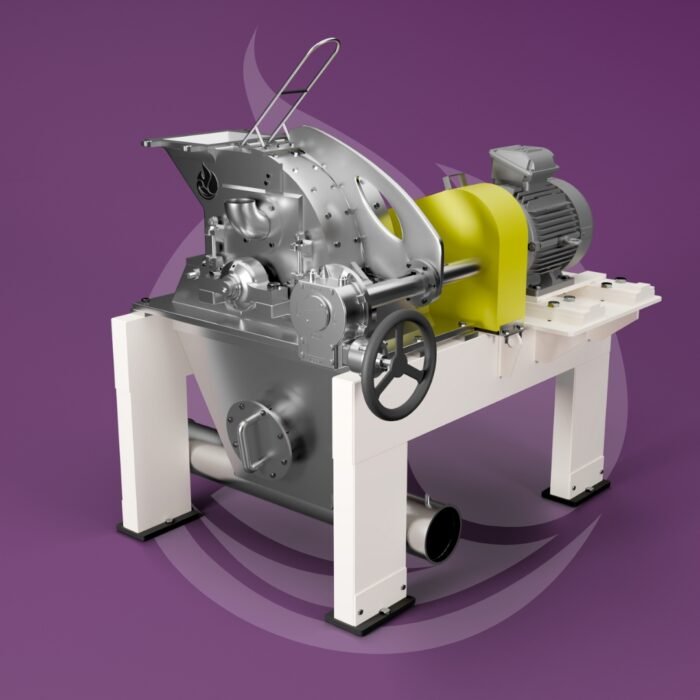
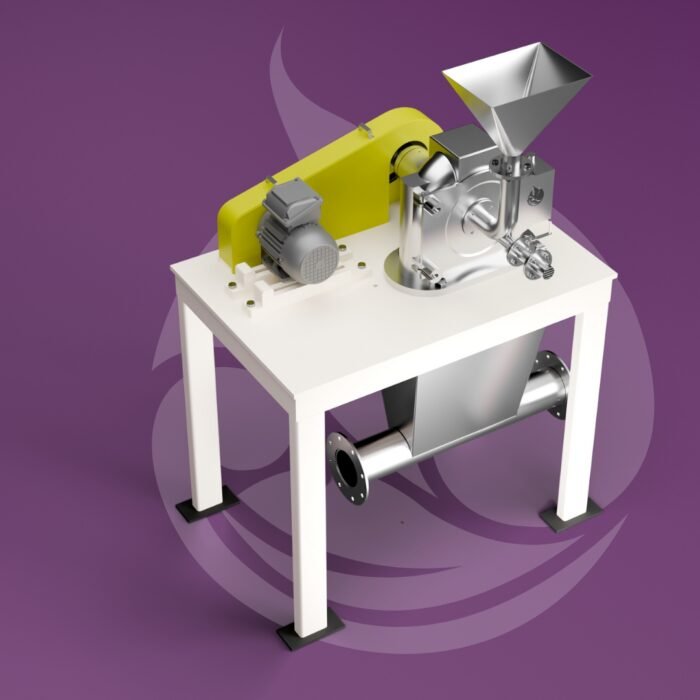
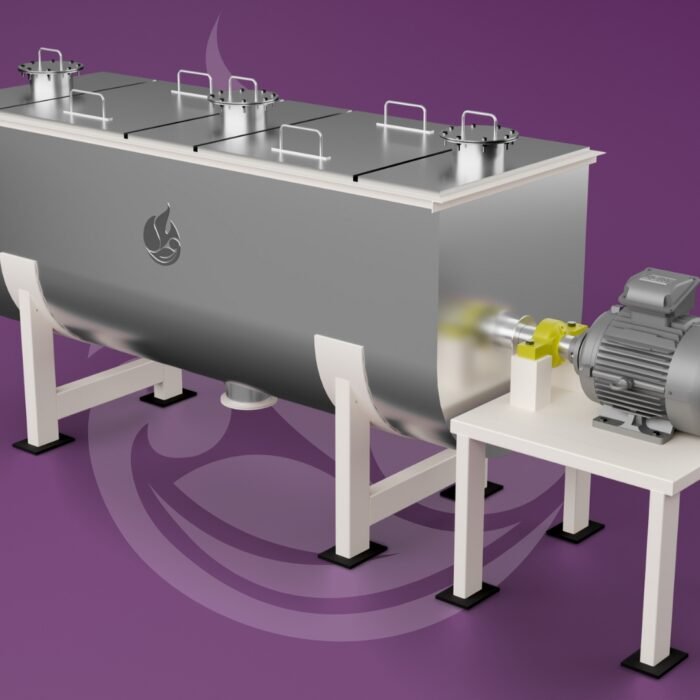
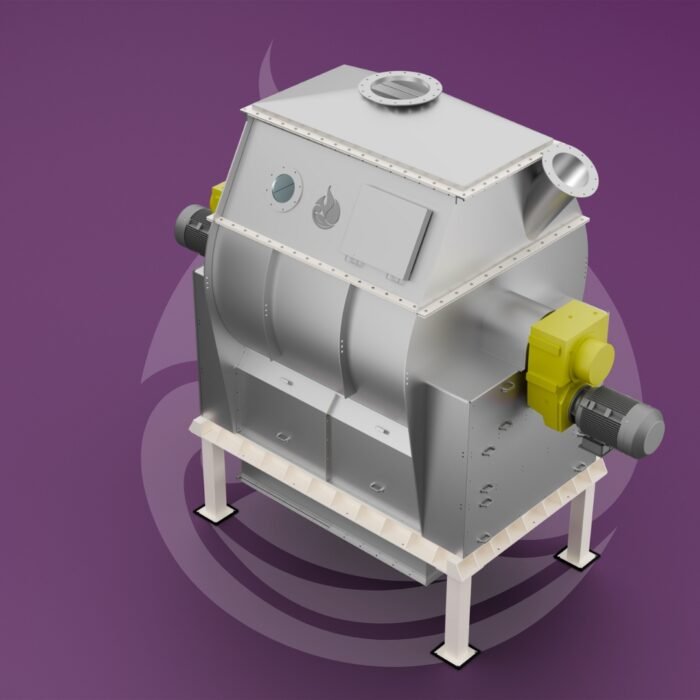
For plant owners who need upgraded equipment but want the economics of refurbishment rather than new machinery, MillNest Originals is a structured programme delivering professionally refurbished spice processing machines to a defined performance standard.
Every machine in the MillNest Originals programme goes through the full six-stage refurbishment process — strip, assess, replace, rebuild, test, commission — and is backed by a 12-month workmanship warranty.
What distinguishes MillNest Originals from a general workshop overhaul:
- Written condition report and scope approval before work commences
- OEM-specification or upgraded replacement parts, sourced and documented
- Performance test data at sign-off against defined benchmarks
- 12-month workmanship warranty with on-site support
- Optional integration with phased modernisation planning for multi-machine facilities
MillNest Originals machines are available for direct purchase as upgraded units, or as a refurbishment service applied to the customer’s own equipment.
Browse the MillNest Originals Programme →
The Modernisation Toolkit: Free Download
To support plant owners working through their own modernisation planning, MillNest has developed a practical toolkit covering the key decision frameworks in this guide.
The toolkit includes:
- Retrofit Feasibility Checklist — The 5-question framework as a scored assessment for your specific machine
- ROI Calculator — Pre-built spreadsheet applying the payback formula to retrofit, refurbishment, and replacement scenarios
- Phased Modernisation Planner — Timeline template for sequencing your upgrade programme across 12–18 months with investment and return projections
The toolkit is available at no cost for qualified spice processors.
Download the Free Modernisation Toolkit →
Choosing Your Path: A Quick Reference
Your Situation | Recommended Starting Point |
Machine underperforming but structurally sound | Refurbishment assessment first |
Machine sound but controls/efficiency outdated | Retrofit — VFD, panel, or sensor integration |
Multiple machines at different lifecycle stages | Phased modernisation planning |
One or two machines at genuine end of life | Targeted replacement within phased plan |
Compliance gap identified in audit | Phase 4 compliance upgrade + feasibility assessment |
Starting from scratch — no prior assessment | Free modernisation toolkit + assessment |
Start With a Free Assessment
The right modernisation path for your plant depends on your specific equipment, your production requirements, your compliance position, and your capital horizon. There is no universal answer — but there is a structured way to find yours.
MillNest offers a no-cost plant modernisation assessment for qualified spice processors, covering all three options — retrofit, refurbishment, and phased replacement — with a written recommendation and indicative investment ranges.
The assessment takes one site visit. The report is delivered within five working days.
Request Your Free Modernisation Assessment Today