
- Home /
- Equipments
Precision Engineering for Powder Processing
Seven machines. Two categories. One manufacturing standard — SS 304/316 food and GMP construction, every unit. From coarse-to-ultra-fine size reduction to gentle blending and conditioning, each MillNest machine is designed around its specific mechanism, not around a generic “powder processing” label.
7 Equipment Models
SS 304 / 316
GMP Grade
Easy Access Maintenance
Four distinct milling mechanisms — each designed for a specific material type, particle size target and thermal sensitivity. The right mill is not the most powerful one; it is the one whose mechanism matches the material’s fracture behaviour.
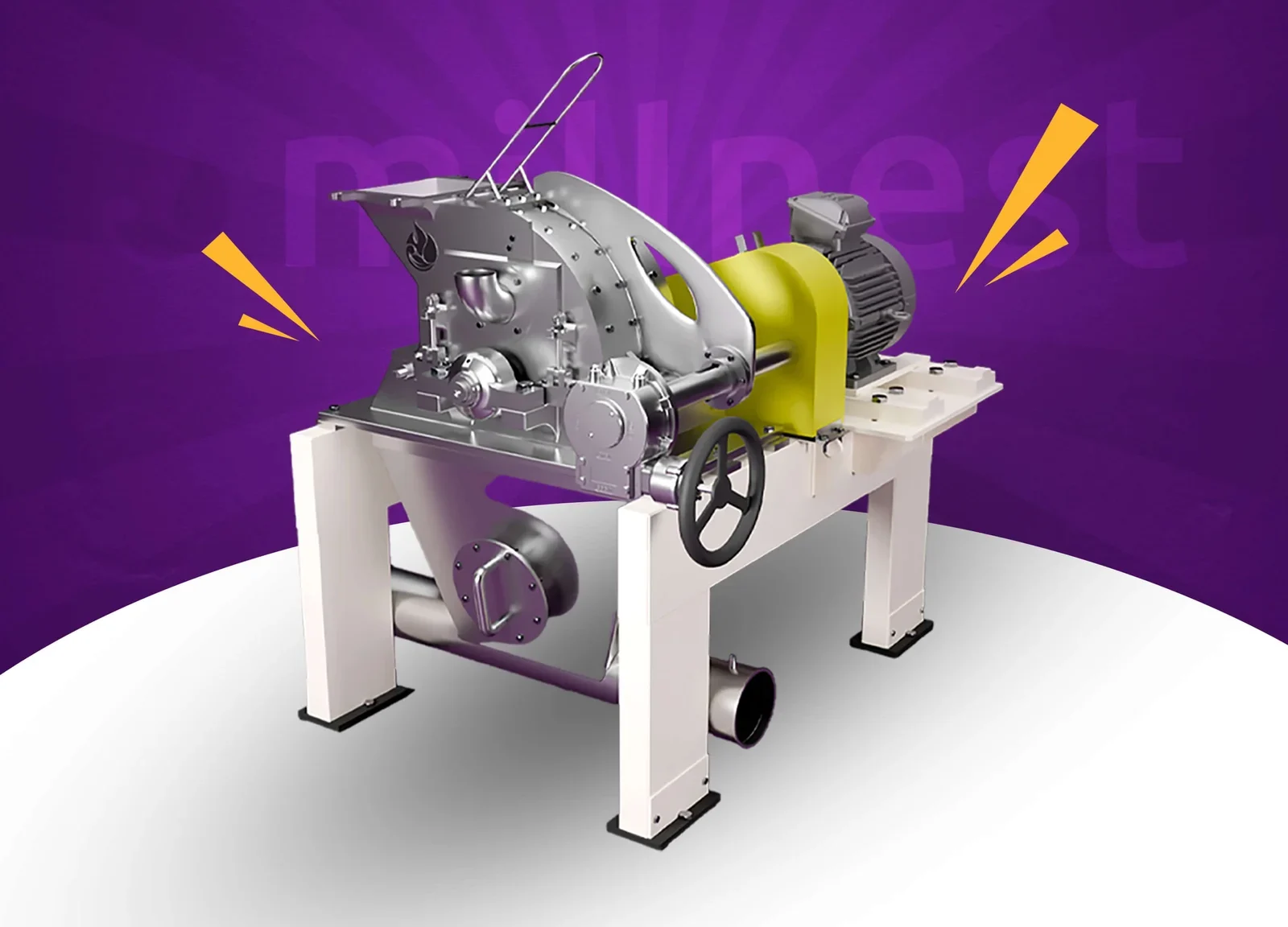
Hammer Mill
High-speed impact milling for free-flowing powders
High-speed rotating hammers fracture material against an interchangeable screen — particle size is controlled by screen aperture and rotor speed. The standard workhorse for spice grinding, grain milling and chemical powder size reduction at throughputs from 50 kg/hr to several tonnes per hour.
- 100 – 6,000+ kg/hr
- Adjustable screen
- SS 304 / 316
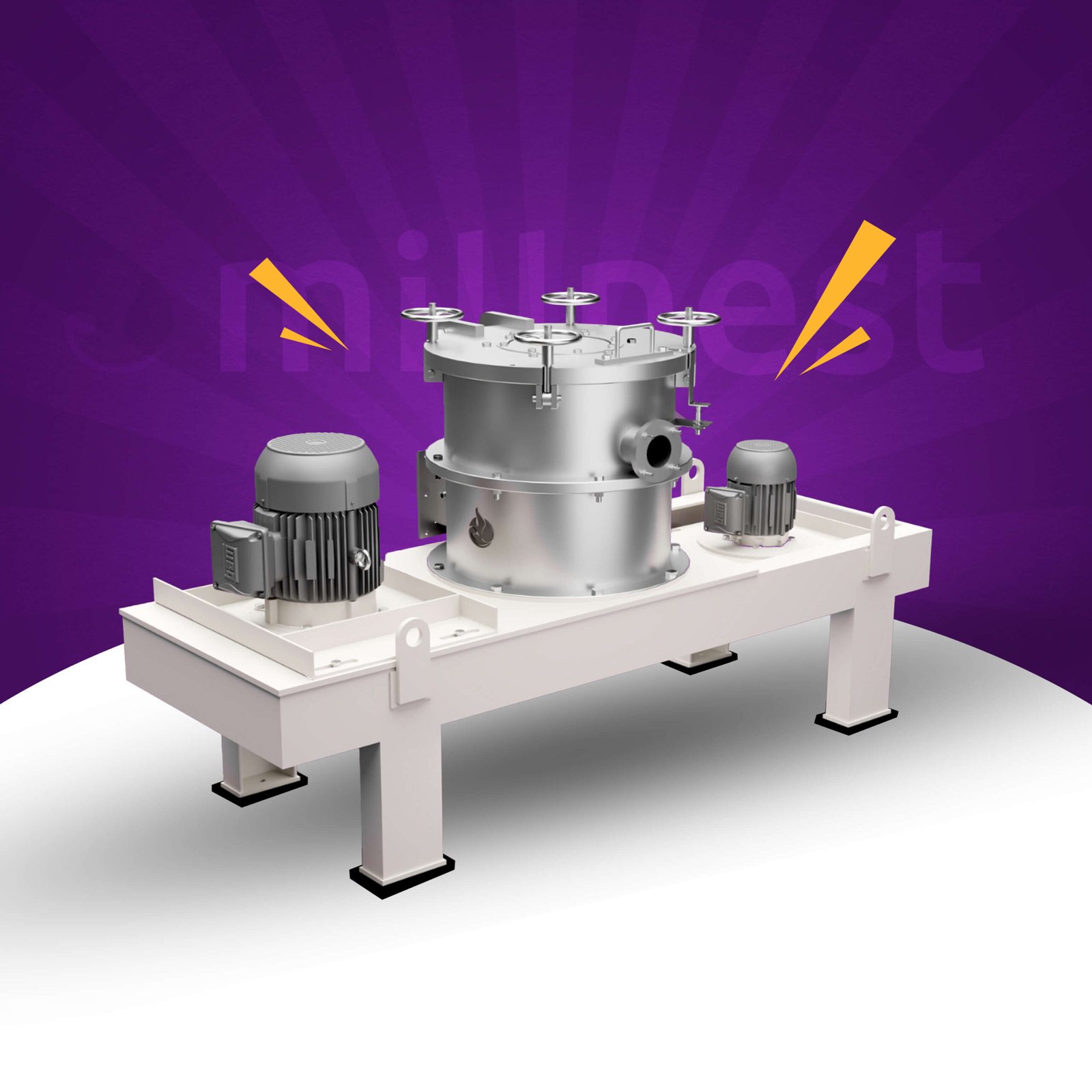
Air Classifying Mill
D90 specification milling — no screen drift
Combines grinding and air classification in one unit. The integrated classifier wheel recirculates oversize material continuously, holding D90 to specification across the full campaign regardless of equipment wear state. Eliminates the particle size coarsening that occurs in screen-based mills as screens wear.
- D50 down to 5 µm
- Classifier-controlled D90
- In-process air cooling
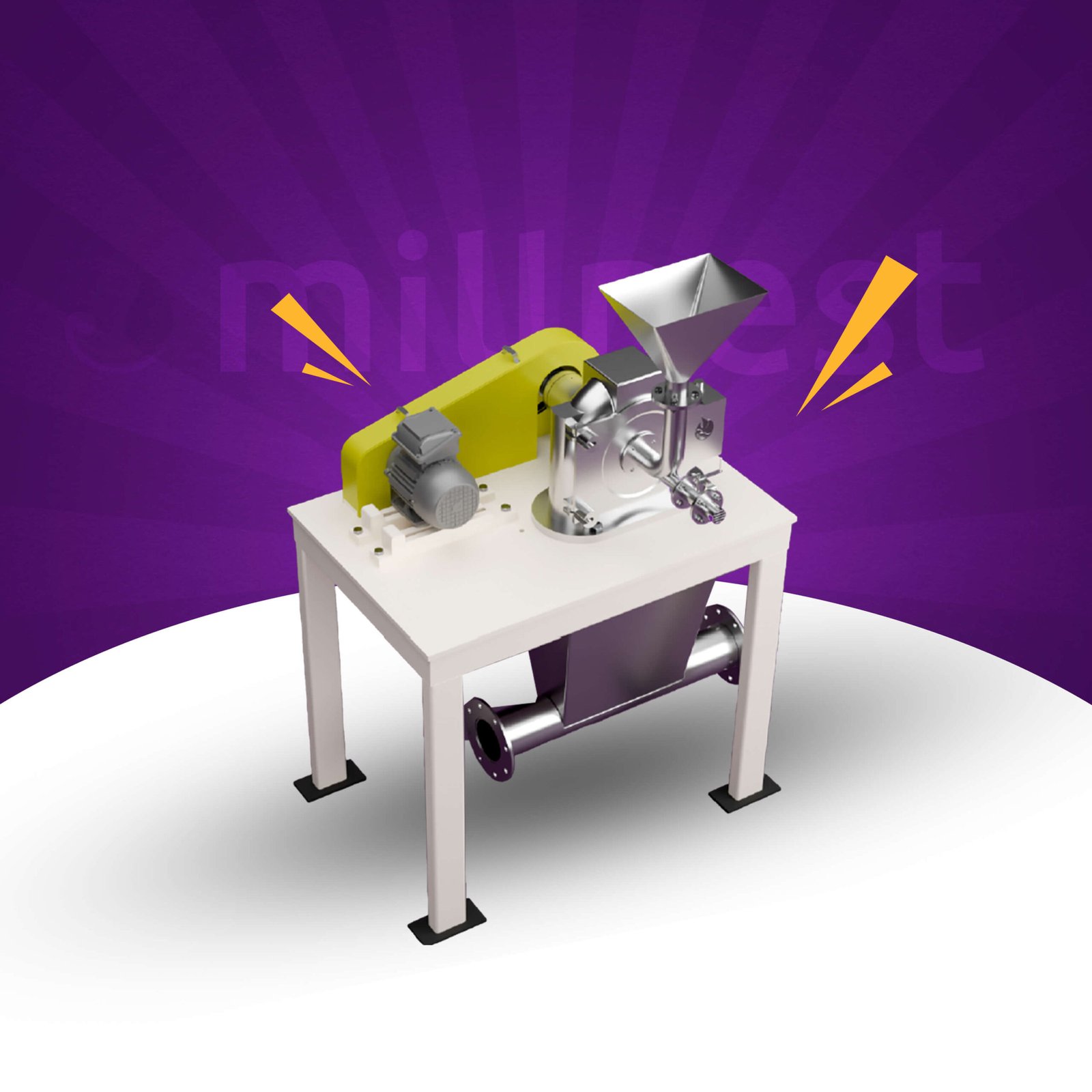
Universal Mill
Multi-mode milling — impact, shear and attrition
Operates in impact, shear and attrition modes — selectable by changing the rotor and stator configuration. Suited to heat-sensitive materials where low heat generation is required alongside particle size flexibility. Single machine handles coarse granulation to medium-fine powder across a range of applications.
- 3 milling modes
- Low heat generation
- Adjustable particle size
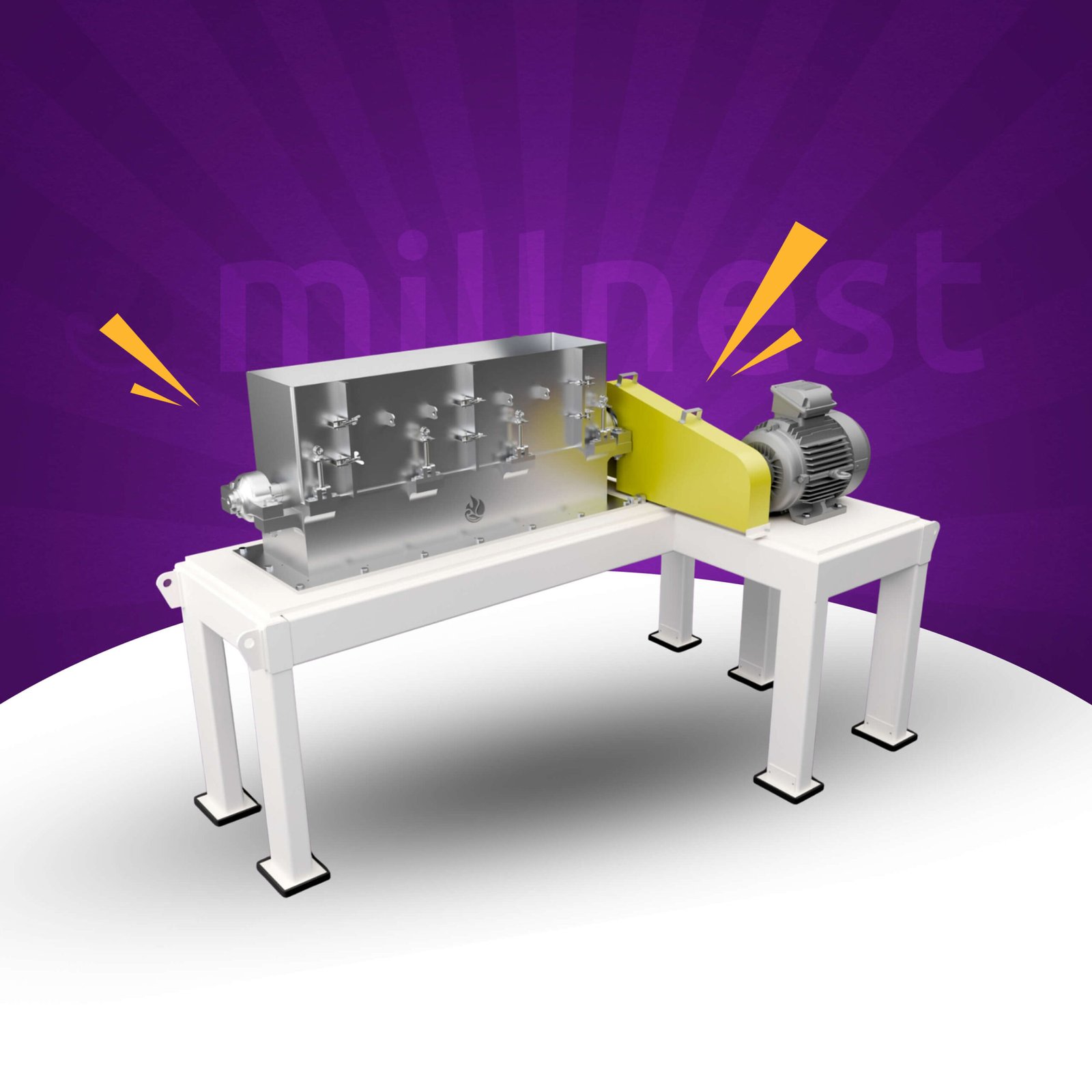
Cutter Mill
Scissor-cut for fibrous, leafy and soft materials
- Scissor-cut geometry
- Fibrous materials
- Low energy input
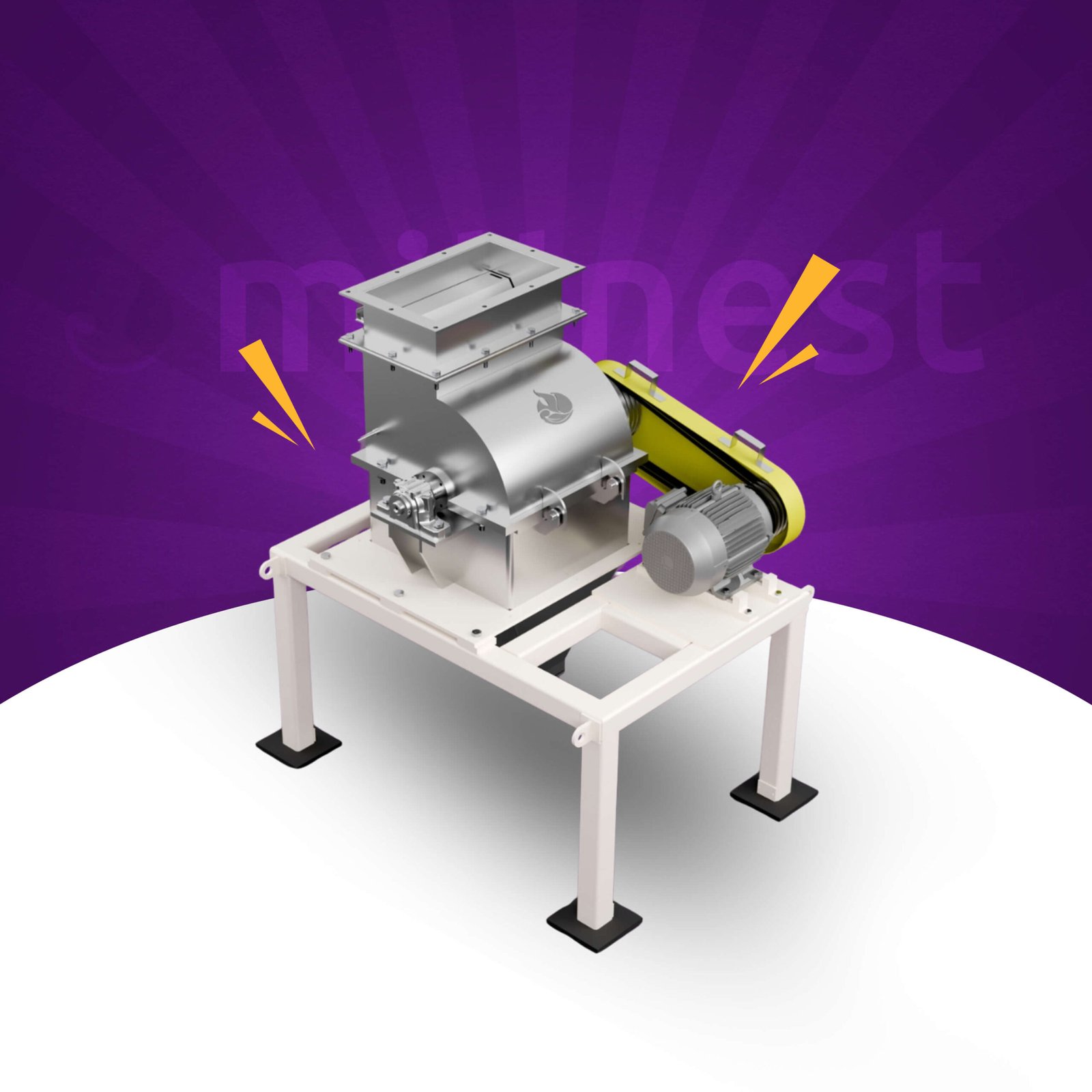
Delumper
Zero net particle size reduction — free-flow restoration
A slow-speed rotor at 50–300 RPM breaks caked and agglomerated powders back to free-flowing condition without reducing particle size. Installed inline at hopper discharge, blender inlet or packing station, the MLUM eliminates variable mill feed, bridging and inconsistent fill weights caused by storage caking.
- 50 – 5,000 kg/hr
- 50–300 RPM
- Zero PSD reduction
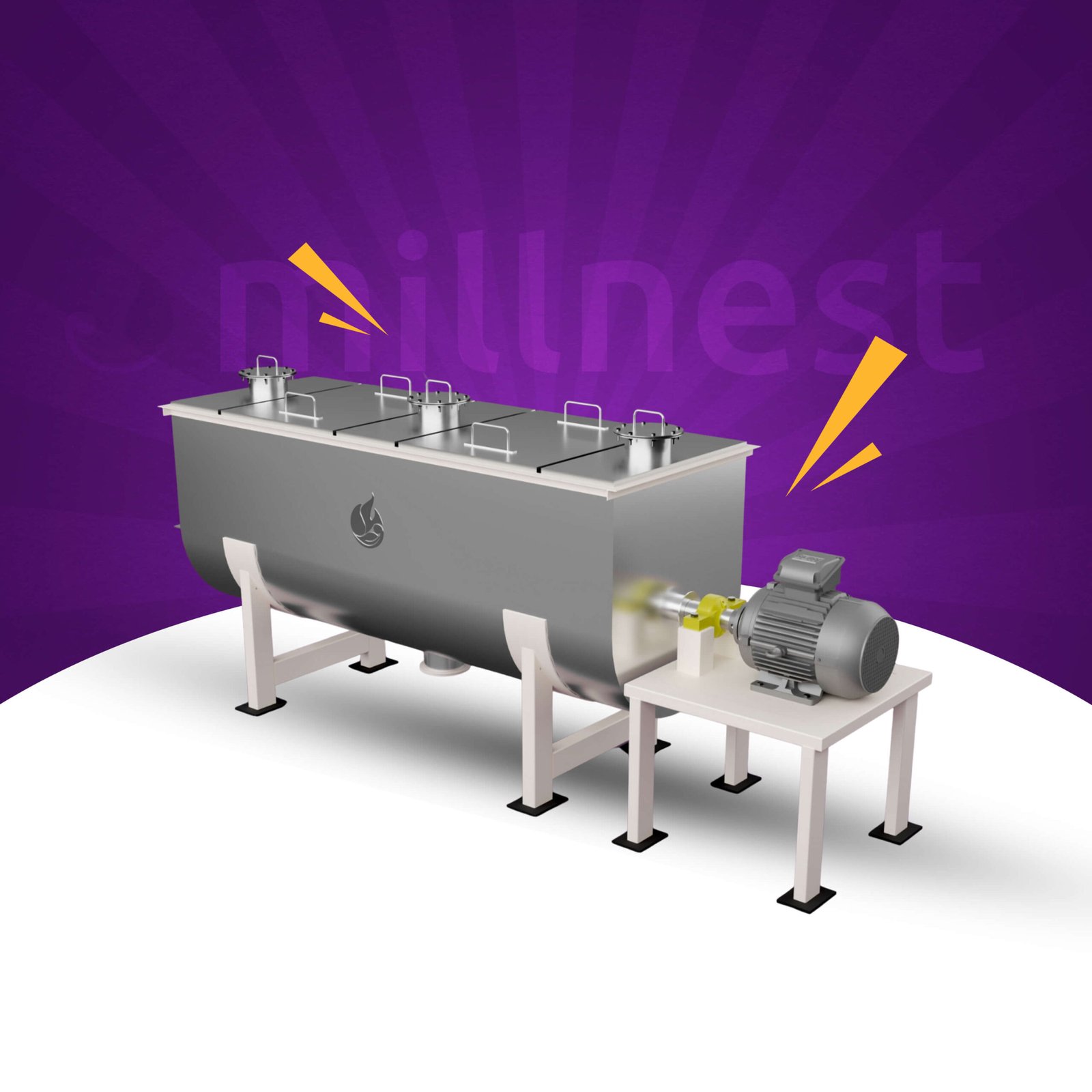
Ribbon Blender
Counter-current double-helical blending — no dead zones
The outer ribbon moves material inward; the inner ribbon simultaneously moves material outward. This counter-current action produces uniform blending of free-flowing dry powders in 5–15 minutes. The flush bottom discharge valve empties the trough completely — no residual heel between batches.
- 50 – 20,000 L
- ±1–3% RSD e
- Flush discharg
Paddle / Plough Blender
Cohesive, moist and sticky materials the ribbon cannot handle
Staggered angled paddles deliver three-dimensional material movement — lifting, folding and distributing cohesive powders, moist granules and sticky ingredients that ribbon blenders cannot process. Also the conditioning equipment for pulse processing: uniform oil and water application to whole chana, toor and urad before dehusking.
- 50 – 10,000 L
- 3–10 min blendy
- Inline liquid spra
Use this table to identify the right machine for your application before requesting a trial. All machines are available for material trials before capital commitment.
| Machine | Model | Category | Best For | Key Spec | Not Suited To | Detail Page |
|---|---|---|---|---|---|---|
| Hammer Mill | MHAM | Size Reduction | Free-flowing dry powder — spice, grain, chemical | Screen-controlled particle size | Ultra-fine D50 below ~40 µm; heat-sensitive without speed control | MHAM |
| Air Classifying Mill | MACM | Size Reduction | D50/D90 spec-critical applications — pigments, pharma, premium spice | Classifier-held D90, no screen drift | Very coarse outputs where a hammer mill is more economical | MACM |
| Universal Mill | MUNI | Size Reduction | Heat-sensitive materials; versatile R&D and multi-product lines | 3 selectable milling modes | Very high throughput single-product lines | MUNI |
| Cutter Mill | MCUT | Size Reduction | Fibrous herbs, leafy spices, cotyledon splitting | Scissor-cut — clean fracture, low fines generation | Hard minerals; free-flowing dry powder | MCUT |
| Delumper | MLUM | Blending & Conditioning | Storage-caked powder — pre-mill, pre-blender, pre-packer | Zero net particle size reduction | Fine grinding; not a primary size reduction machine | MLUM |
| Ribbon Blender | MRBL | Blending & Conditioning | Free-flowing dry powder blending — spice masala, premix, pharma excipients | ±1–3% RSD; flush discharge | Cohesive, moist or sticky materials | MRBL |
| Paddle Blender | MPBL | Blending & Conditioning | Cohesive, moist, sticky materials; pulse oil/water conditioning | 3D action; inline liquid spray | Very fine dry powders where ribbon gives adequate uniformity | MPBL |