
Sugar Grinding PLANT
Sugar behaves differently from every other food powder in the mill — it is thermoplastic. Above approximately 35°C, sugar crystals begin to soften and fuse at their contact points. Standard impact milling generates exactly this temperature at the screen face, causing freshly ground sugar to cake on the screen mesh, blind the aperture and produce a product that exits the mill warm, sticky and prone to lumping before it reaches the pack. Every aspect of a sugar grinding line — mill selection, anti-caking agent dosing, post-mill cooling and enclosed handling — exists to manage this single material property.
Thermoplastic-safe milling
Anti-caking agent pre-dosing
Post-mill cooling before packing
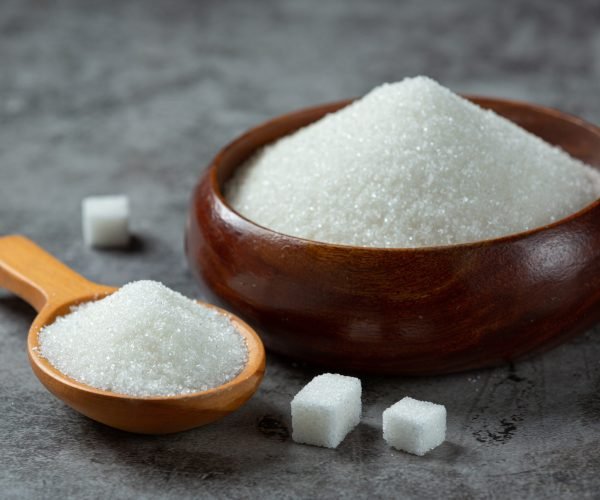
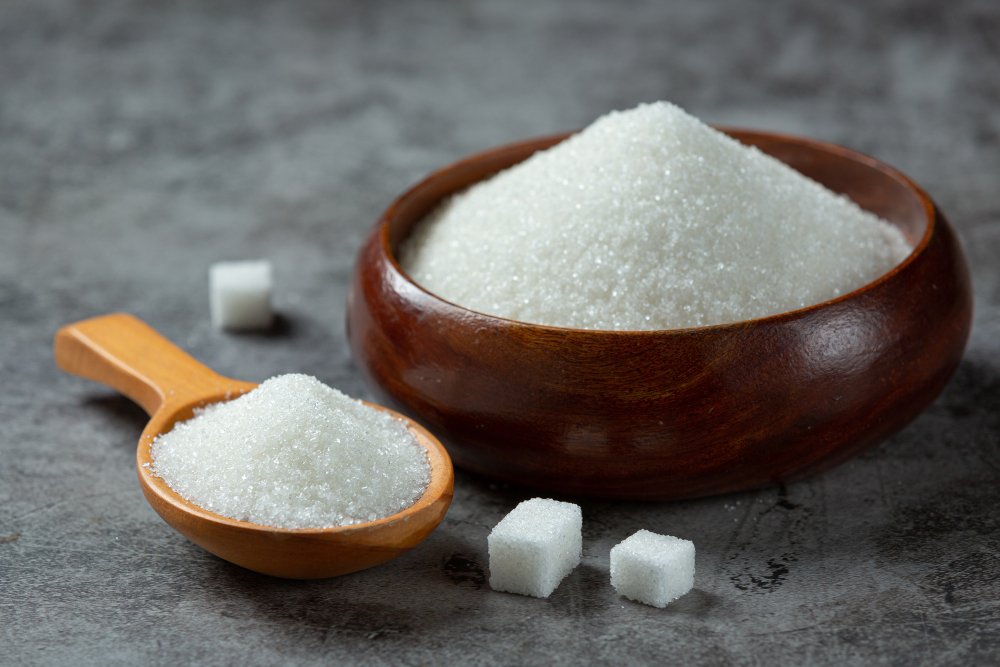
Castor Sugar (Superfine)
Finer than granulated, coarser than icing sugar. No anti-caking agent needed. Used in cold drinks, meringues and fine baking where quick dissolution matters but powder texture is not required.
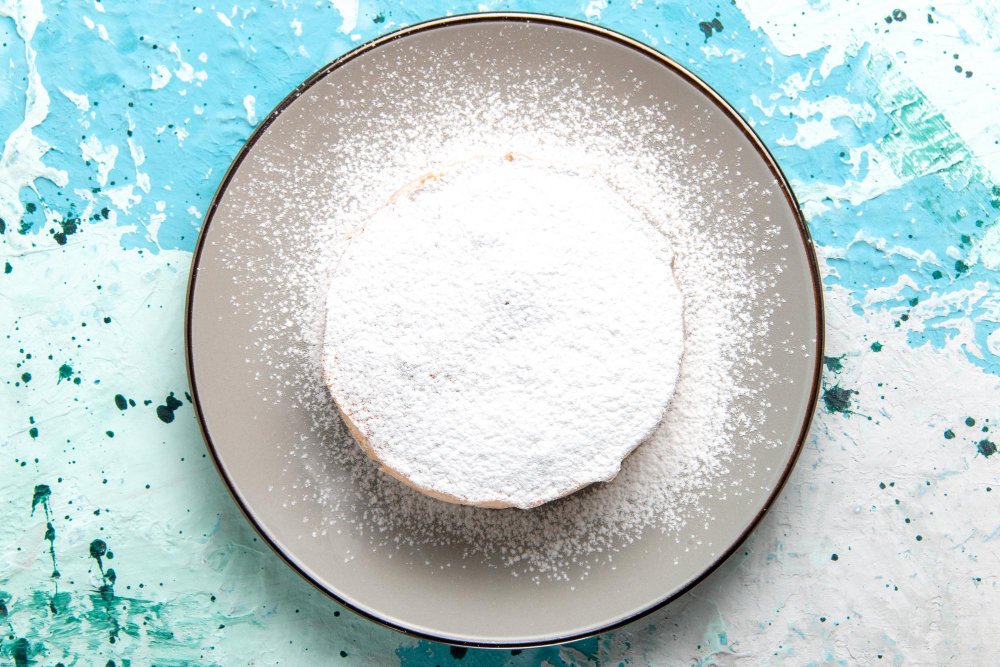
Standard Icing Sugar
Standard confectionery and bakery grade. Anti-caking agent (starch or tricalcium phosphate) at 1.5–2%. Used in frostings, glazes, dusting and most industrial bakery applications.

Fine Icing Sugar
Smooth texture for premium icings, chocolate coatings and fondant. Anti-caking agent at 2–3%. The standard export grade for confectionery manufacturers. Requires ACM for tight D90 control.
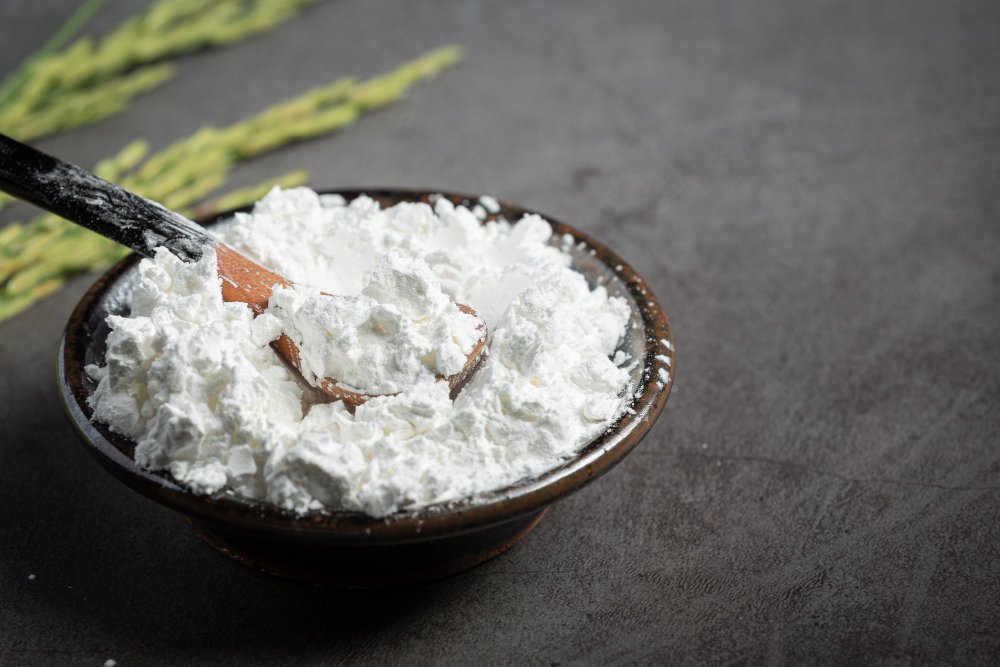
Ultra-Fine Confectionery
Highest caking risk grade. Anti-caking agent at 3% (FSSAI maximum for food use). Used in gum, nougat, chocolate fillings and premium decorative dusting. Requires fully enclosed handling line.

Pharma-Grade Sugar
Used in tablet coating, medicine globules, oral syrups and direct compression excipients. Zero starch — tricalcium phosphate or no anti-caking agent. GMP-compliant construction and batch records required.
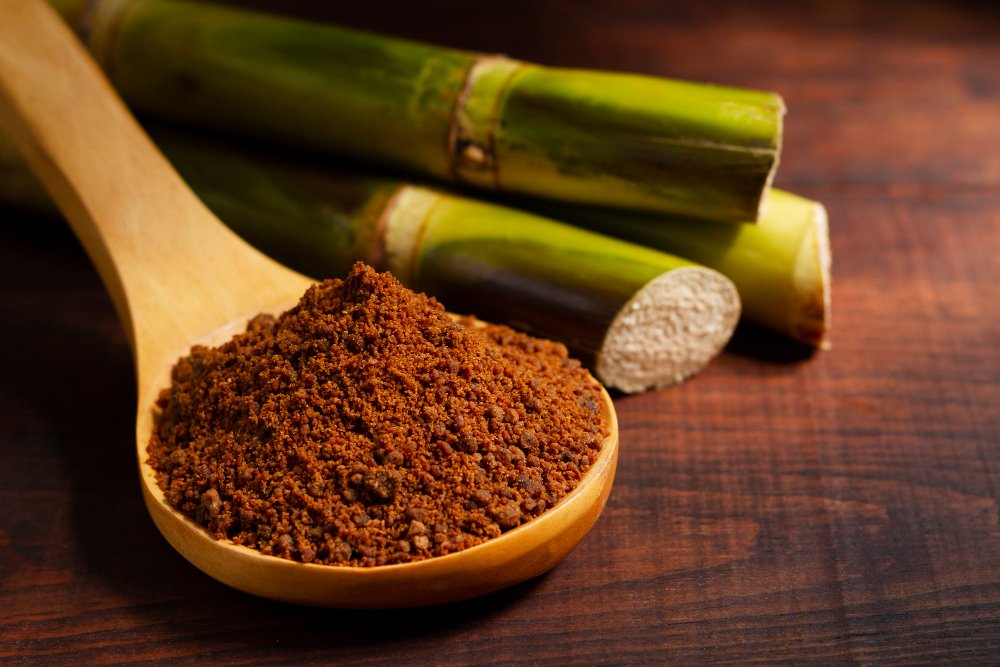
Jaggery / Raw Cane Powder
Higher moisture and mineral content than refined sugar — behaves differently in the mill. Greater caking risk from residual moisture. Used in health food, Ayurvedic and natural sweetener applications.
The sugar grinding line is built around one constraint: keep the sugar below 35°C at every stage from the hopper to the sealed pack. Every design decision — anti-caking agent timing, mill type, post-mill cooling, enclosed conveying — serves this single requirement.
Particle Size (X-Grade)
6X (~40 mesh) to 12X (~150–200 mesh)
The X-grade designation is the primary specification for confectionery-grade powdered sugar — higher X means finer powder. 10X (100–120 mesh) is the most common export and industrial confectionery standard. Particle size directly affects texture in the finished application — coarser powder produces visible graininess in icing; finer powder dissolves instantly but has higher caking risk. The ACM's integrated classifier delivers tight D90 without screen wear drift.
Anti-Caking Agent Type & Level
Food grade: starch 1.5–3% max (FSSAI); pharma: TCP or nil
Anti-caking agent selection depends entirely on the end application. Corn starch or tapioca starch at 1.5–3% is standard for food-grade icing sugar — it absorbs moisture and physically separates sugar particles. For pharma-grade sugar used in tablet coating and medicine globules, starch is not acceptable; tricalcium phosphate (TCP) is used instead, or the sugar is packed and used without any additive under controlled humidity. The anti-caking agent must be added to the granulated sugar before the mill, not blended into the finished powder after grinding.
Moisture Content
Typically <0.5% for refined white sugar powder
Refined white sugar powder has a very low inherent moisture content — below 0.5% in good quality granulated feedstock. However, atmospheric moisture absorbed during open processing or inadequate sealing in packing raises this rapidly, triggering crystal dissolution at the surface and inter-particle bonding. Jaggery and raw cane sugar powders have higher baseline moisture (1–3%) and require more careful handling between mill and pack to prevent caking on standing.
Colour (ICUMSA Units)
Refined white: ICUMSA <45; raw cane: ICUMSA 600–1200
Sugar colour is measured in ICUMSA units — lower values indicate whiter, more refined sugar. Refined white sugar for confectionery and pharma use requires ICUMSA below 45. Raw cane and jaggery powders have naturally higher ICUMSA values from residual molasses colour. The grinding process itself does not change colour, but contamination from previous product runs or equipment staining can introduce colour deviation — validated cleaning between product grades is required on multi-grade lines.
Flowability (Caking Resistance)
Assessed by flow angle and caking test under humidity
The functional quality that confectionery and bakery buyers actually care about most in icing sugar is not particle size — it is whether the bag flows freely when opened after storage. A powder that tested correct at production but cakes in the bag during transport to the customer is a commercial failure regardless of its COA values. Correct anti-caking agent level, post-mill cooling to ambient before packing and moisture-barrier packaging are all required together to achieve shelf-stable flowability in the finished product.
Purity (Pharma & Food Grade)
Sucrose purity: 99.7%+ for refined white grades
Food-grade icing sugar is 95–97% sucrose after starch addition. Pharma-grade sugar requires 99.7%+ sucrose purity with no starch and compliance with IP/BP/USP pharmacopoeial monographs for sugar powder. The mill and handling system must be designed for complete product recovery between grades — any residual starch-containing icing sugar contaminating a pharma-grade batch is a quality failure. Dedicated lines for pharma and food grades, or a fully validated and documented changeover procedure, are the only acceptable approaches.
Restoring free-flow and preparing anti-caking agent before the mill
MLUM
Delumper
Breaking storage cakes in granulated sugar before mill feed — restores consistent crystal size feed without over-grinding
LIW
Loss-in-Weight Anti-Caking Dosing
Starch or TCP dosed proportionally into sugar stream before mill — continuous, ratio-controlled, not batch addition
ACM impact milling with air-cooled chamber and continuous particle size control
MACM
Air Classifying Mill
Fine and ultra-fine sugar grades (8X–12X) — in-process air cooling, D90 control, no screen wear drift
MHAM
Hammer Mill
Castor and 6X grades — speed-controlled, interchangeable screens, temperature monitoring required
Agitated cooling before sifting prevents warm sugar caking on mesh
COOL
Agitated Cooling Hopper
Warm sugar held under agitation while cooling to ambient — prevents fusion during the post-mill temperature drop
SIFT
Enclosed Rotary Sifter
Particle size verification at ambient temperature — oversize returned to mill, on-spec powder to packing
BAG
Bag Filter
Fine sugar dust capture — recovered product returned to stream, ATEX-compliant design for sugar dust environment
Accurate dosing into moisture-barrier packs at verified ambient temperature
Powdered sugar must be packed at ambient temperature — packing warm sugar into sealed bags causes condensation on the interior bag surface as the product cools, which dissolves the surface of the sugar crystals and creates a caked mass inside what appeared to be a correctly sealed pack. The packing station should include a simple temperature check — if the sugar temperature exceeds ambient by more than a few degrees, hold in the cooling hopper rather than pack. Loss-in-weight or net-weight auto-packing systems with moisture-barrier multi-wall paper or laminated bags are standard for icing sugar. For pharma-grade sugar, tamper-evident sealed containers with batch-specific labels and COA documentation are required at the packing stage.
WH
Auto-Weigh Packing System
Net-weight or loss-in-weight filling into moisture-barrier bags — at confirmed ambient temperature only
MICRO
Micro-Dosing (Pharma Grade)
Controlled TCP addition at gram-level precision for pharma-grade sugar — batch documentation, GMP construction
Precision Sugar Grinding for Superior Quality and Consistent Performance
Achieve the perfect particle size with our advanced sugar grinding solutions, designed to deliver exceptional consistency, purity, and product performance. From fine icing sugar to customized powder grades, our hygienic processing methods preserve quality while ensuring uniform texture and reliable results. Partner with us for efficient, high-quality sugar grinding solutions tailored to the needs of the food, bakery, confectionery, and beverage industries.