
Black Pepper Processing
Black pepper is the most traded spice in the world — and the most poorly processed from a quality standpoint. Piperine, the compound responsible for pepper’s characteristic pungency, is heat-sensitive: ambient impact milling at standard rotor speed generates enough temperature at the screen face to degrade measurable piperine content and drive off the volatile monoterpenes that give black pepper its fresh, complex aroma. Every Indian equipment supplier lists a hammer mill and calls it a pepper grinding plant. None explain that the mill’s operating temperature is the variable that most directly affects what ends up in the pack.
Piperine-protective low-heat milling
Volatile oil measured immediately after grinding
HTST sterilization for EU/US export
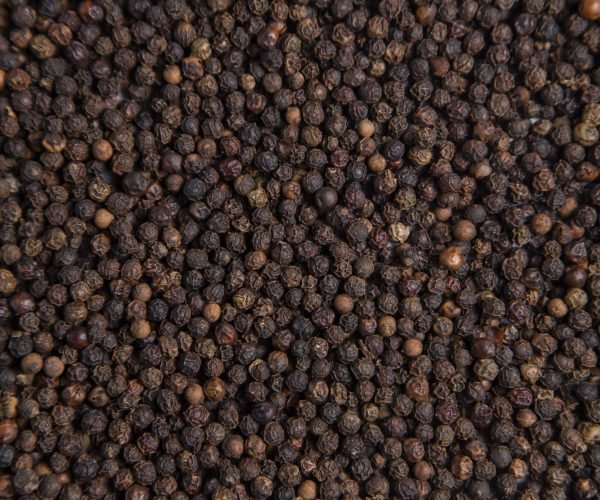
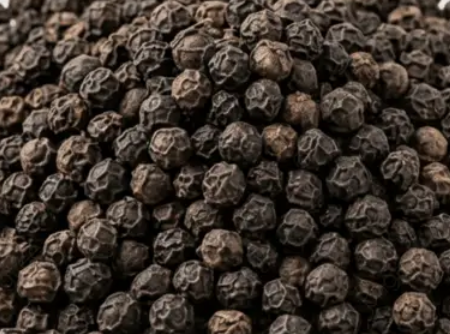
Tellicherry Garbled Special Extra Bold (TGSEB)
India's highest-value whole pepper export grade. Large, uniform berry. Premium EU/US buyers for foodservice and branded retail. Sortex colour-grading and size screening essential.
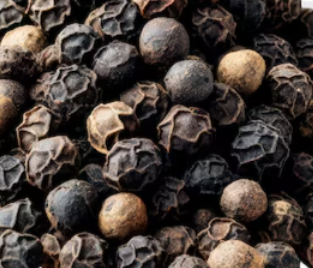
Tellicherry (FAQ)
Standard Tellicherry export grade. Kerala and Karnataka origin. Uniform black colour, low light berry content. ASTA cleanliness specification compliance required for US import.
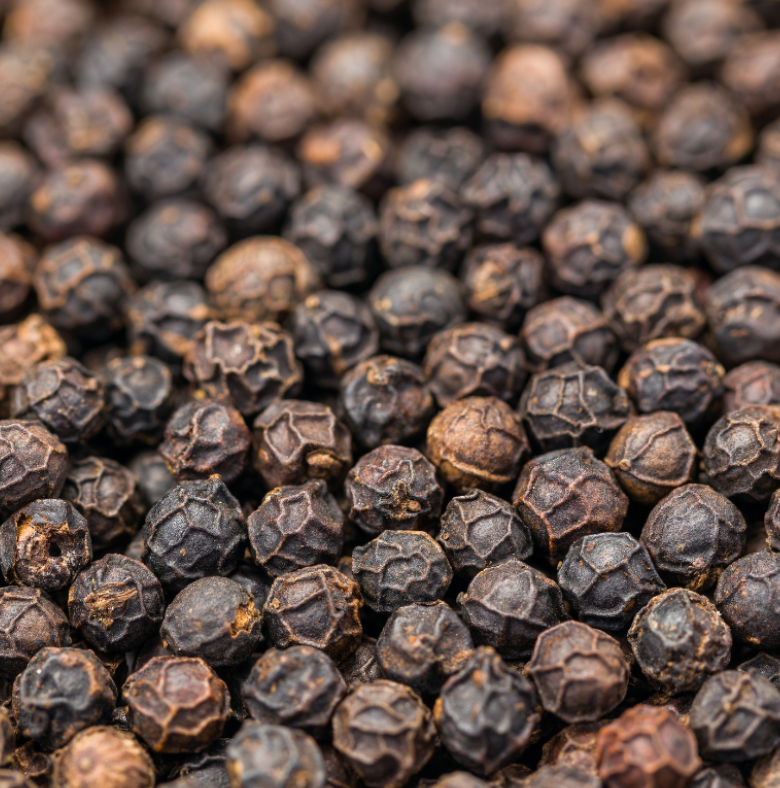
Black Pepper FAQ (Ungarbled)
Standard commercial grade — mixed berry sizes, higher light berry content than Tellicherry. Primary raw material for grinding and for oleoresin extraction. Lower price point.
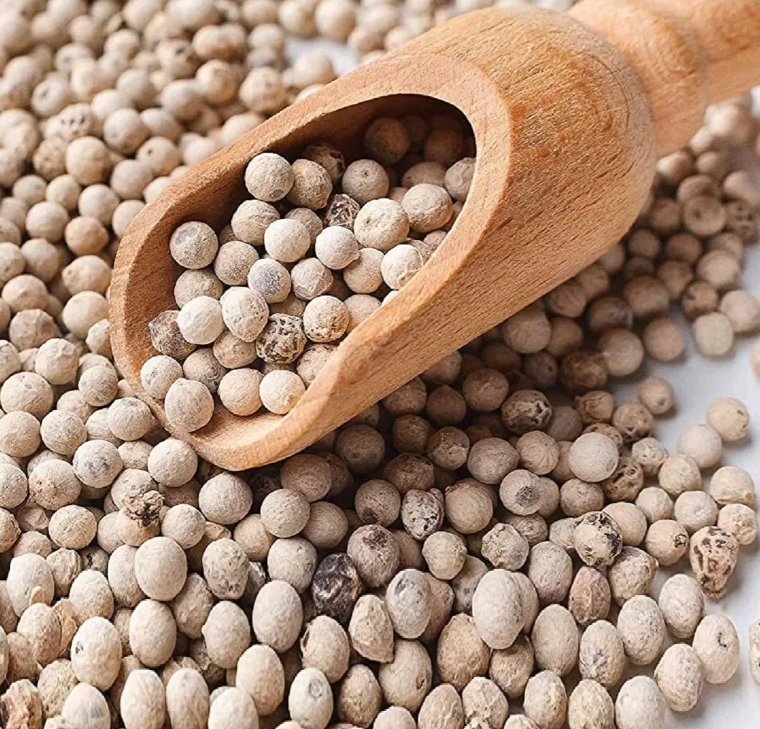
White Pepper
Black outer shell removed by soaking and abrading ripe red pepper. Higher piperine per gram than black pepper. Codex volatile oil minimum 0.7 ml/100g. Separate processing line from black pepper.
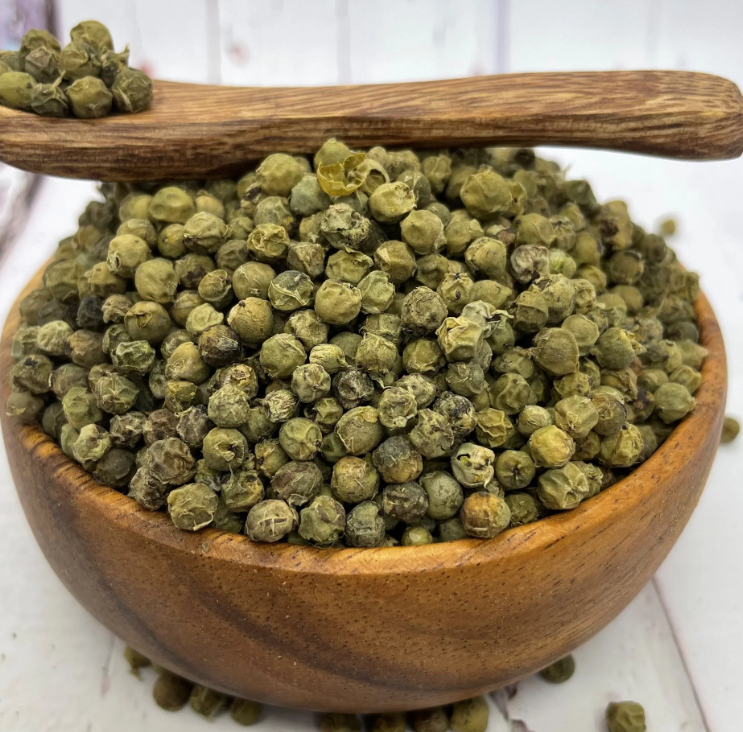
Green Pepper
Immature green berries — softer texture, different flavour profile. Dehydrated green pepper retains green colour with freeze-drying. Standard impact milling cannot be used — cutter mill for dehydrated green.
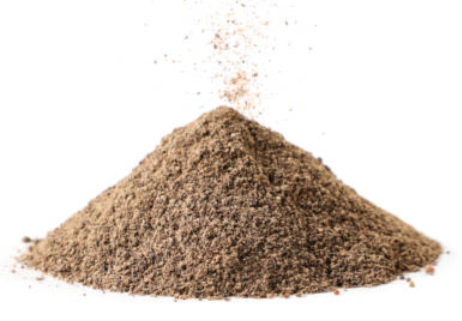
Ground Black Pepper (Spice Powder)
The standard consumer and food manufacturer product. Piperine and volatile oil specifications must be met at the point of packing — not just at raw material receipt. Mill temperature determines whether they are.
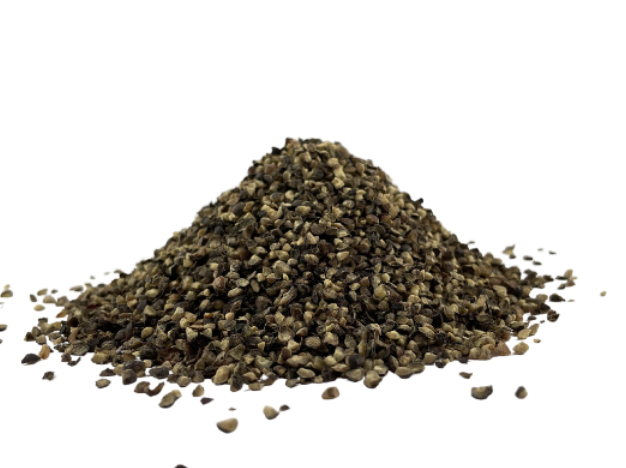
Oleoresin-Grade Pre-Ground
Fed to solvent extraction. Piperine content in the raw material sets the oleoresin yield ceiling. TGSEB and Tellicherry grades produce higher piperine oleoresin than FAQ raw material of the same origin.
Sterilized / Export-Compliant
EU and US importers require Salmonella absence and documented microbial reduction treatment. Black pepper's outer shell and composition are stable at full HTST temperatures — sterilization does not degrade piperine at 20–40 second HTST treatment time.
Black pepper processing diverges at the size grading stage — premium whole peppercorns exit to export packing; the balance proceeds through sterilization and grinding with temperature management as the critical variable throughout.
Piperine Content
Codex min: 3.5% for ground black pepper; IPC: 4%; buyers: 5%+
The primary pungency metric for ground black pepper. Piperine is heat-labile — degraded by elevated milling temperature. Codex CXS 326-2017 mandates minimum 3.5% piperine on dry basis. The International Pepper Community standard sets 4% as minimum. Premium buyers of culinary black pepper may require 5% or above. Mill temperature management is the primary controllable variable affecting piperine content in the finished powder.
Volatile Oil Content
Codex min: 1.0 ml/100g — measured immediately after grinding
Volatile oil — the monoterpenes and sesquiterpenes that give black pepper its complex aroma — evaporate continuously from freshly ground pepper. The Codex standard explicitly notes that volatile oil content should be determined immediately after grinding. A pepper that meets specification immediately post-mill may fail if tested after an hour's exposure. Packing immediately after milling, and minimising open-air handling time, are both required for consistent volatile oil compliance.
Particle Size (Mesh)
Ground: typically 60–100 mesh; coarse crack: 20–40 mesh
Particle size specification for ground black pepper is application-dependent — 60 mesh for industrial seasoning blends, 80–100 mesh for premium consumer packs, coarse crack for table pepper dispensers. The Codex standard requires 95–99.5% of the ground pepper to pass through the specified sieve. Screen wear in impact mills causes progressive coarsening across a run — ACM-based grinding eliminates screen drift for consistent specification compliance.
ASTA Cleanliness
Light berries ≤2%; pinheads ≤1%; Salmonella absent
ASTA (American Spice Trade Association) cleanliness specifications are the standard for US import of whole and ground black pepper. Light berries — immature peppercorns that have not developed full piperine content — dilute the piperine value of the finished powder. Pinheads (very small underdeveloped berries) similarly reduce quality. Colour sortex equipment removes both before the material proceeds to sterilization and milling.
Moisture Content
Codex max: 12% for ground; whole export: 7–10%
Moisture above 12% in ground pepper reduces shelf life, promotes mould growth and causes caking. EU buyers frequently specify 10% or below. Moisture affects grinding behaviour — pepper above 12% generates more heat during impact milling as the water in the berry resists fracture. The interaction between moisture and milling temperature makes pre-milling moisture verification a required step, not a nominal check.
Microbial Compliance
EU/US: Salmonella absent per 25g; TPC <10⁵ CFU/g
Black pepper is consistently among the most contaminated spices in microbial surveys — its rough outer surface, field drying conditions and handling chain all contribute. EU and US importers apply Salmonella absence and TPC limits to both whole and ground pepper. Full HTST sterilization at 102–122°C is appropriate for black pepper — unlike heat-sensitive green herbs, black pepper's composition and colour are stable at HTST treatment temperatures.
Size separation for Tellicherry grade premium and light berry removal
SIEVE
Vibratory Grading Screen
een 4.75mm and 4.25mm aperture separation — TGSEB and Tellicherry grading from FAQ balance for premium export routing
DEST
Destoner
Stone and heavy foreign material removal before sortex — protects optical sorter and prevents contamination in light berry rejects
Full log 6 microbial reduction with black pepper composition intact
HTST
Natural Steam Sterilizer
102–122°C, 20–40 seconds — Log 6 microbial reduction, piperine stable at HTST treatment time, documented batch treatment record
FBD
Fluid Bed Dryer
Post-sterilization moisture removal — returns pepper to ≤12% before the milling section to prevent heat generation from excess moisture
Low-heat impact milling to preserve piperine and volatile oil to specification
MACM
Air Classifying Mill
Export-grade ground pepper — D90 specification, in-process air cooling, piperine and volatile oil protective grinding, no screen drift
MHAM
Hammer Mill (speed-controlled)
Industrial grinding — reduced rotor speed for temperature management, mill outlet temperature monitored and logged per batcher batch
MUNI
Universal Mill
Coarse crack and oleoresin pre-grind grades — multi-mode operation, particle size flexibility for different application requirements
Volatile oil measured at the sifter — pack immediately after specification confirmed
Post-milling sifting verifies mesh specification compliance before the powder proceeds to packing. Volatile oil content is measured at this point — immediately after milling, before the powder has had extended exposure to the packing atmosphere — because evaporative loss is continuous. If volatile oil content fails specification at the sifter, the mill temperature is adjusted for the next run, not the existing batch. Metal detection is positioned before the packing station to catch any metallic contamination from equipment wear throughout the processing sequence. Time between sifter outlet and sealed pack must be minimised for volatile oil compliance — open holding in a packing hopper for extended periods contributes measurably to volatile oil loss.
SIFT
Rotary Sifter
Mesh specification confirmation — volatile oil tested at this point; oversize returned to mill, on-spec powder to packing
MET
Metal Detector & Auto-Packer
Metal detection before pack; immediate fill-seal to preserve volatile oil — minimises open-air exposure from sifter to sealed pack