
Chemicals & Pigments
In chemicals and pigments, particle size is not a processing metric — it is the product specification. The D50 and D90 of a ground calcium carbonate determine whether it disperses correctly in a PVC compound. The D50 of a milled iron oxide determines how much colour strength it delivers per kilogram in a paint formulation. A grinder that drifts from its D90 target across a production campaign is not a throughput problem — it is delivering a different product from the one specified. MillNest configures chemical and pigment processing lines where particle size is held to specification, not managed operationally after the fact.
D50/D90 specification-holding milling
Abrasion-resistant equipment construction
Enclosed handling for hazardous powders
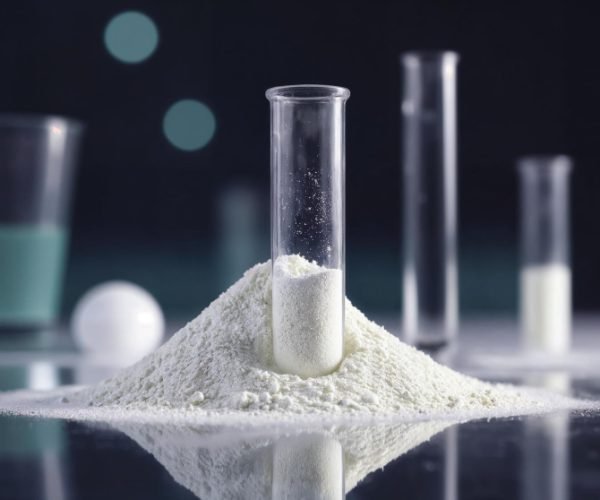
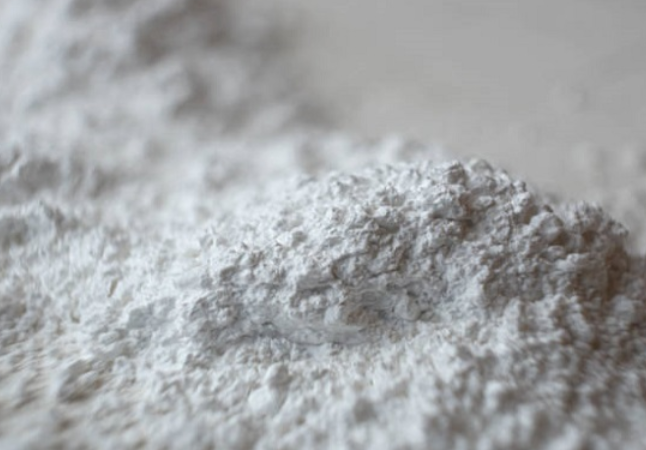
Calcium Carbonate (GCC/PCC)
Largest volume industrial filler. D50 2–50 µm depending on grade. Moderate abrasiveness. Used in paints, plastics, PVC, rubber, paper. Particle size and whiteness together determine grade value.
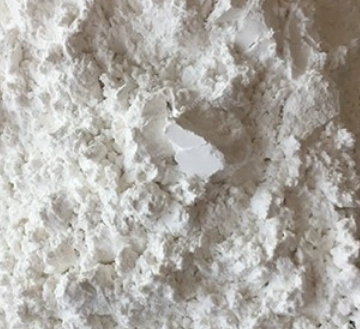
Talc & Kaolin
Talc for polymer reinforcement, paper and cosmetics. Kaolin for ceramics and coatings. Both require controlled D50 and aspect ratio. Platy particle morphology is functionally important — milling method affects it.
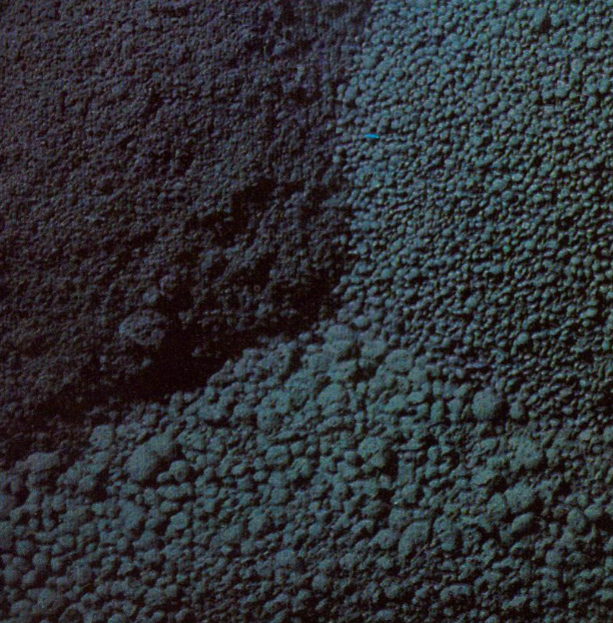
Carbon Black
Primary black pigment for paints, inks and plastics. Tinting strength highly sensitive to surface area and aggregate structure. Enclosed handling essential — carbon black dust is a persistent contamination risk.
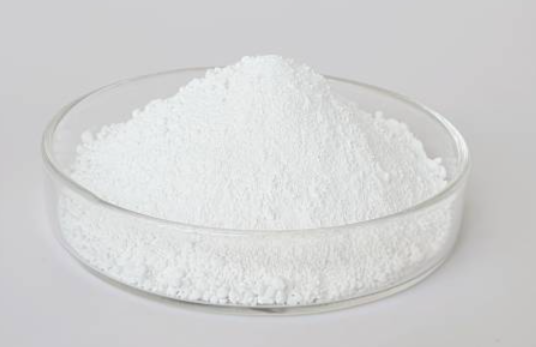
Titanium Dioxide (TiO₂)
The most widely used white pigment. Hiding power (opacity) is maximised at D50 ~0.2–0.3 µm. Highly abrasive — equipment wear rate is significant. Deagglomeration and D90 control are primary milling objectives.
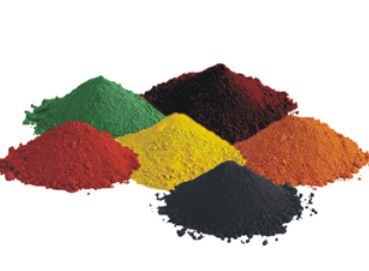
Iron Oxides (Fe₂O₃, Fe₃O₄)
Red, yellow and black iron oxides for paints, construction and ceramics. Tinting strength directly proportional to surface area. Highly abrasive — SS wear liners required. D50 and colour undertone both specified by paint manufacturers.
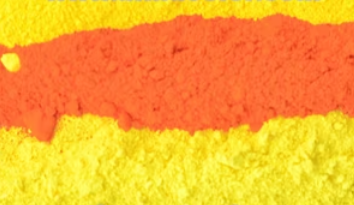
Organic Pigments & Dyes
Phthalocyanine blues and greens, azo reds and yellows. Finer particle size needed for full tinting strength development. Heat-sensitive during milling — some organic pigments degrade above 60°C.
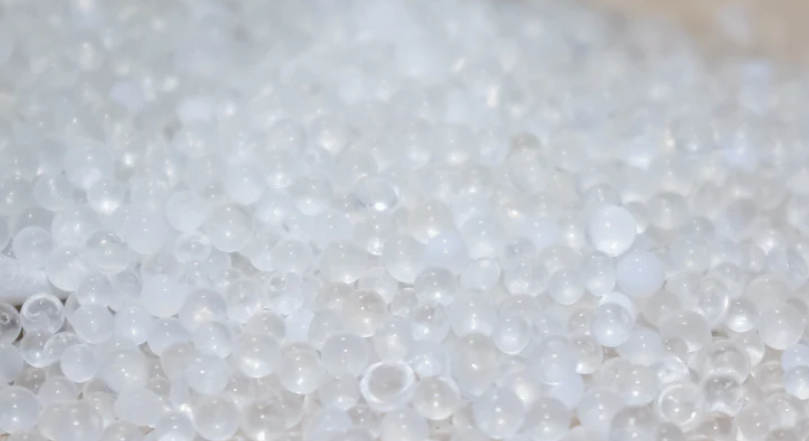
Silica & Precipitated Silica
Extremely abrasive — Mohs hardness 7. One of the most demanding milling applications for equipment wear. Used as anti-blocking agent, reinforcing filler and in silica-based adhesives. Very fine D50 required.
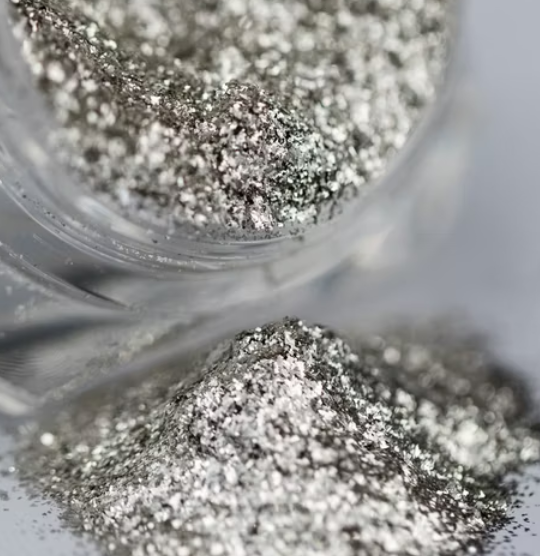
Powder Coatings Pigment Base
Pigment pre-dispersed in resin for powder coating manufacture. D90 <75 µm required to prevent visible specks in applied coating. ACM with tight classifier control is the standard for powder coating pigment milling.
Chemical and pigment processing is a controlled size reduction sequence. Every stage either maintains specification quality or introduces a defect that cannot be corrected downstream.
Chemical and pigment powder buyers specify performance, not process — they want D50, D90, whiteness, tinting strength and purity on the COA. The processing line must deliver these consistently, batch after batch.
Particle Size Distribution (D50, D90)
D50 and D90 specified per grade and application
The primary specification for all chemical and pigment powders. D50 sets the median — it drives dispersibility, reactivity and surface area per gram. D90 sets the coarse particle limit — it determines coating smoothness, dispersion quality and freedom from visible specks. Both must be met simultaneously and held consistently across the production campaign.
Tinting Strength (Pigments)
Measured against a standard — ASTM D387
Tinting strength measures how much colour a pigment delivers per gram in a white or black base. It is directly proportional to surface area — finer D50 means higher tinting strength and lower required pigment loading in the formulation. Batch-to-batch tinting strength variation above ±5% is commercially unacceptable to paint and coatings manufacturers because it forces formula adjustment on every production run.
Hardness & Abrasiveness
Mohs 2–7 range covers most chemical powders
Calcium carbonate is Mohs 3 — moderate wear on equipment. Silica is Mohs 7 — extreme wear. The material's hardness determines screen life, liner life and the correct construction specification for all contact surfaces. Equipment specified for calcium carbonate will fail prematurely on silica grinding. Hardness must be established at line design stage, not discovered at commissioning.
Whiteness / Brightness (L*, CIE)
White fillers: L* typically 95–98; higher is better
For white mineral fillers — calcium carbonate, talc, kaolin — whiteness is a primary commercial specification alongside particle size. Whiteness is determined by the raw material purity and can be degraded by contamination from equipment wear particles (iron from mild steel equipment) or cross-contamination from previous darker materials. Food-grade stainless steel contact parts are the minimum standard for white filler applications.
Containment & Dust Limits
OEL-based — carbon black, silica, TiO₂ all have specific limits
Several chemical and pigment powders have occupational exposure limits that require engineered containment at mill discharge, transfer and packing points. Crystalline silica (respirable fraction limit: 0.025 mg/m³ in India) requires enclosed handling with local exhaust ventilation. Carbon black is a persistent contamination material — once it deposits on surfaces, it migrates into subsequent products. The containment requirement must be established per material before the line is designed.
Purity & Cross-Contamination
Validated cleaning between grades — analytical verification
Chemical manufacturers producing multiple grades on shared equipment — different D50 grades of the same material, or different materials on a multipurpose line — must demonstrate that previous product does not contaminate the next. For colour-critical pigment applications, even trace quantities of a previous pigment affect the colour specification. Cleaning validation with swab testing or colour matching checks is standard for multi-grade pigment lines.
Lump breaking and consistent mill feed before fine milling
MLUM
Delumper
Lump breaking before mill entry — consistent feed size for D50 uniformity, reduces peak load on fine milling equipment
FEED
Loss-in-Weight Feeder
Controlled feed rate to the mill — rate-controlled input prevents overloading and maintains stable classifier operating conditions
ACM integrated classification for drift-free D90 across the full campaign
The air classifying mill is the standard equipment for chemical and pigment powders where D50 and D90 must be held to specification across the full production run. The integrated classifier recirculates oversize material continuously — coarse particles that would cause tinting strength reduction in pigments, or dispersibility failure in fillers, are separated and re-milled before they reach the product stream. The classifier speed setting is the D90 control parameter. Changing D90 specification requires only a classifier speed adjustment — no screen change, no downtime. For abrasive materials including calcium carbonate and iron oxide, the grinding elements and classifier wheel are specified in appropriate wear-resistant alloys to match the material’s hardness. Liner material selection for the grinding chamber is confirmed from the specific material’s Mohs hardness and throughput before commissioning.
MACM
Air Classifying Mill
Primary D50/D90 specification milling — integrated classifier holds D90 across full campaign, wear-resistant construction option
MHAM
Hammer Mill
Coarser chemical grades and pre-grinding before ACM — abrasion-resistant liner and screen options for hard mineral materials
MUNI
Universal Mill
Multi-mode development grinding and R&D grade production — impact, shear and attrition modes for process optimisation
Product recovery and operator protection for dusty chemical powders
CYCL
Cyclone Separator
Fine product recovery at mill outlet — returns airborne product fraction to process stream, critical at D50 below 10 µm
BAG
Pulse-Jet Bag Filter
Exhaust air cleaning — continuous pulse-jet cleaning, contained venting for hazardous powders, HEPA option for OEL-sensitive materials
SIFT
Security Sifter
Final oversize removal before product stream — catches any agglomerates or foreign material that passed the classifier
Multi-grade blending for specification standardisation and consistent lot quality
Chemical manufacturers supplying multiple customers with the same nominal grade — but with customer-specific D50 windows — blend milled batches from different operating points to hit each customer’s specification. Ribbon blending with load cell-controlled addition maintains accurate proportioning. For pigments, batch-to-batch tinting strength variation can be corrected by blending a stronger-than-specification batch with a weaker batch to bring both into the target tinting strength range — a standard industry practice that requires the blend ratios to be analytically determined, not estimated. Packing into sealed containers immediately after blending minimises re-agglomeration in fine chemical powders that are prone to surface bonding once they are no longer in motion.
MRBL
Ribbon Blender
Multi-grade standardisation blending — load cell weighing, tinting strength or PSD matching across production batches
WH
Auto-Weigh Packing System
Accurate fill weight into sealed bags or bulk containers — immediate sealing minimises re-agglomeration in fine chemical powders
From coarse chemicals to micronized powders. Tell us the specification. We'll engineer the process.
Whether you’re processing industrial chemicals, mineral powders, pigments, additives, or specialty materials, our engineers will recommend the right milling, classification and handling solution to achieve your required particle size, capacity and product quality.