
Dehydrated Onion & Garlic Processing PLANT
Chilli powder quality is measured at the buyer’s end in ASTA colour units, moisture content and fineness — not at the mill. Every stage from cleaning through to packing either protects or reduces these values. MillNest designs chilli processing lines around the specific variety being processed and the output standard being targeted — not a generic chilli grinding configuration.
ASTA colour value protection
Low-heat multi-stage milling
Natural steam sterilization
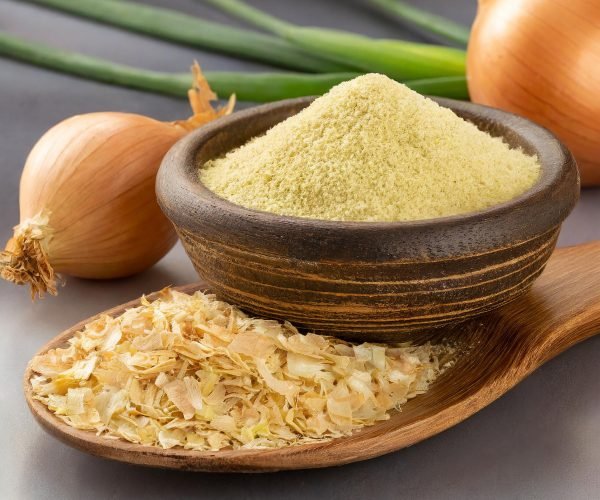
Dehydrated onion and garlic are sold in several distinct forms — each requiring a different point of exit from the processing line and a different set of equipment between the dryer and the pack. The line design must accommodate all the forms produced on the same facility.
The primary drying of fresh onion and garlic to flakes happens upstream of this line. The secondary processing stages — milling, sifting, pasteurization, blending and packing — determine the final product grade, colour and compliance status.
Dehydrated onion and garlic are traded against documented specifications — buyers provide a COA checklist at procurement. These are the parameters that determine acceptance or rejection.
Moisture Content
Powder grade: ≤5–6% maximum
The most critical specification for dehydrated allium powders. Moisture above 6% accelerates caking, reduces shelf life and promotes microbial growth. Export contracts typically specify 5% or below. Moisture must be achieved at the dryer, maintained through all secondary processing stages and locked in by sealed packing — not corrected after caking occurs.
Pungency (Pyruvic Acid)
Onion: 30–50 µmol/g; garlic: specified per grade
Pungency in dehydrated onion is measured by pyruvic acid concentration — the higher the µmol/g value, the stronger the onion flavour per kilogram of powder. Buyers of premium onion powder specify a minimum pyruvic acid value on the COA. Raw material variety selection (high-pungency white onion varieties recommended for dehydration) and drying conditions both affect the final pungency level — it cannot be recovered if lost during processing.
Colour — White to Off-White
Natural: white to very pale yellow; browning = rejection
Any browning in dehydrated onion or garlic powder indicates either excessive heat during primary drying, poor raw material quality or over-processing during secondary milling. Export buyers request a visual colour reference sample at procurement and reject batches showing browning. Pasteurization temperature, milling temperature and storage conditions all affect final colour — and browning is irreversible once it occurs.
Particle Size (Mesh)
Powder: 80–100 mesh; granules: 10–40 mesh
Particle size determines application suitability and directly affects caking tendency — finer particles have more surface area and absorb moisture faster. Producing consistent 80–100 mesh onion powder requires enclosed milling and sifting with controlled screen wear monitoring. For granule grades, the narrow size window (e.g. 1–3mm for minced) requires precise cutter mill configuration and multi-deck sifting.
Total Volatile Oil (Garlic)
Garlic oil: 0.46–0.57% on moisture-free basis
Garlic flavour intensity correlates with volatile oil and allicin content. High-quality dehydrated garlic powder retains its oil fraction through controlled drying and low-heat secondary processing. Buyers of industrial garlic powder for sauces, seasoning blends and processed foods specify minimum oil content on the COA as a proxy for flavour intensity per kilogram.
Microbial Count
EU/US: Salmonella absent per 25g; TPC <10⁵
Dehydrated allium products destined for EU, US and Middle East markets require documented Salmonella absence and TPC compliance. Salmonella can survive in low-moisture foods for extended periods — the drying process alone is not sufficient for export microbial compliance. Natural steam pasteurization before or after secondary processing provides documented microbial reduction with treatment records that meet buyer and regulatory requirements.
The secondary processing line for dehydrated onion and garlic is built around two priorities: hygroscopic moisture exclusion and colour preservation. Every equipment selection is evaluated against both.
Export microbial compliance without colour damage
Dehydrated onion and garlic flakes are highly heat-sensitive — full HTST sterilization at 102–122°C causes visible browning in white onion products and measurable volatile oil loss in garlic. MillNest deploys TEMA Process B.V. pasteurization below 100°C — sufficient to achieve Salmonella absence and TPC compliance for EU, US and Middle East markets, without the colour and flavour impact of higher-temperature treatment. Post-pasteurization fluid bed drying is critical — the steam treatment adds moisture, and powder going forward above 6% moisture will cake during subsequent milling and sifting. The FBD must return the material to target moisture before the first mill pass.
PAST
Natural Steam Pasteurizer
Sub-100°C treatment for onion and garlic — Salmonella compliance without browning or colour loss
FBD
Fluid Bed Dryer
Post-pasteurization moisture removal — returns material to ≤6% before milling and sifting stages
Enclosed impact milling to specified mesh with minimal air exposure
Dehydrated onion and garlic flakes are brittle and fracture easily — but the powder produced is immediately hygroscopic once the cell structure is broken open. Every second the powder spends in an open environment after the mill discharge picks up atmospheric moisture. Enclosed hammer milling with sealed discharge directly to a cyclone separator — not an open chute — is the correct configuration. For garlic powder in particular, the strong odour also makes enclosed handling essential for the working environment. The MCUT cutter mill is used for pre-sizing flakes to a consistent input size before the fine impact mill, which improves fineness consistency and reduces specific energy in the fine milling pass.
MCUT
Cutter Mill
Pre-sizing of dried flakes to consistent input for fine milling — reduces energy in the fine pass
MHAM
Hammer Mill (enclosed)
Impact milling to 80–100 mesh — enclosed housing with sealed discharge to prevent moisture ingress
CYCL
Cyclone Separator
Powder collection from mill outlet — enclosed cyclone prevents open-air exposure of hygroscopic powder
Mesh-grade separation in a sealed environment
Standard open-top sifters expose dehydrated allium powder to ambient air for the full duration of sifting — often several minutes per batch. For a powder targeting ≤6% moisture, this is long enough for surface caking to begin if ambient humidity is above 50%. Enclosed rotary sifters with sealed product intake and discharge are the correct specification for dehydrated onion and garlic secondary processing. Multi-deck sifters allow simultaneous production of multiple grades (e.g. granule fraction and powder fraction) from the same milled material in a single pass.
SIFT
Enclosed Rotary Sifter
Sealed product intake and discharge — prevents moisture ingress during mesh-grade separation
MLUM
Delumper
Breaking surface cakes in incoming dehydrated flakes before milling — restores free-flow to already-caked material
Pungency standardisation and immediate moisture-sealed packing
Dehydrated onion pungency (pyruvic acid level) varies naturally between crop seasons, varieties and growing regions. Buyers of industrial onion powder for soup bases, snack seasonings and processed food applications typically specify a minimum pyruvic acid value per COA. Ribbon blending of different crop batches to hit a consistent pungency specification is standard practice for industrial-grade dehydrated onion supply. Critically — time between the sifter outlet and pack sealing must be minimised. Dehydrated onion and garlic powder absorbs moisture fast enough that any holding time in an open intermediate hopper adds measurable moisture to the finished product. The line should flow directly from sifter to blender to packing — not hold in open hoppers between stages.
MRBL
MRBL Ribbon Blender (enclosed)
Crop-batch blending for pungency and colour standardisation — enclosed design, minimal dwell time
WH
Weigh Hopper & Auto-Packer
Accurate batch weighing to moisture-barrier sealed packs — minimises open-air exposure time before sealing
Tell us your product, target cut size and quality requirement.
We'll design the line.
Share your raw material, required flake, granule or powder size, production capacity, and export requirements. MillNest will design the right processing line for size reduction, classification, conveying and packaging, then validate the solution through material trials before any capital investment.