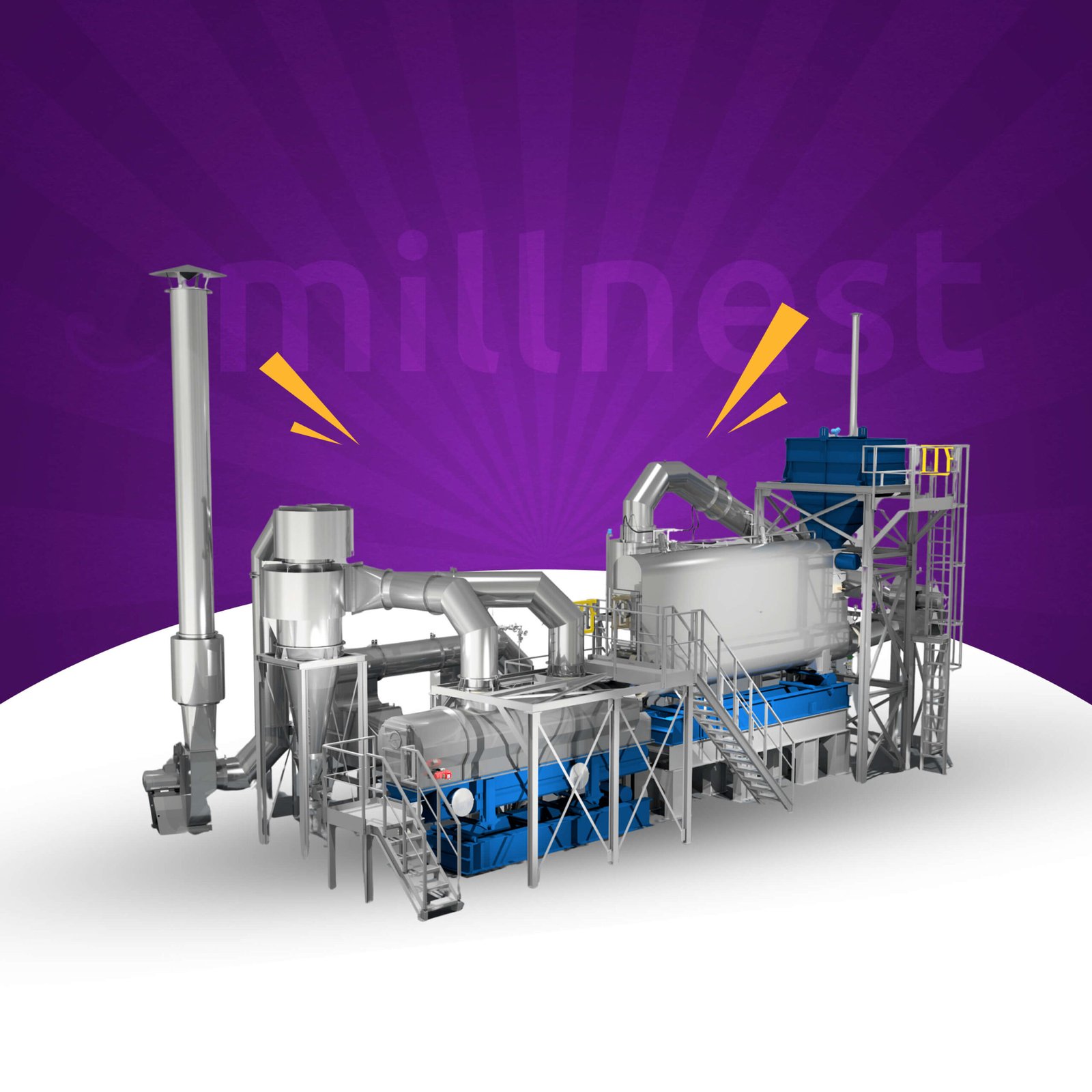
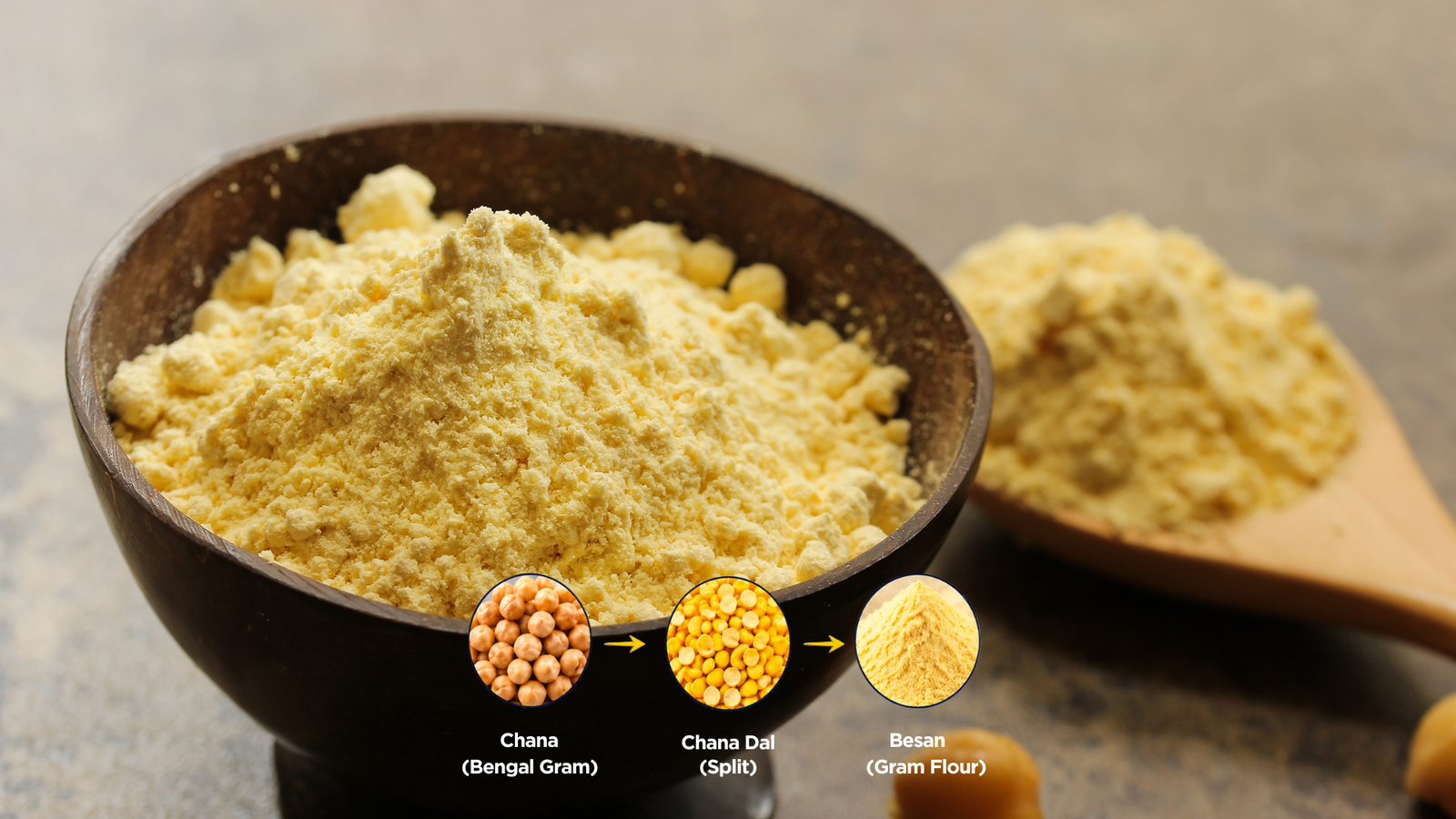
Besan looks like one of the simplest products in an Indian kitchen. Chana dal goes in, pale yellow flour comes out. Anyone who has run a besan processing plant knows it’s more interesting than that. The colour buyers judge by eye, the fineness that decides whether a batter turns out smooth or grainy, and the consistency between one lot and the next are all set by a chain of stages, each one depending on the stage before it.
This page walks through that chain from intake to packing: what each stage does, what tends to go wrong, and which equipment fits where. It’s written for plant owners planning a new gram flour line, and for production teams trying to get more out of an existing one.
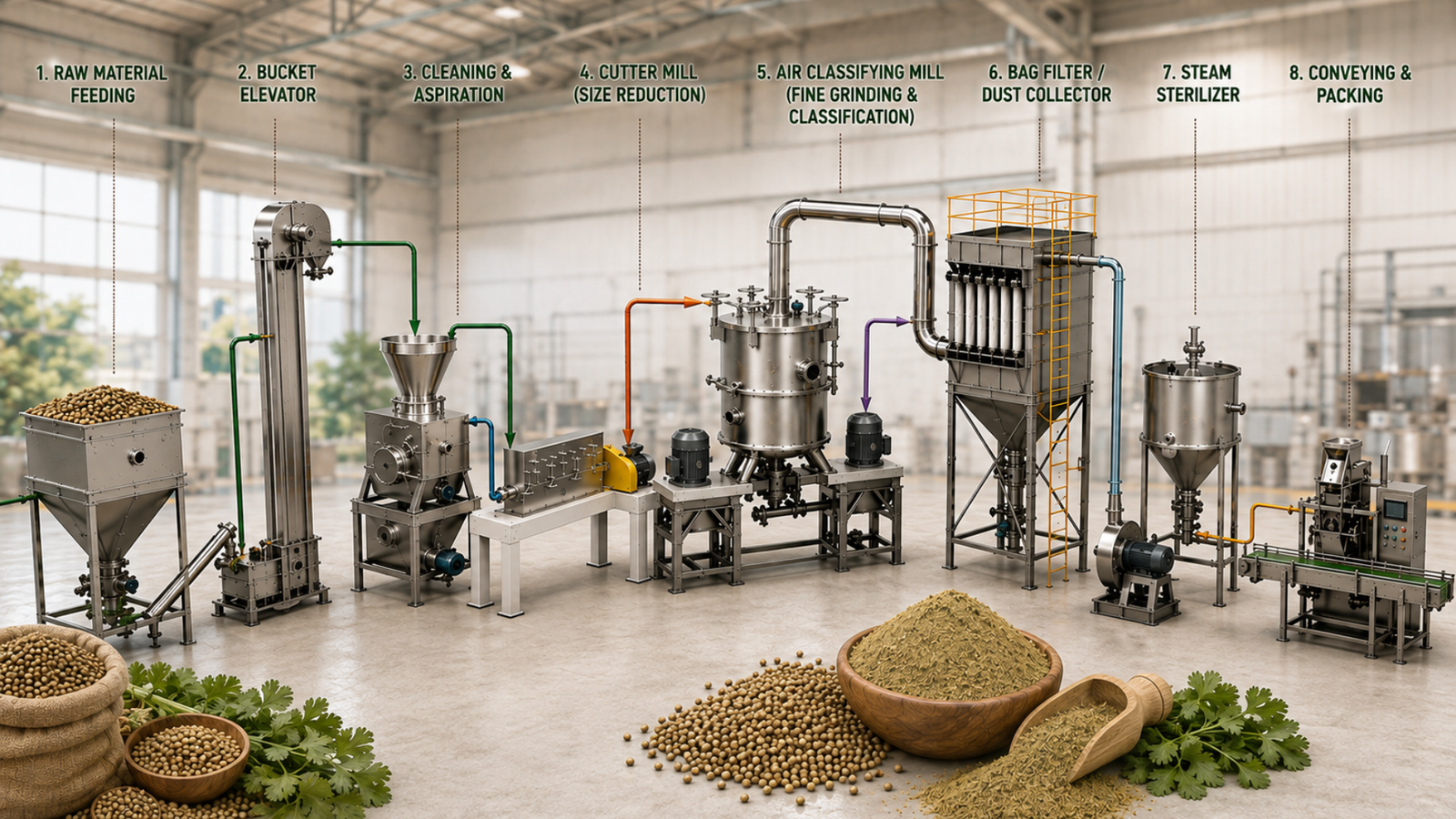
How a besan plant works at a glance
- Intake and cleaning: remove stones, grit, metal, husk and damaged grain.
- Dehulling and splitting, or dal intake: produce clean chana dal in-house, or check purchased dal.
- Moisture check: confirm the dal is in the range your mill is set up for.
- Grinding: reduce dal to flour with a mill matched to the grade.
- Sifting and classification: keep only flour inside the target size range.
- Dust collection: capture fine flour at every transfer and vent point.
- Conveying: move flour between stages in closed lines.
- Optional sterilization: for buyers with microbial specifications.
- Delumping and blending: for premix and ready-mix products.
- Packing.
Stage 1: Intake and cleaning
Everything the mill produces depends on what reaches it. Chana from the field can carry stones, mud balls, grit, loose husk, tramp metal and damaged or discoloured grain. Stones and grit wear hammers and screens and push output coarser over a run. Metal can damage the mill in seconds. Husk and damaged grain dull the colour. A cleaning section built from sieving, aspiration, destoning and magnets takes most of this load off the mill, and makes wear-part changes far more predictable.
Stage 2: Dehulling and splitting, or dal intake
Plants either make their own chana dal from whole Bengal gram, or buy split dal and grind it. Making your own gives you control over dehulling quality, which matters because leftover husk shows up as dark specks and a coarser, more fibrous fraction in the flour. Buying dal is simpler, but your intake check then becomes your dehulling quality control: look at husk content, broken and damaged pieces, foreign matter and colour before a lot is accepted.
Stage 3: Moisture check
Moisture changes how dal breaks. Drier dal shatters cleanly; moister dal tends to flatten and smear, slowing the mill and blinding screens. Lot-to-lot moisture swings are one of the most common hidden causes of week-to-week fineness drift. A simple check at intake, against a range your process has proven, removes much of that variation.
Stage 4: Grinding besan by grade
Besan isn’t one product. Fine besan suits pakoda and bhajji batters, dhokla and kadhi. Coarser besan is preferred for sweets like laddoo and mohanthal. The right mill depends on which grades you make and how tightly buyers specify them.
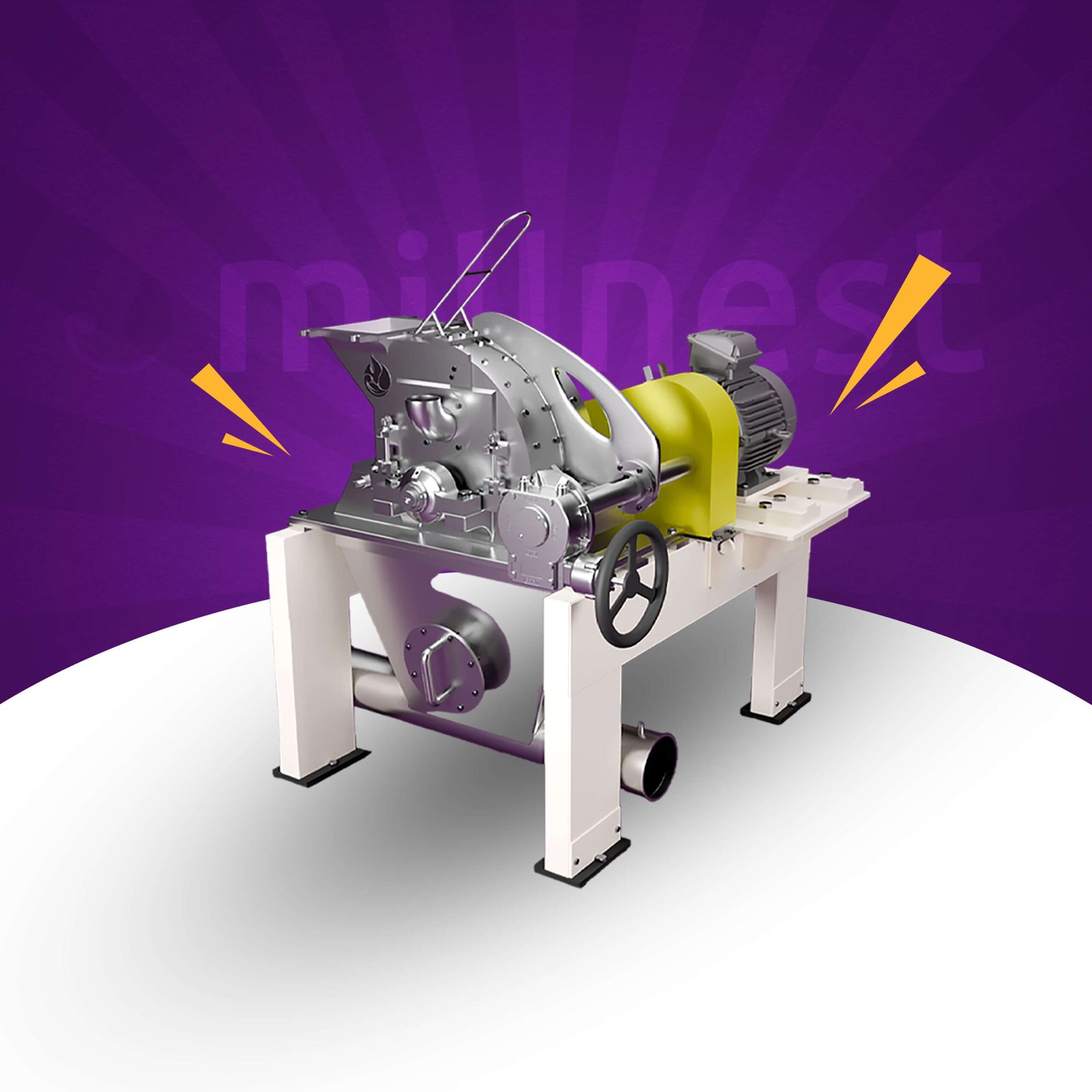
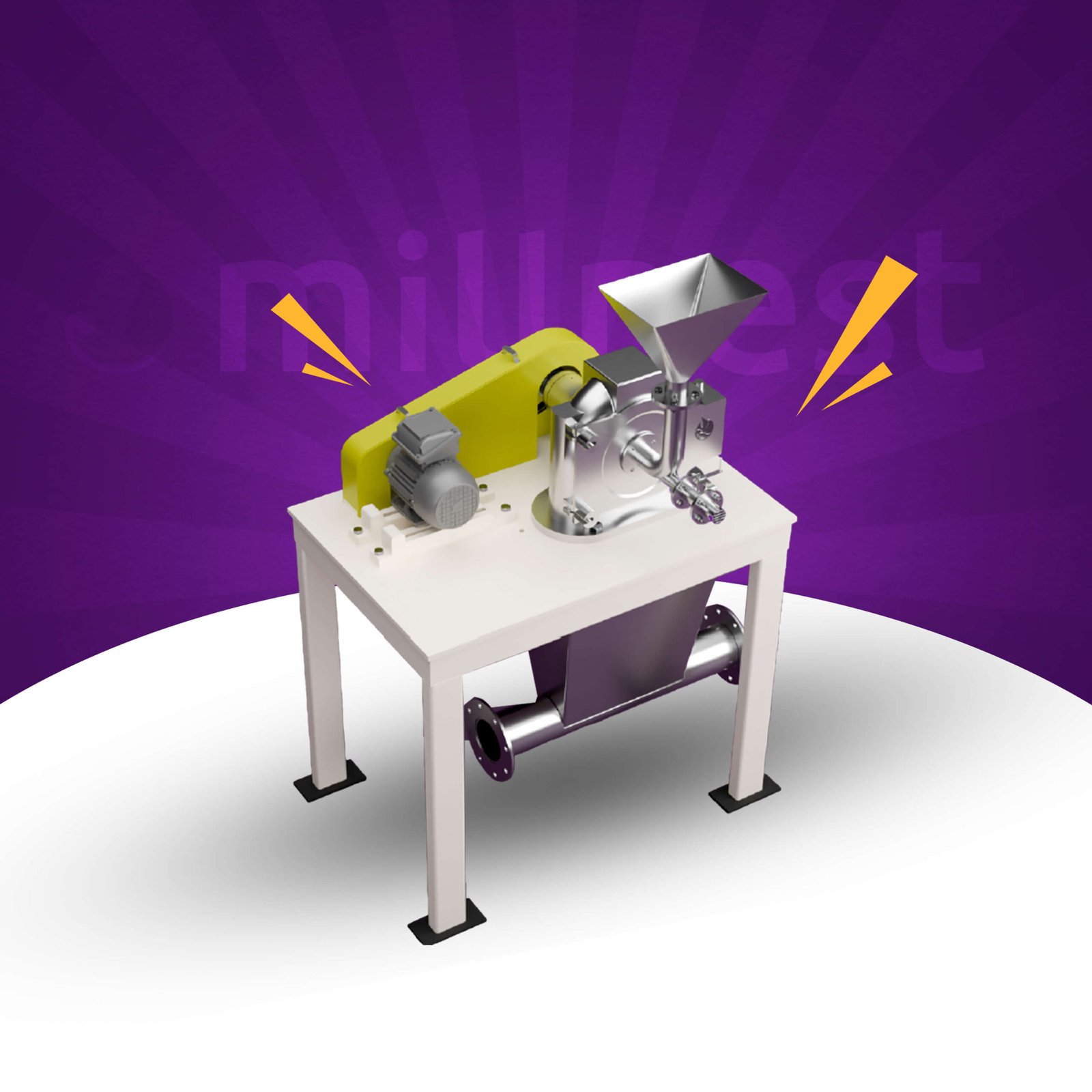
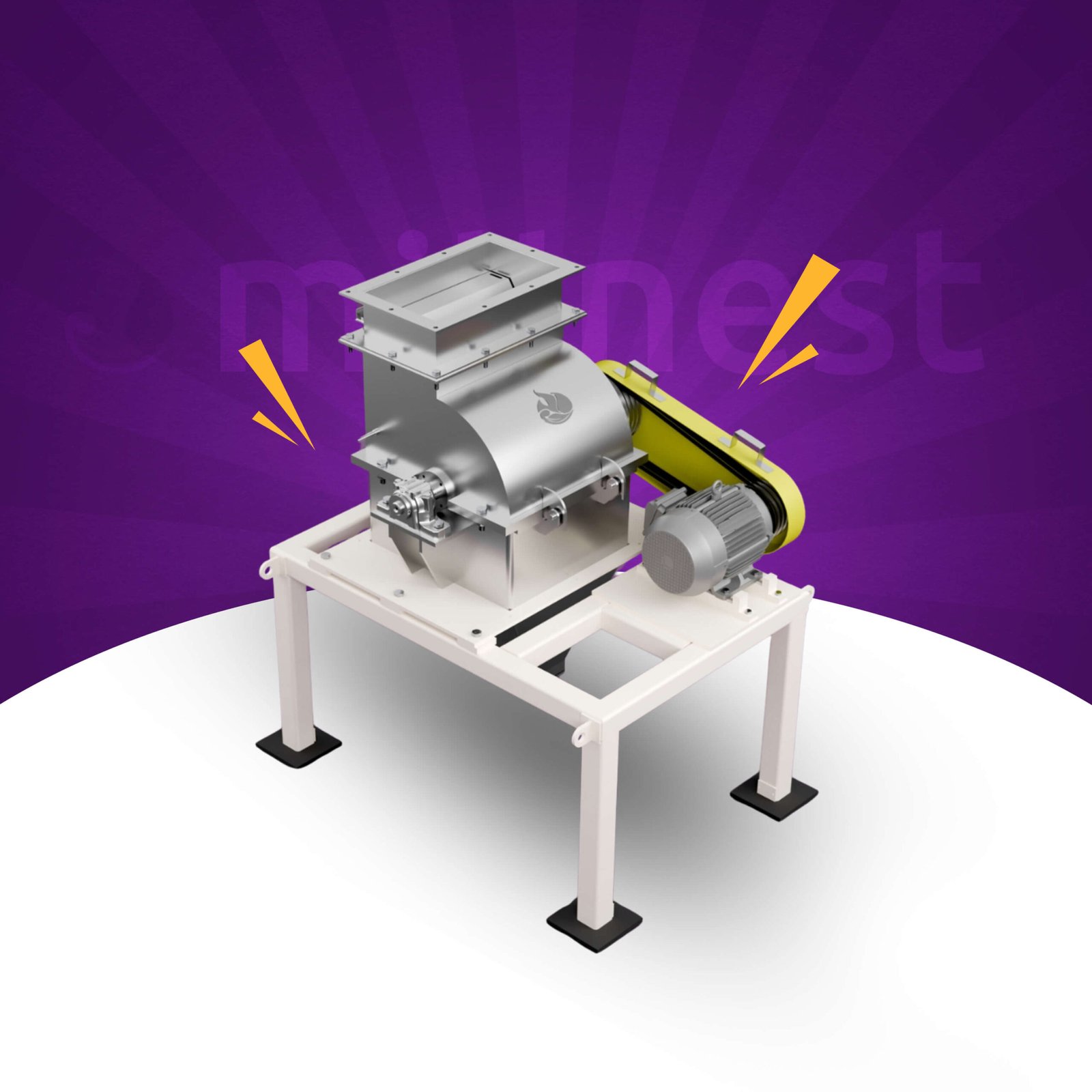
- Hammer Mill (MHAM): high-speed hammers with adjustable hammer and screen configurations. A dependable choice for standard fine and coarse grades, with grade changes made through screen and hammer setup. SS 304/316 contact parts.
- Universal Mill (MUNI): impact, shear and attrition modes with customisable screens and rotors, designed for low heat generation. Useful because chickpea’s natural fat makes fine besan prone to stickiness when grinding runs hot.
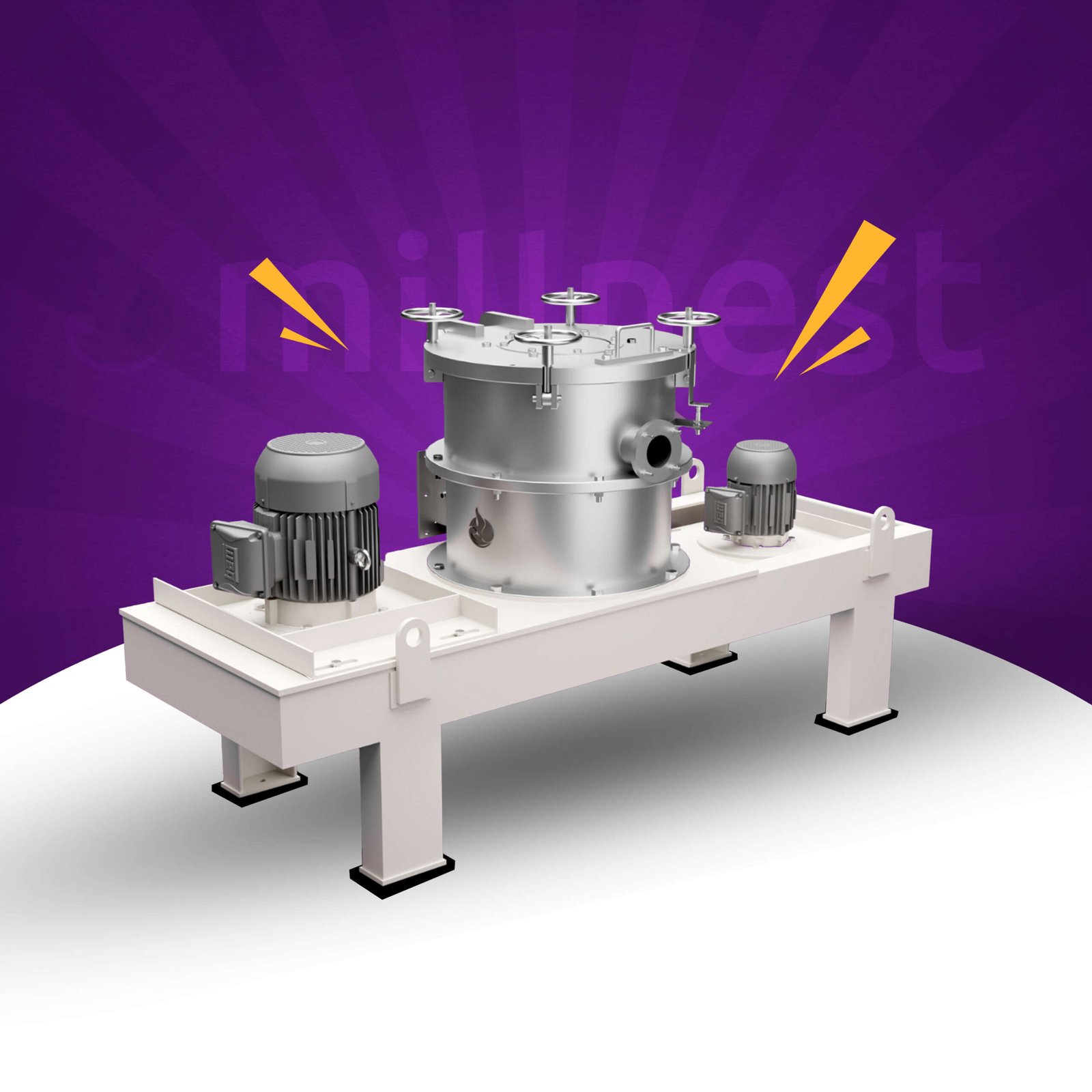
- Air Classifying Mill (MACM): grinding and air classification in one unit. Particles leave as soon as they reach the target size, which tightens the particle size distribution and limits overgrinding. Suited to fine and premium grades with a defined specification.
Many plants run more than one mill type, using a hammer mill for standard volume grades and a classifying mill for fine grades. Every recommendation should be confirmed with a grinding trial on your own dal.
Stage 5: Sifting and classification
Whatever the mill, a sifting stage confirms the flour meets specification and separates oversize for regrinding. With an air classifying mill, classification is already built into the grinding step, and downstream sifting acts mainly as a safety check before packing.
Stage 6: Dust collection
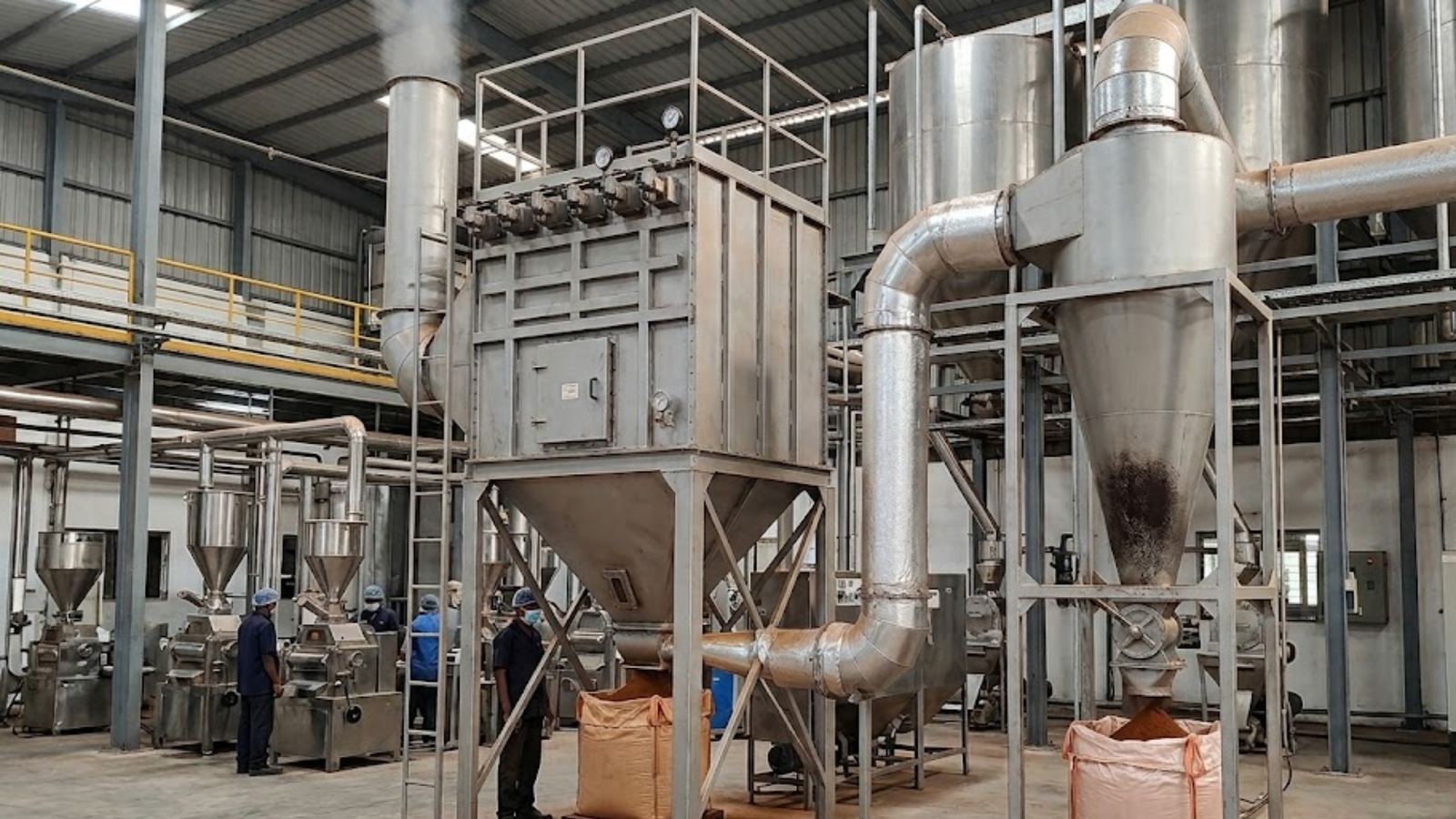
Besan is a fine, light flour that escapes at every open transfer, vent and discharge. That’s product loss, a cleaning burden and a safety concern, since many food powders can form combustible dust clouds and dust risk should be formally assessed. A cyclone separates the larger particles from the airflow using centrifugal force, and a pulse-jet bag filter captures fine particulates, so flour stays in the process instead of on the floor.
Stage 7: Enclosed pneumatic conveying
Open transfers mean dust, spillage and manual handling. Enclosed pneumatic conveying moves flour from mill to sifter, storage, blender and packing inside closed lines. It keeps the plant cleaner, reduces exposure to humid air and makes layouts more flexible, since lines can be routed rather than relying on gravity drops and bucket elevators. See our material handling & conveying page for more.
Stage 8: Optional steam sterilization for microbial specifications
Some buyers, particularly in exports and industrial food manufacturing, specify microbial limits for flours and premix bases. For these, MillNest offers natural steam HT-ST sterilization through its technology partner Therma Process, operating at 102–122°C for 20–40 seconds with microbial reduction of up to log 6. It’s an optional stage, positioned according to the product and specification. Learn about sterilization.
Stage 9: Delumping and blending for premixes
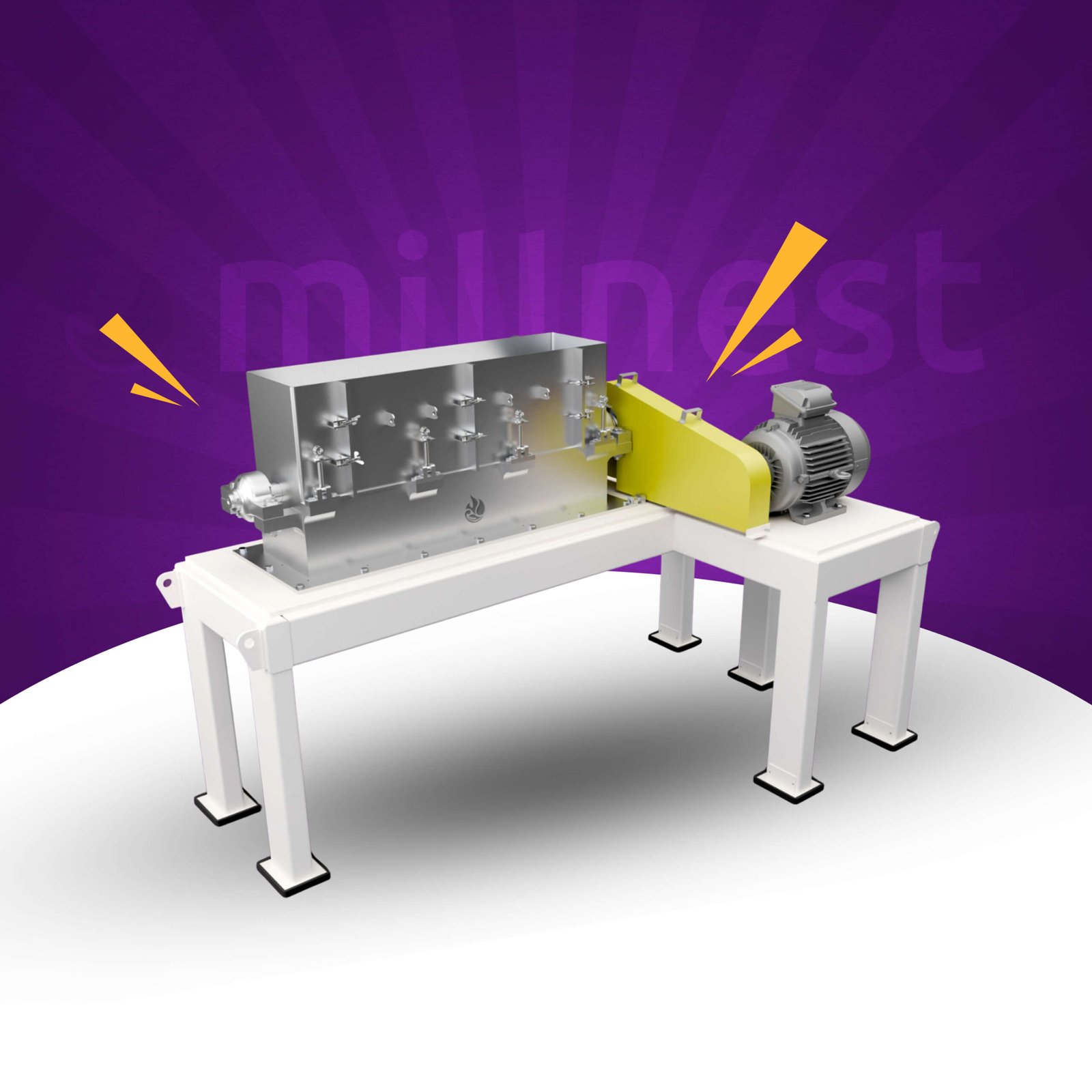
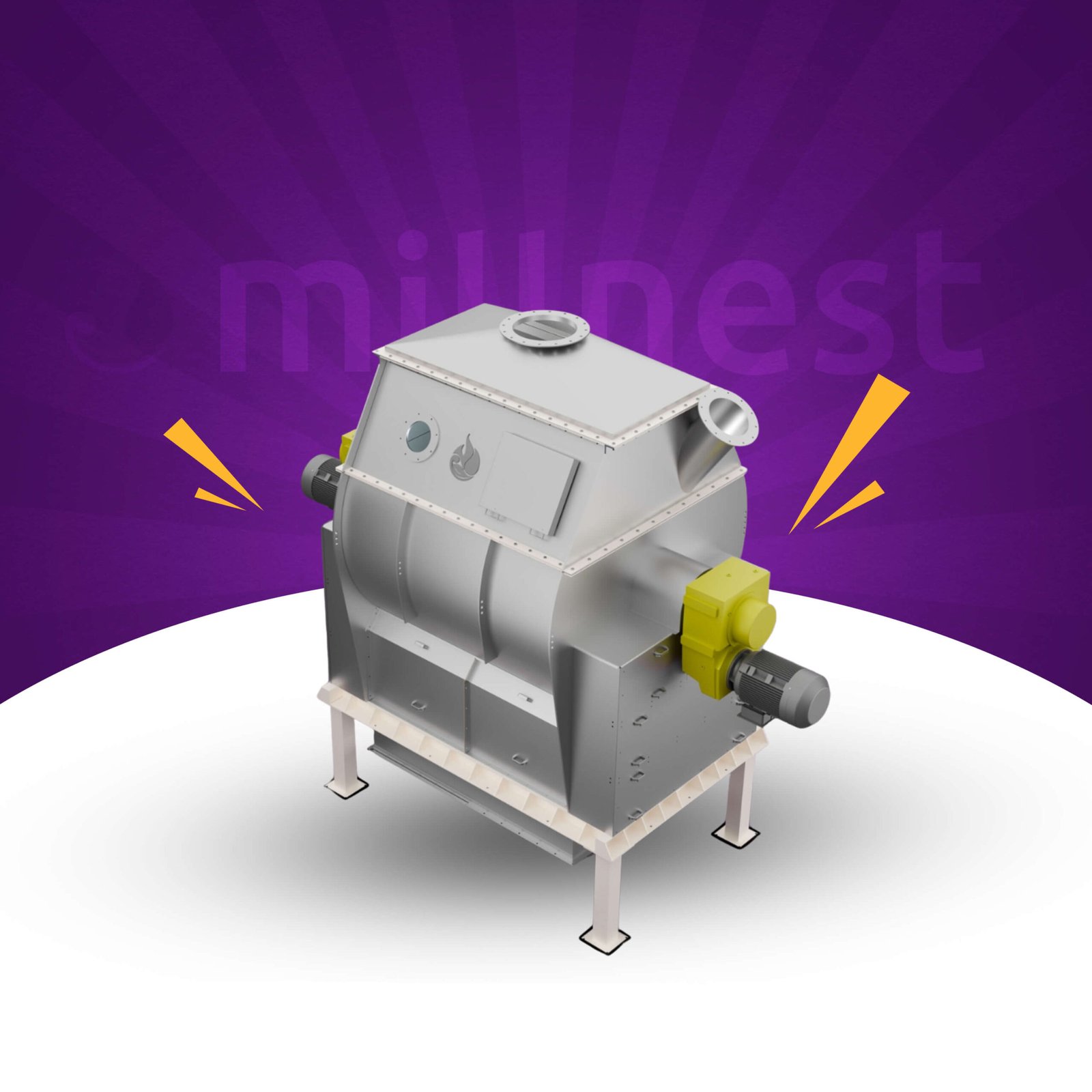
The value-added end of the besan market is ready mixes: pakoda, bhajji, dhokla and batter premixes. Stored besan can form lumps, so a Delumper (MLUM) restores free flow before blending. Besan is then blended with salt, spices, raising agents and minor ingredients in a Ribbon Blender (MRBL) or Paddle Blender (MPBL). Recipe management on MillNest blenders stores the ingredient sequence and mixing parameters for each mix, so the same product comes out the same way every shift.
Stage 10: Packing
Short, enclosed transfers from the last process stage to the packing machine protect fineness, limit moisture pickup and keep blends from segregating on the way.
Turnkey besan and pulse processing plants
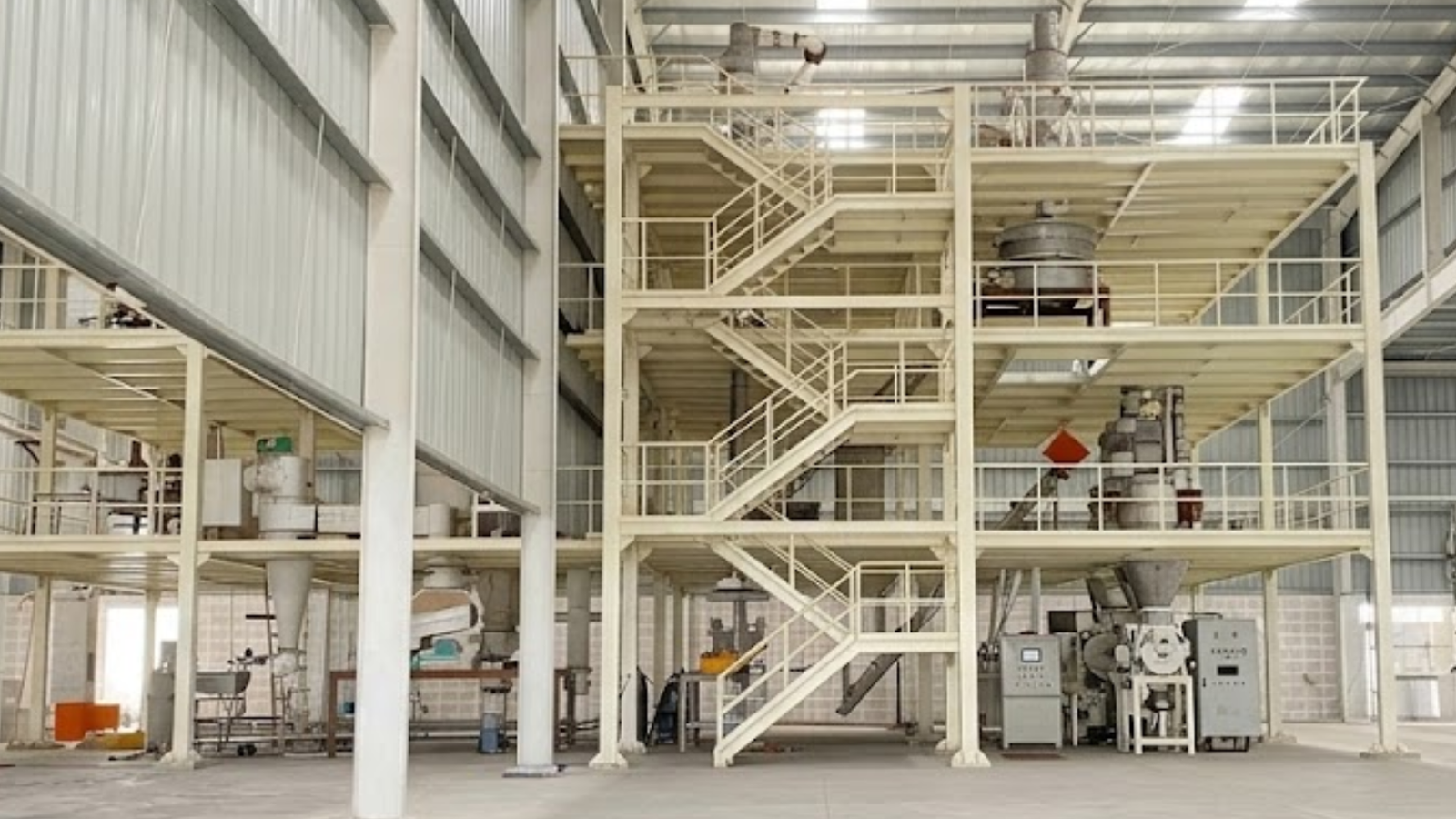
MillNest designs and supplies turnkey EPC lines, configuring each plant around the producer’s grades, pulse mix and capacity, and confirming equipment choices with material trials before capital commitment. The same line logic extends to other pulse flours such as moong, urad, masoor and yellow pea, each with its own settings. We’ll be adding pages on each of these.