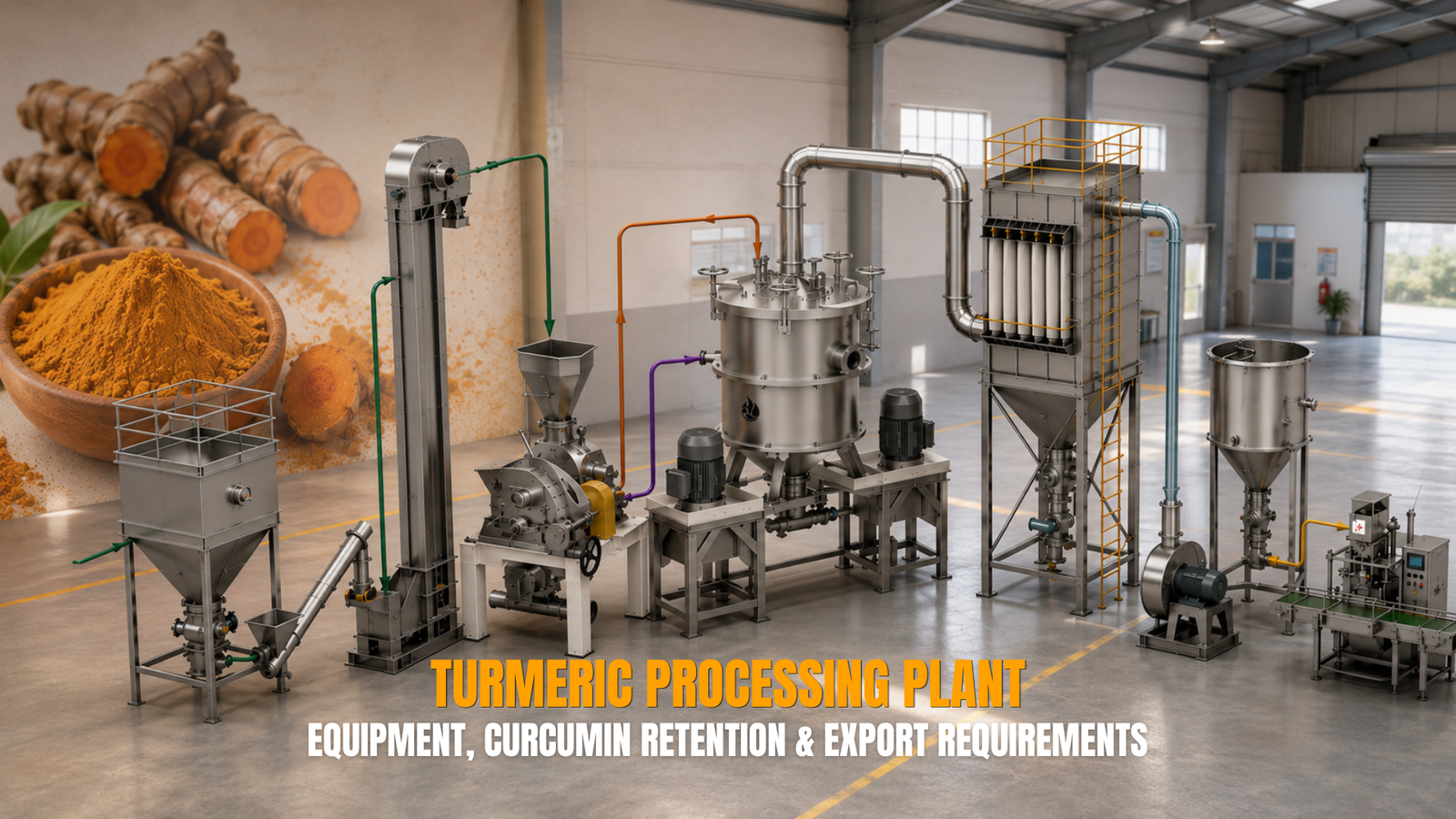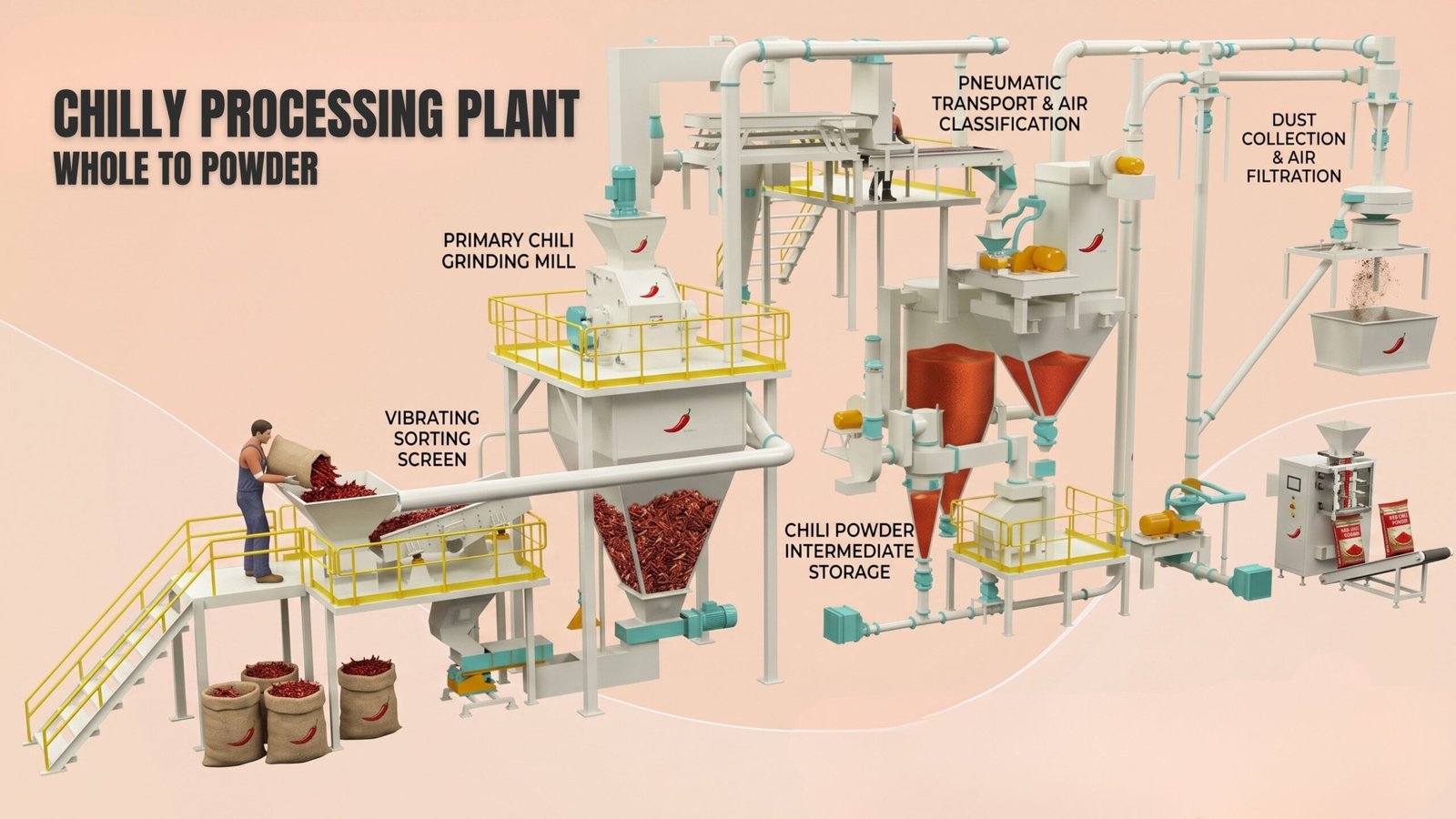
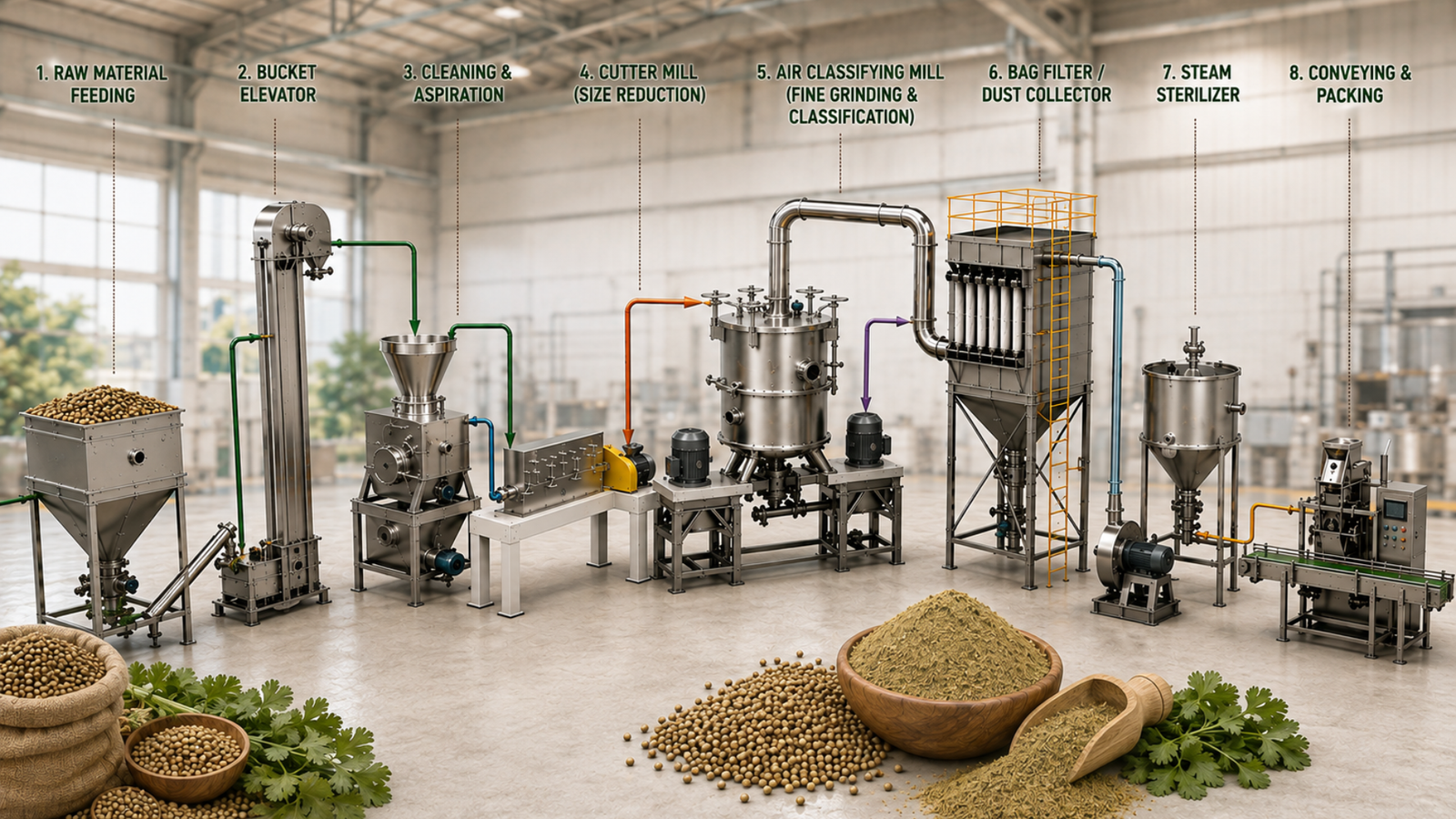
Setting up a coriander processing plant requires a clear decision upfront: are you producing whole or split coriander for export, coriander powder, or both? The two products share a raw material and a building. They share almost nothing about the equipment and line design required to produce them well. This guide covers the complete coriander processing plant — both product paths — and what it takes to design each for consistent, export-compliant output.
Why coriander is a two-path crop
Coriander is India’s most exported spice by volume. Its buyers divide into two categories with different quality requirements. Whole and split coriander buyers want uniform seed grade, low moisture, clean colour and ASTA cleanliness compliance — essentially a sorting and grading brief. Coriander powder buyers want a specific particle size and, above all, a volatile oil content that meets the Codex minimum, measured immediately after grinding. The volatile oil is the aroma — the terpene compounds, primarily linalool and geraniol, that give coriander its characteristic smell and flavour. That volatile oil begins evaporating the moment the seed is ground, at room temperature, continuously. It is not a storage problem; it is a grinding and post-grinding handling problem.
The whole and split coriander line
Cleaning and destoning. All coriander starts with removal of stones, stems, dust and foreign matter. Destoning before the grading line protects the vibratory screen and sortex from abrasion damage and ensures that contaminants do not reach the packed product.
Vibratory grading screen. Size grading separates whole coriander by seed diameter, removing undersized, broken or shrivelled seeds that reduce the uniformity grade buyers require. Screen apertures are set for the target grade specification.
Colour sortex. The optical sorter removes light, mould-damaged and discoloured seeds. For whole coriander ASTA compliance, sortex is essential — it lifts both the visual appearance grade and the rejection rate at import inspection.
Moisture verification. Whole coriander must be within moisture specification before packing. Seed above target moisture risks mould in storage and at the buyer’s warehouse. If incoming moisture is above target, drying before packing is required.
Split coriander. A controlled mechanical splitter opens the seed along its natural seam without shattering the halves. The split product is re-screened to remove dust and whole seed fragments before packing.
The coriander powder line
Pre-breaking — cutter mill. Whole coriander seed fed directly into a fine mill creates an uneven, oil-loaded grinding zone that runs hotter and produces less consistent powder. A cutter mill pre-breaks the seed first, delivering a consistent, even feed to the grinding stage. This is the lowest-cost improvement available on most coriander powder lines, and its benefit — calmer grinding, lower temperature, less screen loading — runs through every stage that follows.
Fine milling. The hammer mill handles coarse-to-medium coriander powder at volume. For volatile oil-sensitive fine powder, the air classifying mill is the better choice: classification by airflow avoids screen blinding from coriander’s natural oils, holds tight particle size without screen drift, and the air volume through the grinding chamber provides active in-process cooling. Mill outlet temperature is logged; if it rises during a run, feed rate is reduced before volatile oil loss becomes significant.
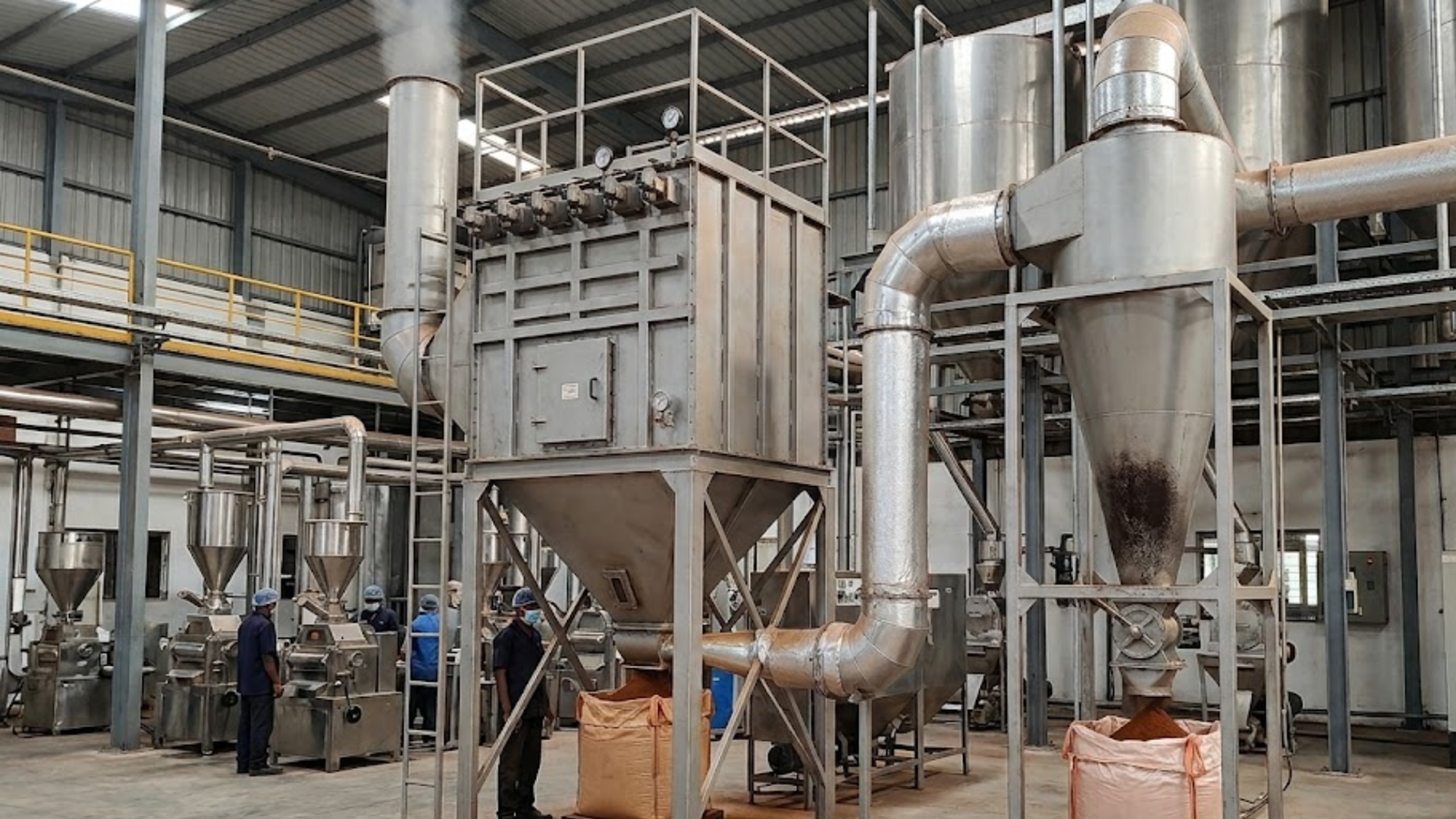
De-dusting. A cyclone and pulse-jet bag filter capture grinding dust, protecting workers from volatile compound exposure and recovering product from the air. The system runs under slight negative pressure so dust is drawn in rather than expelled into the working environment.
Sterilisation. Coriander is field-dried and carries a microbial load. Export buyers test for Salmonella absence and total plate count. Natural-steam HT-ST sterilisation treats the coriander at 102–122 degrees C for 20–40 seconds, achieving microbial reduction up to log 6 with no fumigants, no irradiation, and without the prolonged heat that would damage volatile oil. Batch records document the treatment parameters for each production run.
Sifting, testing and packing. A final sift confirms the powder is on specification mesh. Volatile oil content is tested at the sifter outlet — immediately, not at the packing station — because the number degrades from the moment of measurement. Metal detection is positioned before the packing station. The powder is sealed promptly: open-hopper dwell time after the sifter is the last remaining voluntary source of volatile oil loss in the line.
Equipment selection guide
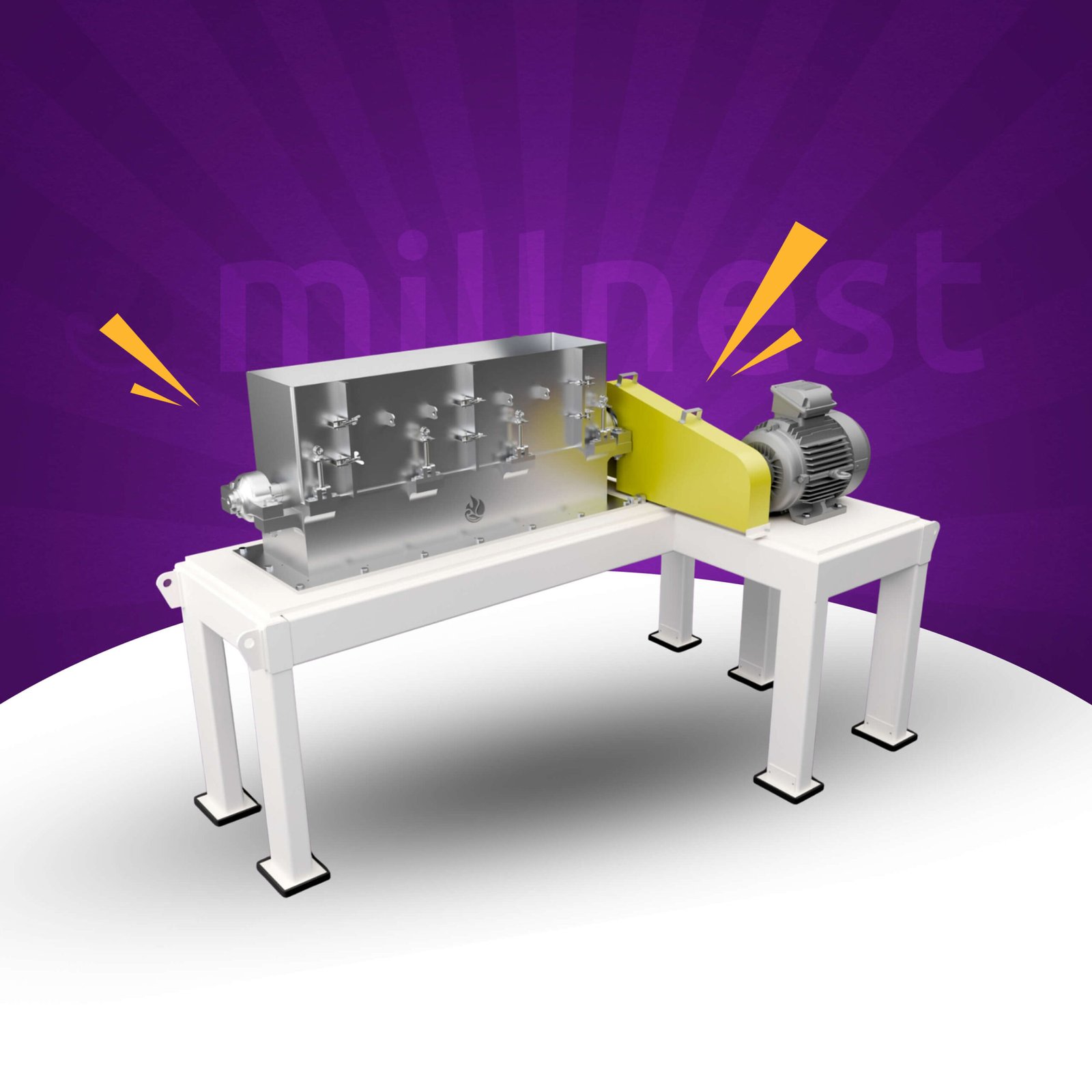
Cutter mill for coriander. The pre-breaker at the front of the powder line — opens the seed, controls feed consistency for the fine mill, enables deseeding where required. See the MillNest Cutter Mill page.
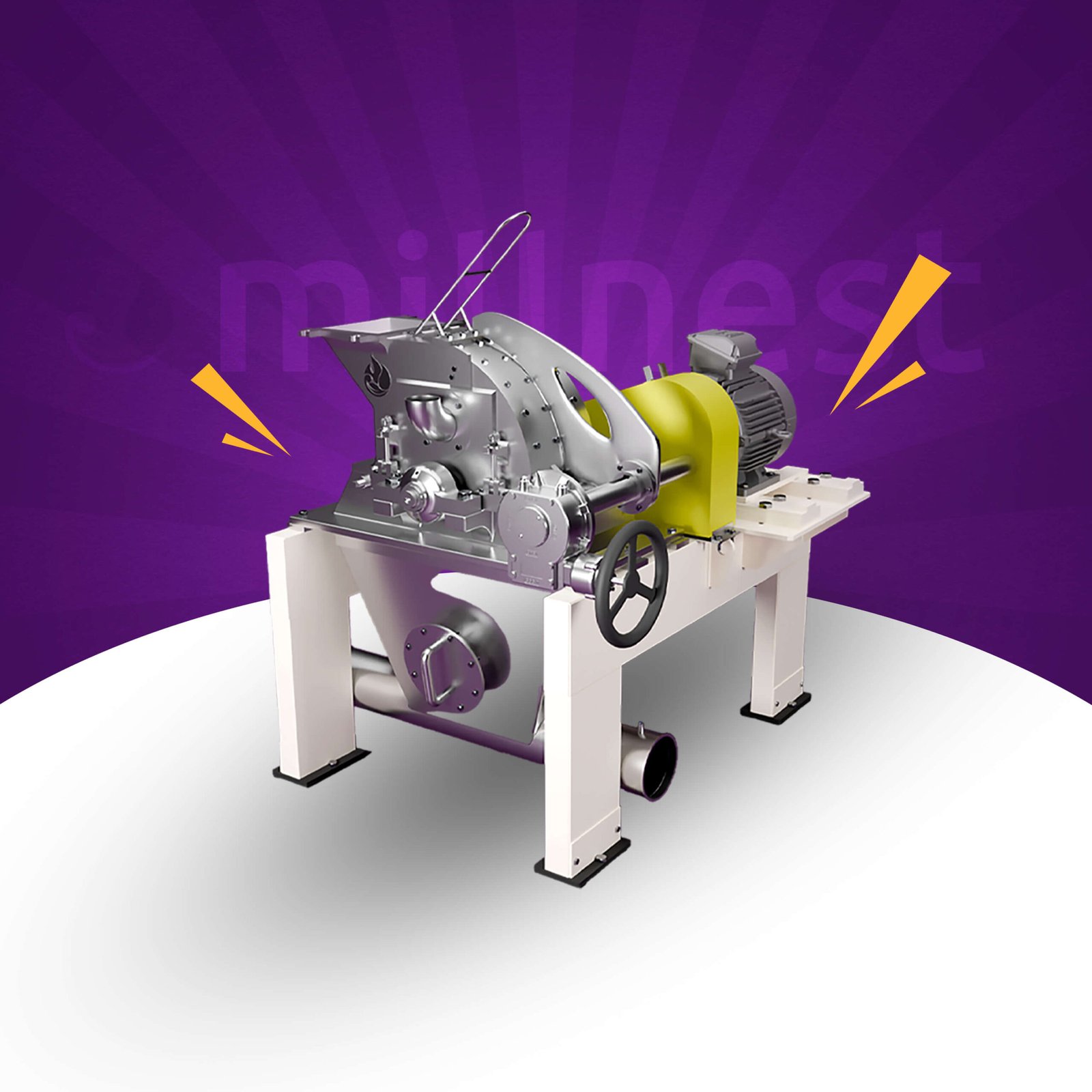
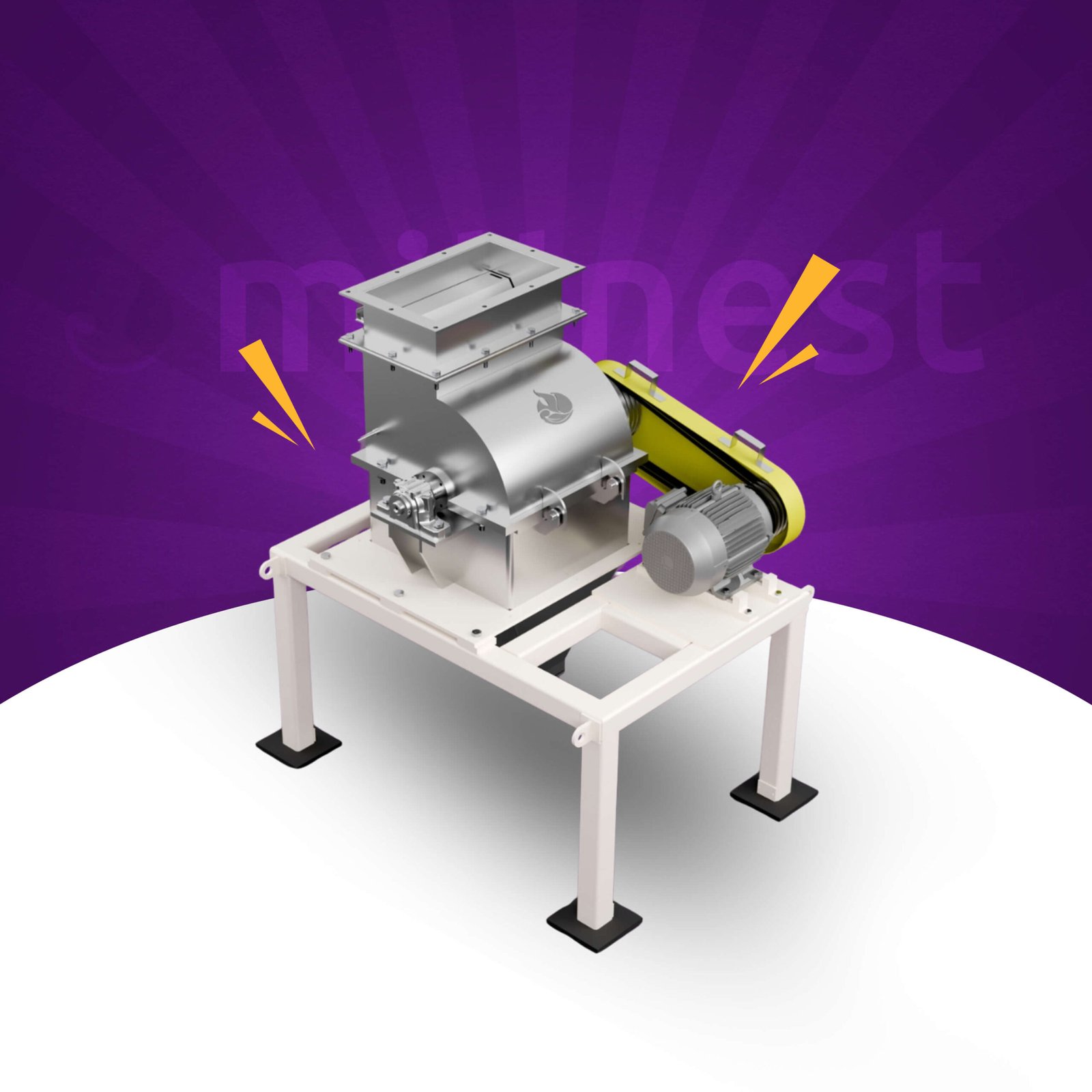
Hammer mill for coriander. The workhorse for coarse-to-medium powder at volume. SS 304/316 food-grade construction, adjustable screen configurations. See the MillNest Hammer Mill page.
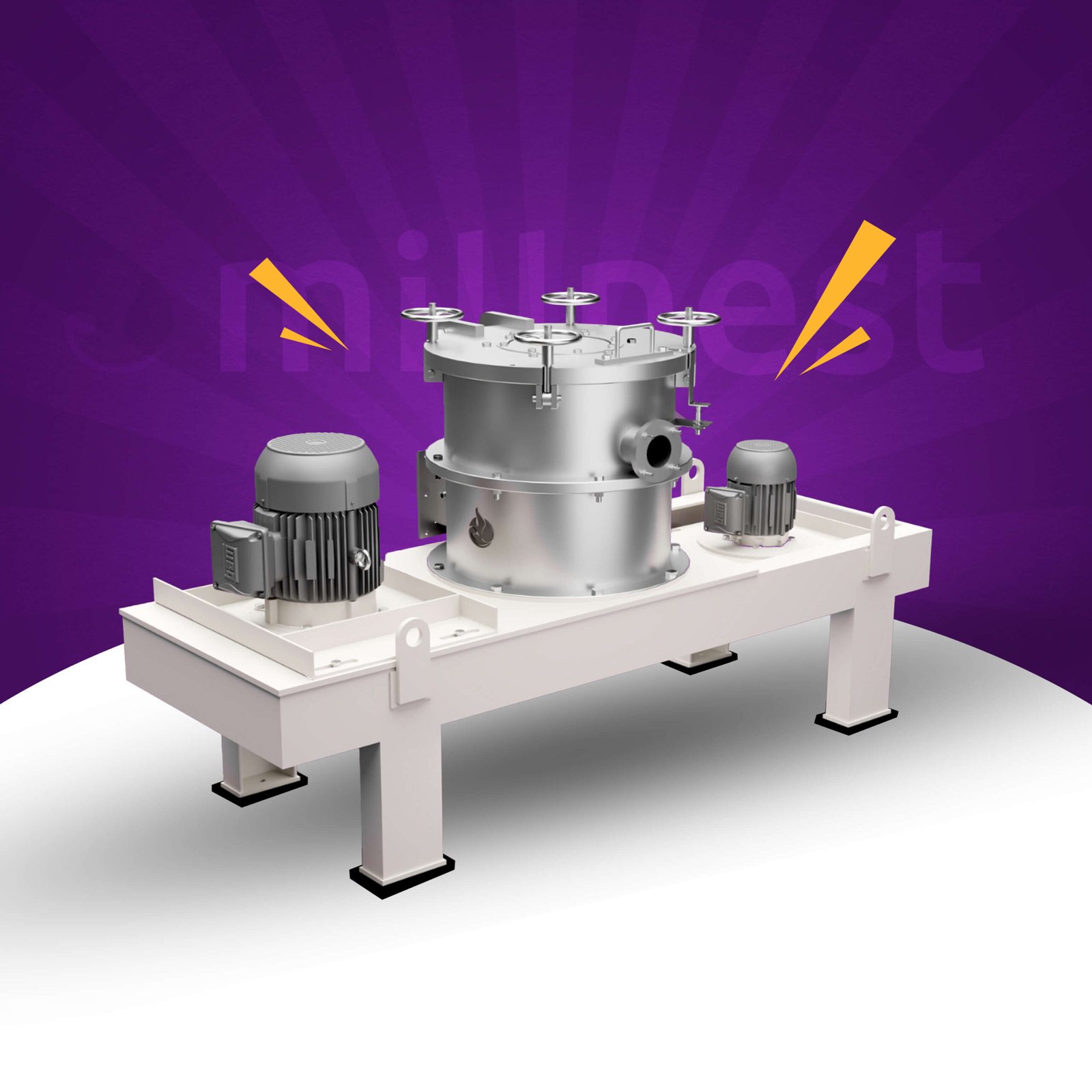
Air classifying mill for coriander. Preferred for export-grade, volatile oil-sensitive fine powder: no screen blinding, tight particle size, in-process air cooling. Particle size controlled by classifier speed, not screen aperture, so it holds specification across a production run without drift. See the MillNest Air Classifying Mill page.
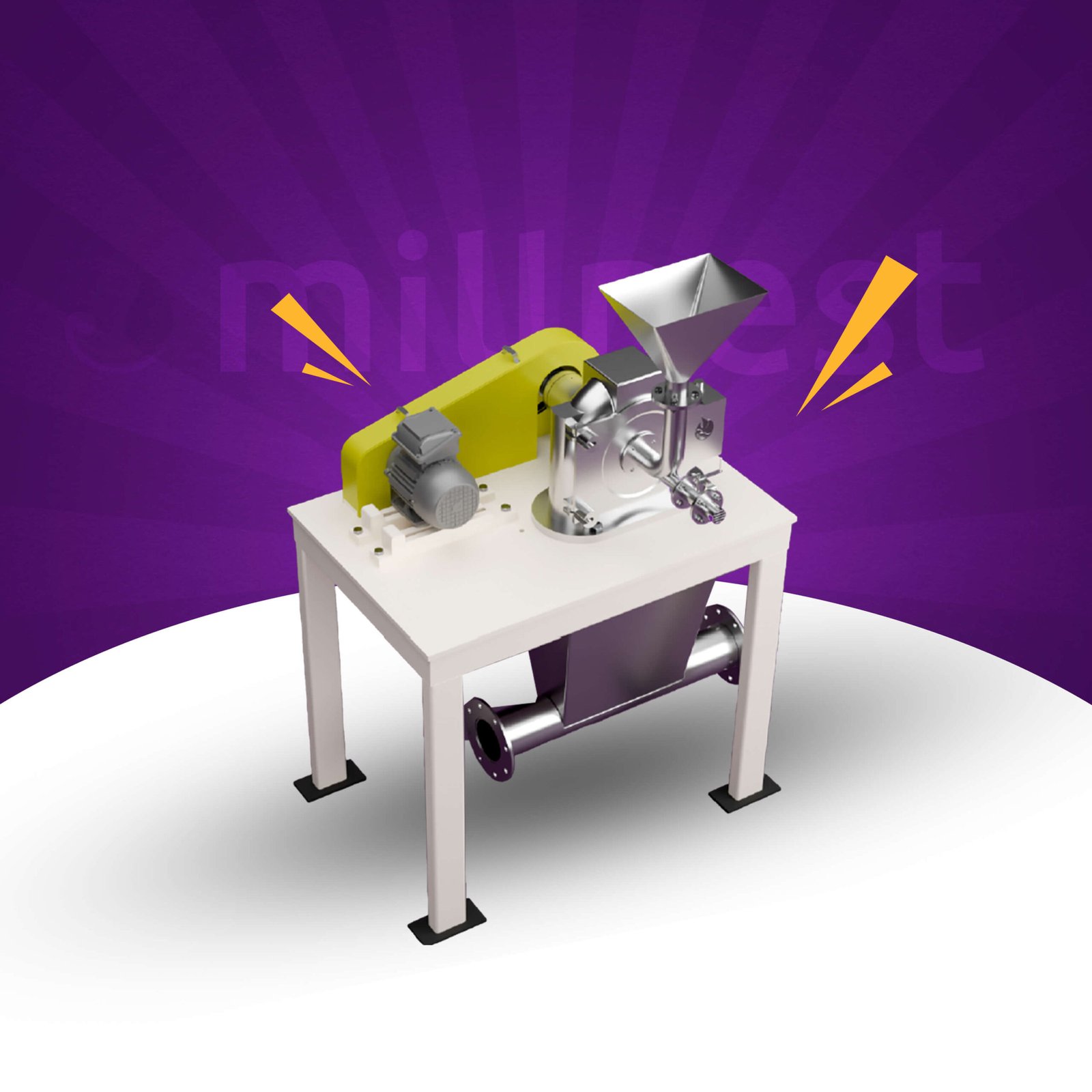
Universal mill for seed spice range. For processors running multiple seed spices — coriander, cumin, fennel, fenugreek — the universal mill’s multi-mode operation handles the range with fewer machine changes. See the MillNest Universal Mill page.
Export compliance requirements
Volatile oil content. Codex Alimentarius specifies a minimum volatile oil content for coriander powder, measured immediately after grinding. Compliance requires temperature-managed milling and prompt packing — it cannot be recovered after the fact.
Microbial standards. Salmonella absence per 25g and total plate count limits apply at EU, US and GCC import. HT-ST steam sterilisation with batch documentation addresses both.
Cleanliness and adulterant compliance. ASTA and Codex cleanliness standards for whole coriander are met through sortex and grading. Extraneous matter and adulterant checks are increasingly part of premium buyer audits.
Planning your coriander processing plant
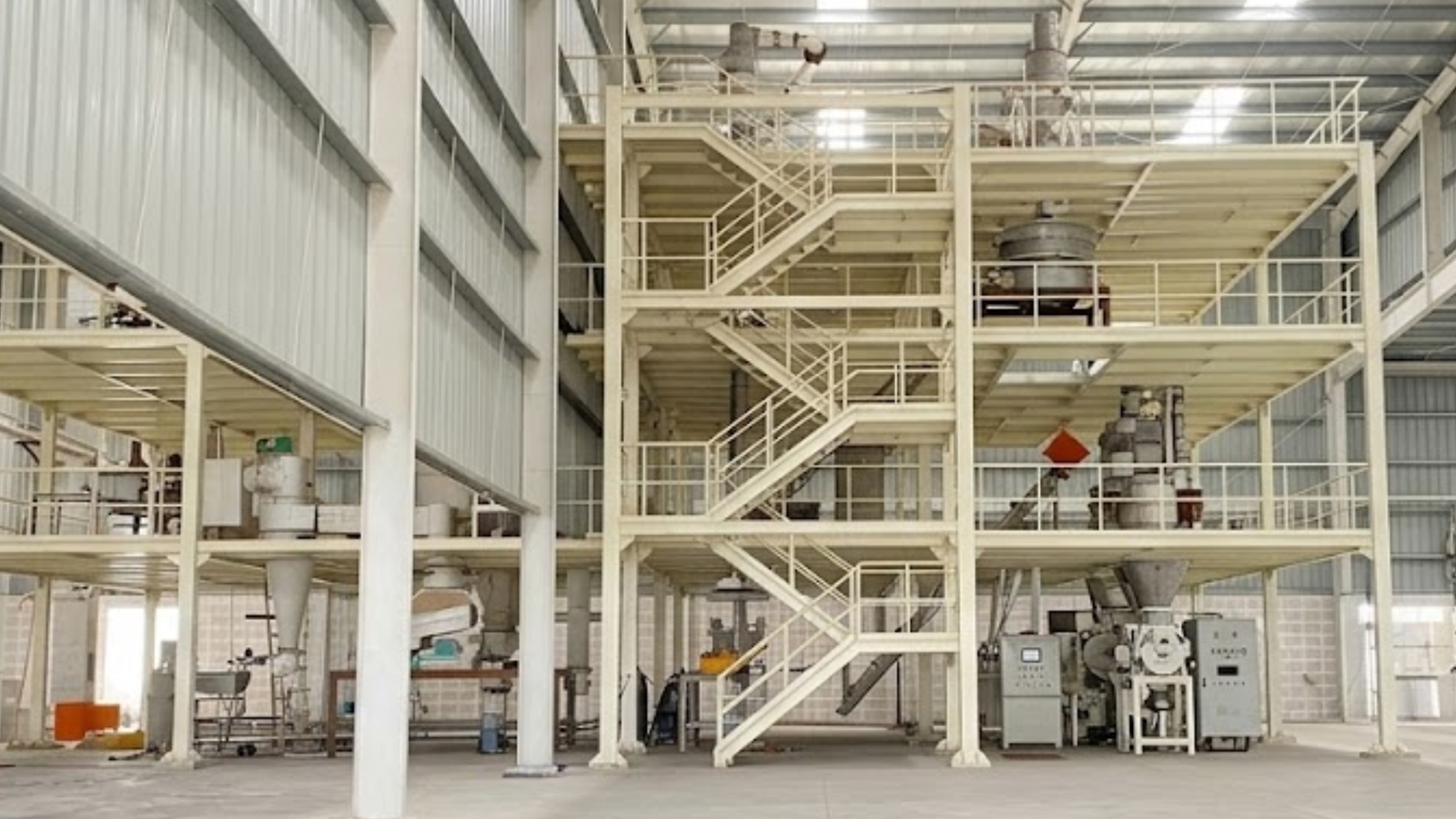
Capacity planning should separate the whole/split grading line from the powder line: they run at different speeds, with different throughput profiles, and mixing them on a single sequential layout creates bottlenecks at the grading stage that slow the powder line and vice versa. A shared intake and cleaning section feeds both, with the lines diverging from the size-grading stage onward.
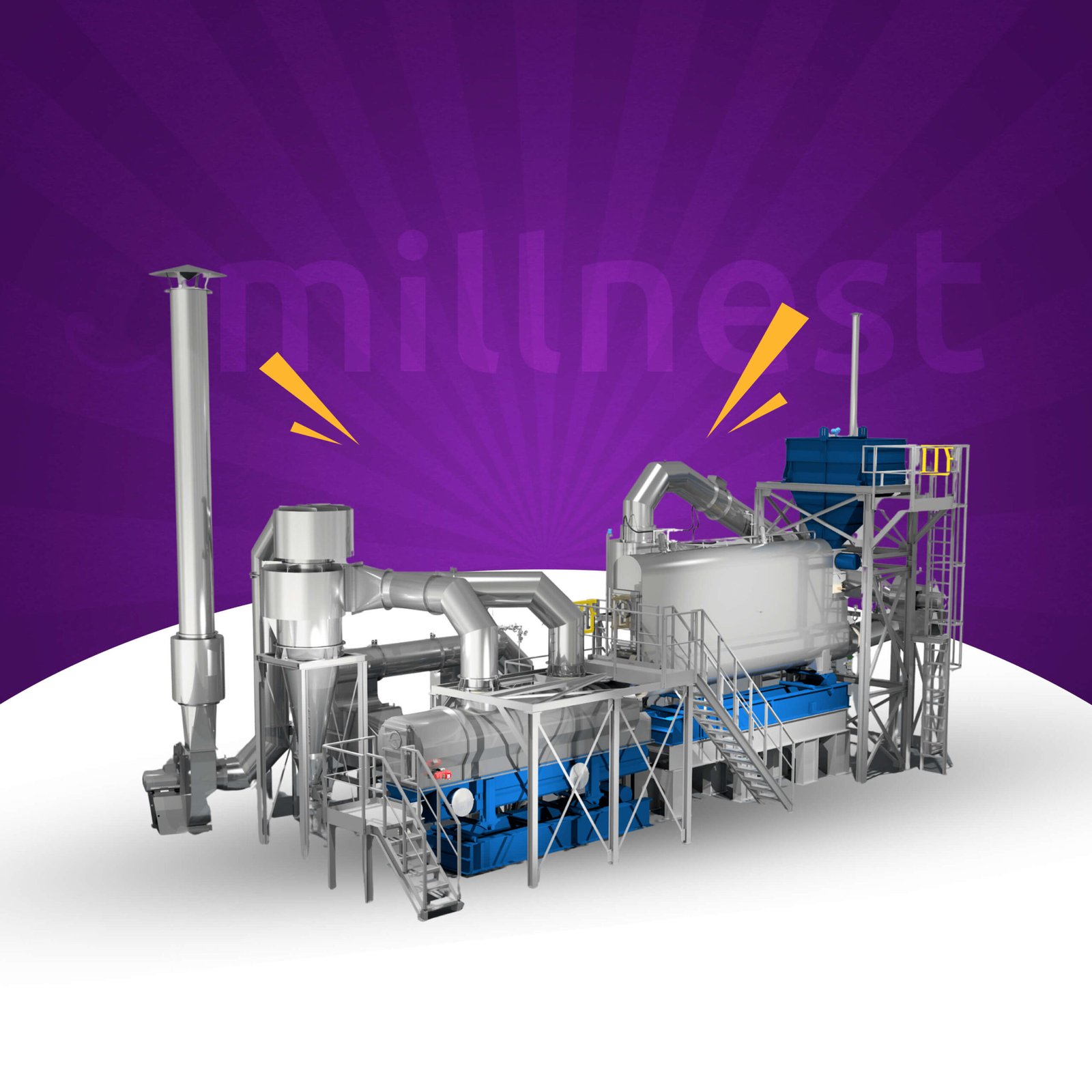
MillNest designs and supplies complete coriander processing plants — cutter mills, hammer mills, air classifying mills, de-dusting, grading lines and HT-ST sterilisation — as integrated EPC solutions, confirmed with a material trial on the customer’s own coriander before any commitment. To discuss a plant for your throughput, grade and target market, contact MillNest at enquiry@millnest.com or +91 73300 00173.
Common questions about coriander processing
What is the best machine for coriander powder? For coarse-to-medium powder at volume, a hammer mill. For fine, export-grade, volatile oil-sensitive powder, an air classifying mill — ideally fed by a cutter mill pre-breaker.
How do you protect volatile oil in coriander powder? Temperature-managed milling: a consistent pre-broken feed, an ACM at the fine end, mill outlet temperature monitoring, and immediate packing after the sifter. Volatile oil is measured at the sifter, not at the pack.
Does coriander powder need steam sterilisation for export? Yes, for EU, US and GCC export. HT-ST sterilisation achieves the microbial reduction required without fumigants and without damaging volatile oil.
What is the difference between whole coriander and split coriander processing? Whole coriander requires destoning, vibratory grading and sortex — no milling. Split coriander adds a controlled mechanical splitter and a re-screening step to remove dust and fragment material.
Can one plant handle both whole coriander and coriander powder? Yes, with a shared intake and cleaning section and two separate downstream lines — grading line for whole/split, grinding line for powder. Integrated on the same site, they share raw material handling but diverge at the size-grading stage.